
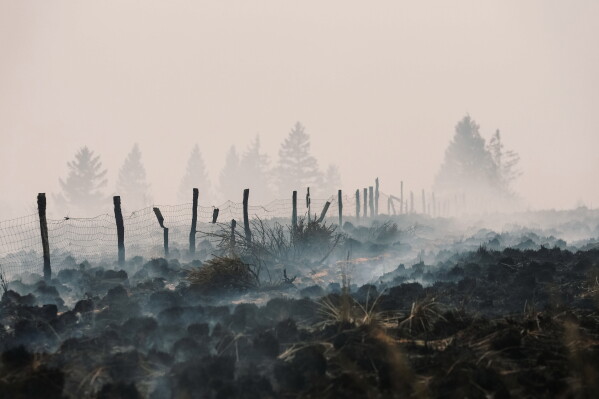
The recent wildfires sweeping across Europe have exposed a significant hazard hidden underneath the burned surfaces: unexploded bombs and mines from World War conflicts. These relics, unused for decades, have become dangerous as the continent faces increasing threats fueled by climate change. Some of these explosives have detonated due to the extreme heat of the fires. Incidents have been reported in countries like France, Belgium, Germany, and the Netherlands, emphasizing the challenge fire crews encounter in these regions.
Impact of Climate Change
Climate change is altering the stability of previously dormant wartime weapons. Sarah Njeri, a peace and conflict scholar from the London School of Oriental and African Studies, explains that climate change is now causing these buried and supposedly safe munitions to resurface. Fires ignite old munitions and reveal their presence as vegetation burns away. The wildfires this season have been intensified by heavy early-year rains, which encouraged plant growth that later served as fuel for the fires when the summer heat and drought conditions struck.
Historical Dangers
As flames progressed across old battlegrounds, they triggered unexploded munitions still lying from previous wars. In France, a major wildfire near Bordeaux revealed a stockpile of World War II ammunition. In Belgium’s Liege province, sporadic detonations were heard. Emergency services adapt their strategies to account for buried munitions in these fire-prone areas. During World War II, explosive devices sprinkled across various forest regions have remained and continue to threaten lives.
Operational Challenges
Firefighters must remain cautious as they navigate terrains that conceal potential threats. Governor Hervé Jamar of Liege noted that despite sporadic detonations recently heard, fire crews were not in direct danger. Local historian Bernard Collard touches on the challenges by recalling past instances where explosives had caused civilian deaths after World War conflicts.
Ongoing Efforts
Collard has extensive experience scanning former battlefields that have transformed into various land uses. He has discovered varied wartime artifacts, emphasizing the unpredictability of such sites. Collaborating with Belgian demining squads, Collard acknowledges the historical legacy and ever-present danger posed by unexploded ordnance. Such artifacts are especially hazardous in regions experiencing wildfires, as heat can trigger explosions.
Continued Discovery
Belgium’s Ministry of Defense frequently receives requests for munitions disarming services but does not consider some regions high-risk compared to others. The ministry handles thousands of explosive incidents yearly, indicative of Belgium’s wartime history. The discovery of munitions is common, and incidents like the ‘iron harvest’ during farming activity result in finding numerous war remnants.
Rivers Reveal More Threats
Adding to the danger are drought conditions that shrink river beds and expose more wartime devices. Slovakia’s Danube River receded, revealing naval mines, while authorities in Hungary closed Budapest’s Margaret Bridge due to an exposed bomb. As rivers like the Rhine dry up, more discoveries are made, illustrating lingering threats.
Christine Greene, a University of Arizona researcher, notes that climate change causes repeated encounters with war remnants long set aside, drawing attention to Europe’s historical wartime legacy. This complex issue of reliving wartime legacies underscores the seriousness of the situation.
— Associated Press contributors Mike Corder, Sylvain Plazy, Angela Charlton, Kirsten Grieshaber, and Stanislav Hodina provided insights for this report.