
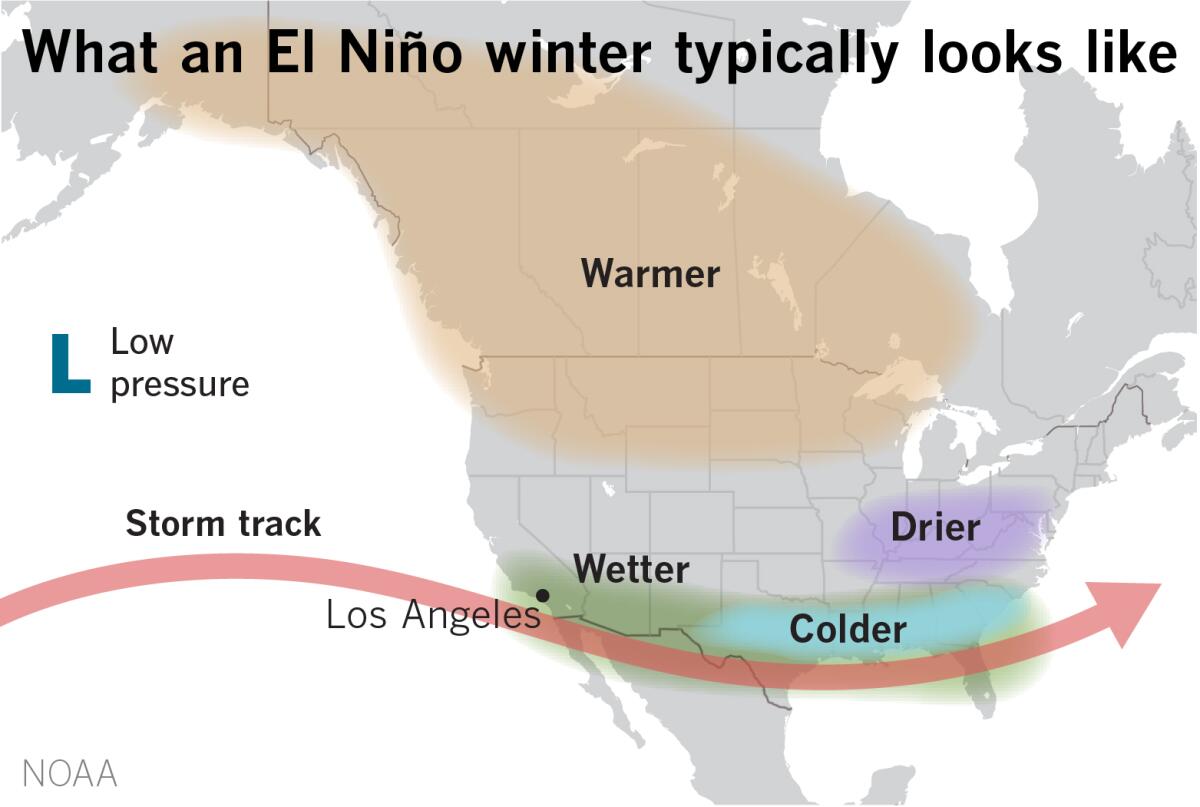
El Niño has arrived in California, bringing the potential for a wet winter season. Oceanic conditions have evolved rapidly, giving scientists confidence in a strong or very strong El Niño this coming winter.
The National Oceanic and Atmospheric Administration’s Climate Prediction Center has indicated a 97% probability of El Niño being strong or very strong through the end of December. Historically, El Niño events have led to significant increases in rainfall for California, such as the winters of 1982-83 and 1997-98 when downtown Los Angeles saw more than double its usual annual rainfall.
Understanding El Niño
El Niño is a climate pattern occurring every two to seven years, lasting nine to twelve months. This phenomenon is associated with warmer waters in the central and eastern tropical Pacific Ocean. It influences global weather, affecting rainfall and drought, and is further impacted by human-induced global warming.
Impacts on California
El Niño’s effects vary around the world, but in the southern United States, including Southern California, Texas, and Florida, it often brings stormy weather during winter. Southern California may see above-average rainfall, leading to risks of landslides and coastal flooding. The 2015-16 El Niño resulted in unprecedented coastal erosion along California’s beaches.
Marine Environment Concerns
Warmer ocean waters could influence marine life along the California coast. Questions arise about increased shark sightings and shifts in marine mammal habits as they follow food sources closer to shore. Prior strong El Niños have led to reductions in plankton levels, harmful algal blooms, and changes in the abundance of market squid.
There have been observed effects on California sea lions, including reduced productivity and smaller pups during past El Niño occurrences.