
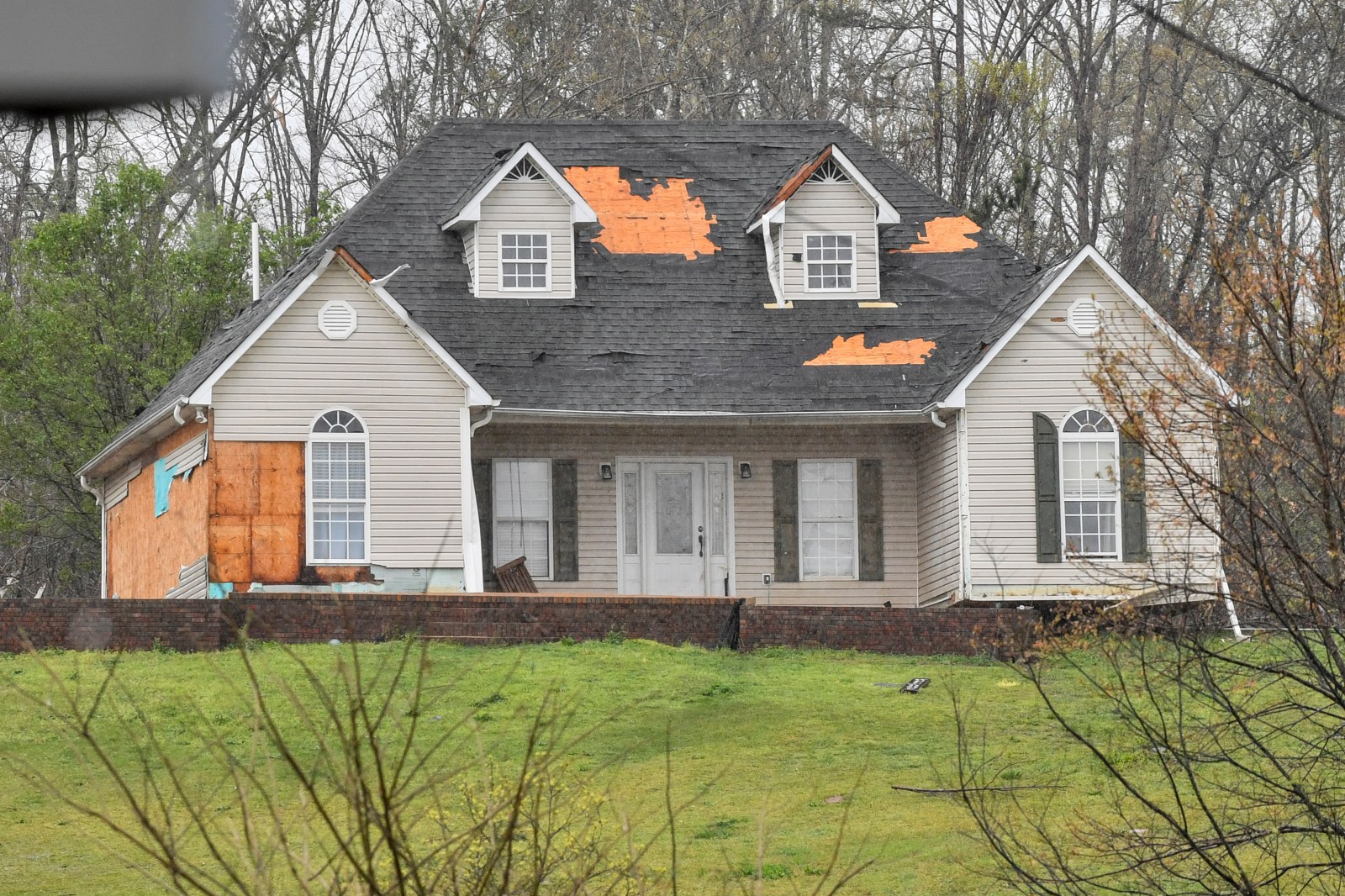
Republican leaders across the United States are actively addressing property taxes following recent increases. However, data reveals that home insurance premiums pose a greater financial challenge for many homeowners in various states.
In Tennessee, homeowners typically spend around $284 monthly on insurance coverage. This is nearly double the property tax bill, which averages $143, as reported by a study from the personal finance website, LendingTree. Alabama homeowners face a similar situation, with average monthly spending of $182 on insurance compared to $93 on property taxes.
Property tax bills in Tennessee and Alabama are significantly lower compared to New Jersey and New York. In these Northeastern states, the estimated monthly property tax burdens are $863 and $626 respectively. Property taxes constitute 23.4% in New Jersey and 19.5% in New York of total housing costs, contrasting with 6.8% in Tennessee and 6.3% in Alabama.
Despite higher property taxes, homeowners in New Jersey and New York pay less for insurance, with estimated monthly bills of $159 and $168. Insurance contributes just 4.3% and 5.2% to monthly housing costs in these states, whereas it represents 13.4% and 12.3% in Tennessee and Alabama respectively.
States with Higher Home Insurance Costs
LendingTree data indicates that homeowners in 15 states spend more on insurance than on property taxes:
- Tennessee: $284 vs. $143
- Alabama: $182 vs. $93
- Colorado: $463 vs. $241
- South Carolina: $259 vs. $135
- Arkansas: $200 vs. $115
- Oklahoma: $278 vs. $178
- Arizona: $238 vs. $162
- New Mexico: $244 vs. $189
- Idaho: $200 vs. $163
- Nebraska: $413 vs. $350
- Mississippi: $149 vs. $131
- West Virginia: $113 vs. $101
- Kentucky: $186 vs. $167
- North Carolina: $214 vs. $196
- Louisiana: $132 vs. $125
In Virginia and Montana, the spending on home insurance and property taxes is relatively even.
Impact and Mitigation Efforts
Disaster-prone states like those in the Southeast face additional insurance burdens due to hurricanes and flooding risks. Meanwhile, tornadoes and wildfires affect costs across the central and western U.S.
Property taxes have increased by over 30% from 2019 to 2025, according to Harvard University’s Joint Center for Housing Studies. Home values rose by 54% since 2020. Insurance premiums surged 46% since 2021, driven by natural disasters and rebuilding expenses. Insurify forecasts another year of premium hikes in 2026.
These costs contribute to the housing affordability crisis. The Federal Reserve Bank of Atlanta reports that the median-income household must spend 66.38% of its income to own a median-priced home. Spending over 30% on housing is considered burdensome.
To combat rising costs, Congress has enacted a housing package targeting inventory shortages. States like California and New York are easing construction regulations, while Florida and Texas are cutting property taxes.
Disaster-prone states like California and Florida are implementing reforms to retain insurers and manage costs, yet challenges persist. The federal government is considering solutions like a reinsurance backstop and federal funding for home resilience projects. The Treasury may play a role in assessing risks and coverage gaps.