
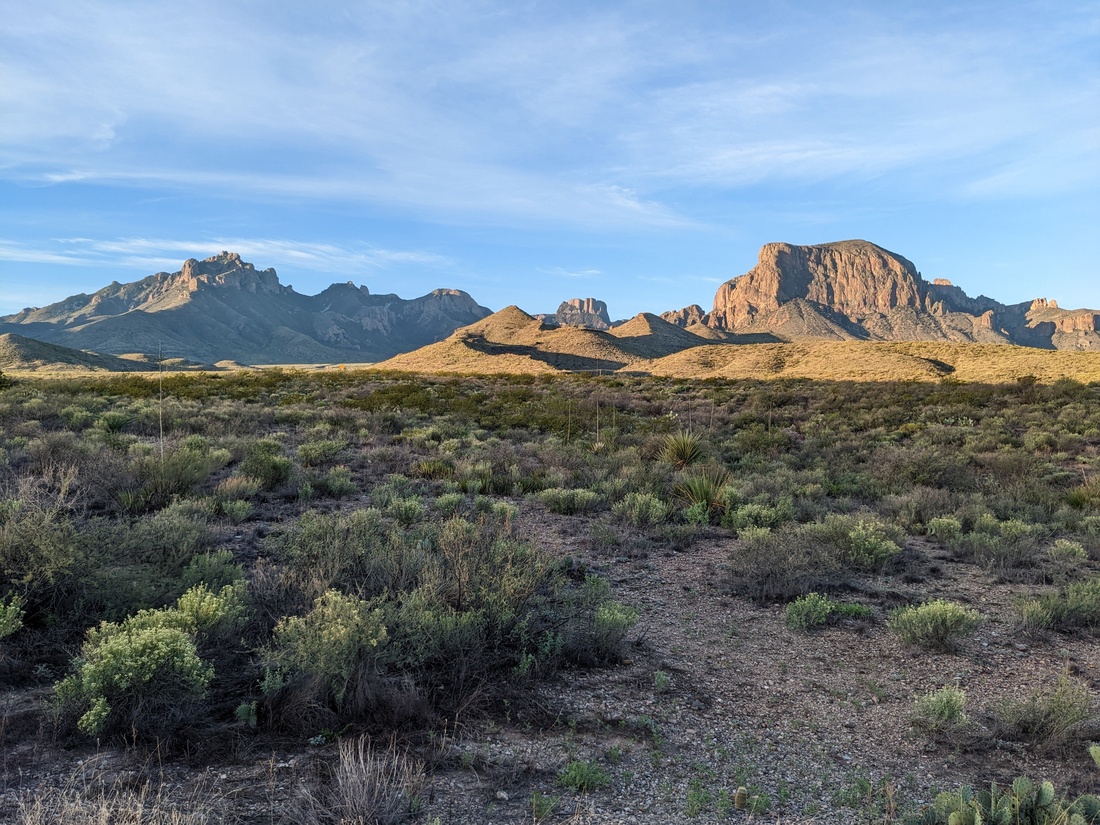
Big Bend National Park features diverse habitats, including desert, mountains, and river ecosystems. At the center are the Chisos Mountains. These mountains boast cooler forest ecosystems with pinyon pines, junipers, and the endangered Guadalupe fescue.
The Chisos Mountains rise about 6,000 feet above the Chihuahuan Desert. In these heights, isolated from other ecosystems, unique environments form. These ‘sky islands’ offer a sanctuary for the only known patches of Guadalupe fescue in the U.S., nestled in Big Bend National Park along the Texas-Mexico border. Their isolation has been key to their survival, protecting them from extinction.
Climate change poses a significant threat to these species. As global temperatures rise, species reliant on ‘sky island’ habitats must migrate to increasingly higher altitudes. However, eventually, they encounter the limits of the mountain.
Carolyn Whiting, a Park Botanist at Big Bend, has monitored the Guadalupe fescue closely. She shares insights with host Aaron Scott about the unique features of Big Bend and the importance of conserving these small, yet crucial species. The Guadalupe fescue was declared an endangered species in 2017.
For more insights, explore other episodes in our research series on U.S. public lands. Connect with us on Twitter at @NPRShortWave or email us at [email protected].
This episode was crafted by Rebecca Ramirez, with editorial oversight from Gabriel Spitzer. Fact-checking was conducted by Rebecca, Brit Hanson, and Gisele Grayson. Natasha Branch handled audio engineering.