
Fishing Excursion Amid Super El Niño Conditions
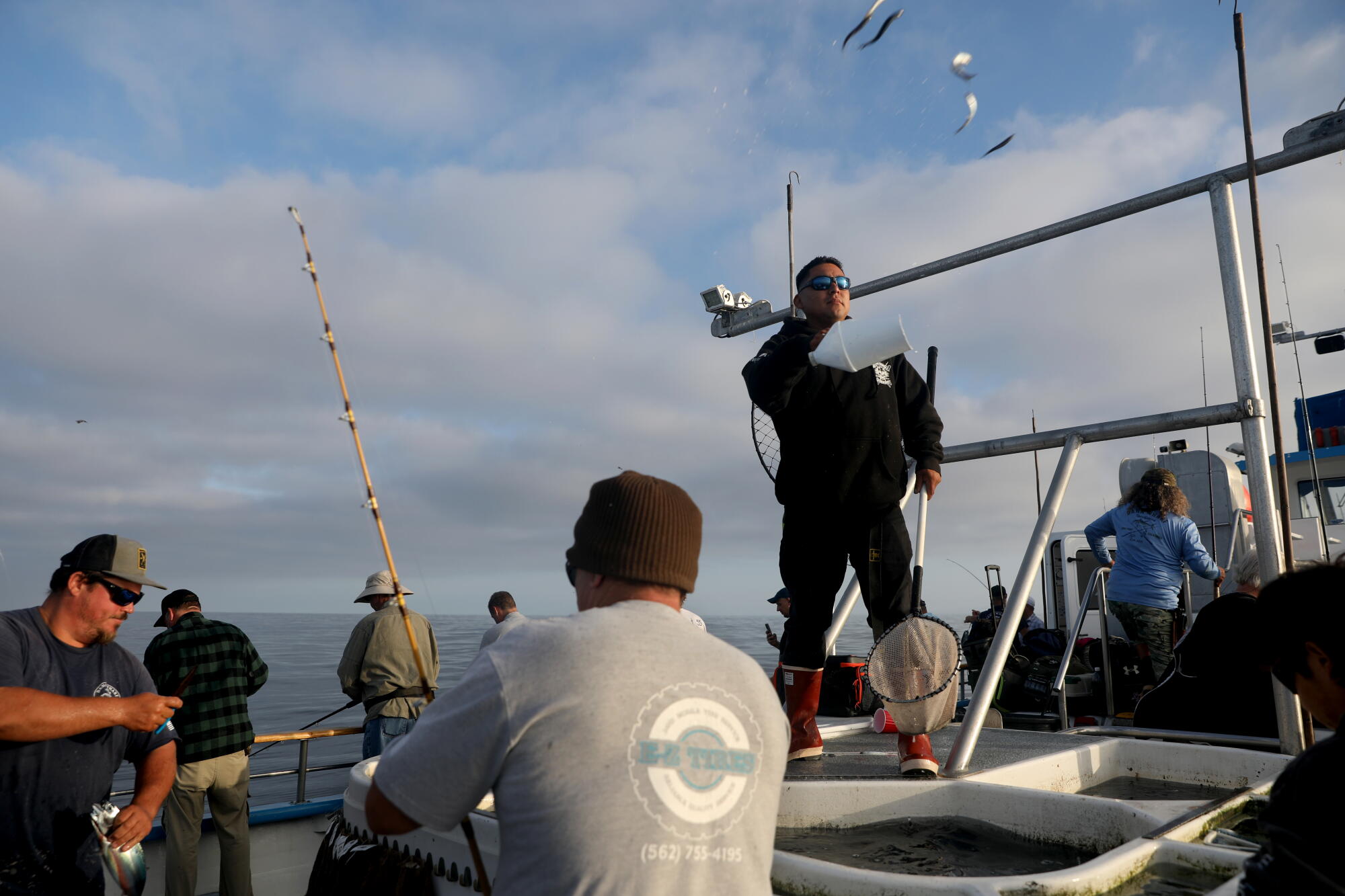
Captain Brandon Erdo navigated the 95-foot Dana Pride towards promising waters miles off the Orange County coast one Wednesday morning. The boat was nearly full, with 37 out of 40 spots occupied by anglers eager for the reputed excellent fishing brought by the super El Niño. As excitement mounted, Erdo instructed the deckhand, Eric, to get the bait ready, leading to anchovies being thrown into the water, shimmering scales landing on anglers.
Unique Marine Life Experiences
Veteran angler Chuck Freeman caught his first bullet tuna in 47 years of fishing in the Pacific. Bullet tuna, usually found in the Indian and Atlantic Oceans, or around Hawaii and the central Pacific, were now appearing off California’s coast. This shift in marine life was attributed by scientists to super El Niño conditions, which had warmed Pacific waters, attracting various rare species to the area.
Beachgoers and amateur anglers from Orange County to Malibu have reported seeing whale sharks, hammerhead sharks, devil rays, wahoos, and other unique species. NOAA fish biologist, Owyn Snodgrass, stated that the ecosystem has noticeably changed, bringing fish to regions where they hadn’t previously been seen.
Impact on Recreational Fishing
Recreational fishing businesses have benefited significantly from the super El Niño. Tuna and other sought-after species appeared in abundance in U.S. waters. President of the Sportfishing Assn. of California, Mike Conroy, mentioned this was a historic year for marlin fishing, with the most large fish being caught since 1990.
The Reality of Fishing Expectations
Despite the interesting catch opportunities, the reality at sea showed discrepancies. Anglers sought species not seen since the last major El Niño and marine heat waves a decade ago, but scientists noted a decrease in the quantity caught this year compared to previously.
Erdo directed the crew to reel in lines for moving locations after the excitement slowed, indicating that bullet tuna wasn’t popularly kept due to poor preservation.
Finding New Spots on the Open Sea
With a quiet atmosphere setting in, the captain scanned the water for signs indicating fish presence—kelp, birds diving, or disturbed waters. Utilizing sonar to scan 500 feet in every direction, Erdo had hope having followed dolphins earlier performing along the water.
Jacob Rubio, having lost several caught bullet tuna, remained optimistic with early expectations.
Fluctuating Catch Results
Earlier, Dana Wharf Sportfishing had only two yellowfin tuna caught last year. This year, over 5,800 yellowfin tuna and 150 mahi-mahi were caught, a significant increase thanks to warm waters.
Fisheries scientist Lyall Bellquist noted substantial catches, referencing a state data comparison. However, this year hasn’t seen the predicted spike like the previous El Niño years.
Understanding Influences on Fishing Outcomes
Differences between marine heat waves affect fish numbers. NOAA research oceanographer Andrew Leising states features like “the blob” in previous years altered the food chain significantly, affecting catches.
Bellquist suggested lowered offshore fishing efforts due to economic factors might contribute to lower catches compared to 2015.
Fishing Practices in an Altered Ecosystem
Although El Niño hype on social media exaggerated expected positive outcomes, experts like Elizabeth Hellmers note fishermen’s tendency for exaggeration. By mid-day on Dana Pride, success had varied, though some anglers reeled in yellowfin tuna, encouraged by Erdo to adjust lure depths for better results.
In summary, the final haul included 120 bullet tuna, 17 yellowfin tuna, 3 skipjack tuna, and 1 mahi-mahi. Although not an epic day, Erdo suggested maintaining watch on fish counts for potential improvements.