
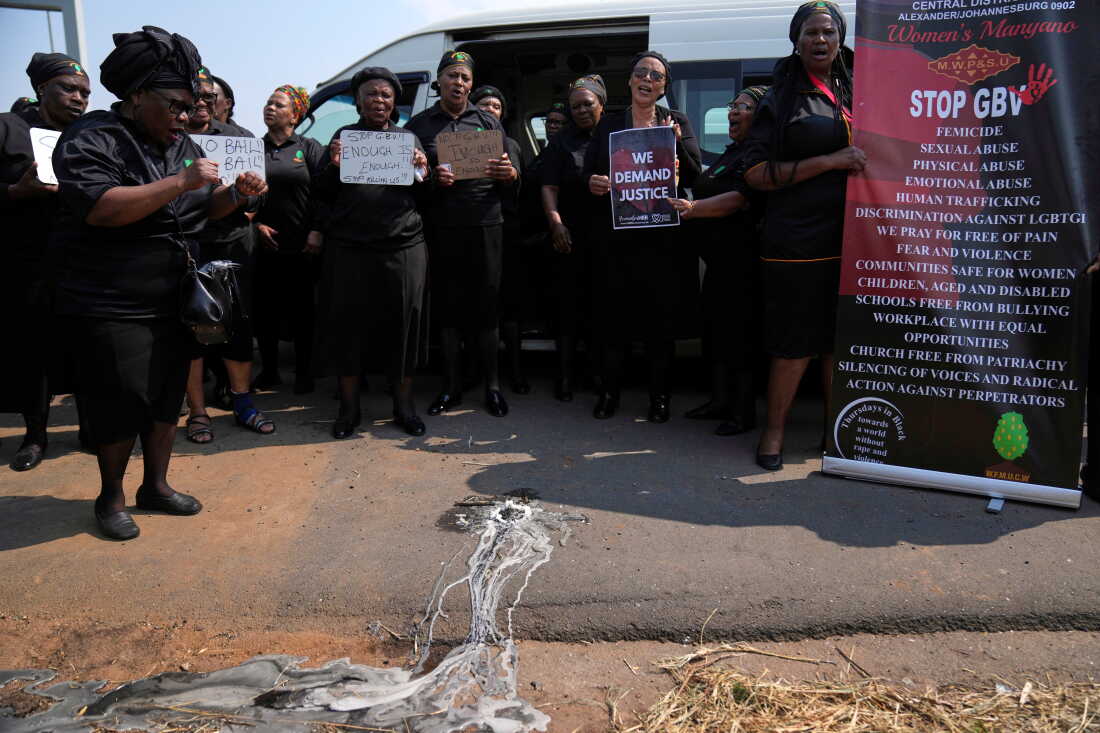
In Kempton Park, South Africa, members of a women’s church group sang beside a melted candle, honoring a woman whose body was found the previous week. Located east of Johannesburg, this community mourns another tragic loss linked to a disturbing trend.
Elizabeth Moselakgomo, a 38-year-old manager, mother, and avid runner, disappeared during her regular jog near Johannesburg airport. Her 8-year-old daughter alerted relatives who then contacted the police. Five days later, Moselakgomo’s half-naked body was discovered. Her face was beaten beyond recognition.
This incident is part of a grim pattern with nine women found slain in the same area within weeks. Most victims faced sexual assault. South Africa struggles with high rates of gender-based violence; statistics indicate over 100 rape cases daily and about 15 women killed each day. These recent murders have intensified fear and outrage.
Police suggest a potential serial killer and have advised women to remain cautious by avoiding solitary walks or runs. However, this advice has prompted criticism on social media, with women asserting that safety is the responsibility of police, not the limitation of their own freedoms.
President Cyril Ramaphosa pledged thorough investigations to bring the perpetrator or perpetrators to justice. Yet, there is widespread discontent regarding governmental efforts. Gender-based violence and femicide were declared national emergencies in 2025, but many feel inadequacies persist in safeguarding women and girls.
Women in South Africa continue to be hunted and denied the most basic right to life and security,said Amnesty International’s South Africa Director Shenilla Mohamed.Women are tired of platitudes. We want to know what is going to be done to make women and children feel safe.
Protests have erupted in Kempton Park and Cape Town, signaling public exasperation. Local running clubs honor Moselakgomo and other victims with memorial runs. Participants dressed in black observed a moment of silence, demonstrating unity across ages and races.
Shari Maluluke, a 26-year-old runner, expressed frustration. Gender-based violence, but particularly femicide, is such a big issue in South Africa. As a woman you can’t do anything alone,
she shared. Many women feel their movements are restricted, evoking a sense of living in a prison.
Other women echoed these sentiments, voicing discomfort with their safety. Precautions like sharing locations and Ubers have become routine. Didi Tsitsi, 31, attributed femicide to several issues, including governmental and policing failures. She believes entrenched societal norms and unresolved apartheid legacies contribute to this crisis.
Academic studies support the notion that apartheid’s oppressive history has fostered a masculinity crisis and strengthened patriarchal attitudes. Such cultural remnants continue to impact society, posing significant challenges to achieving safety and equality.