
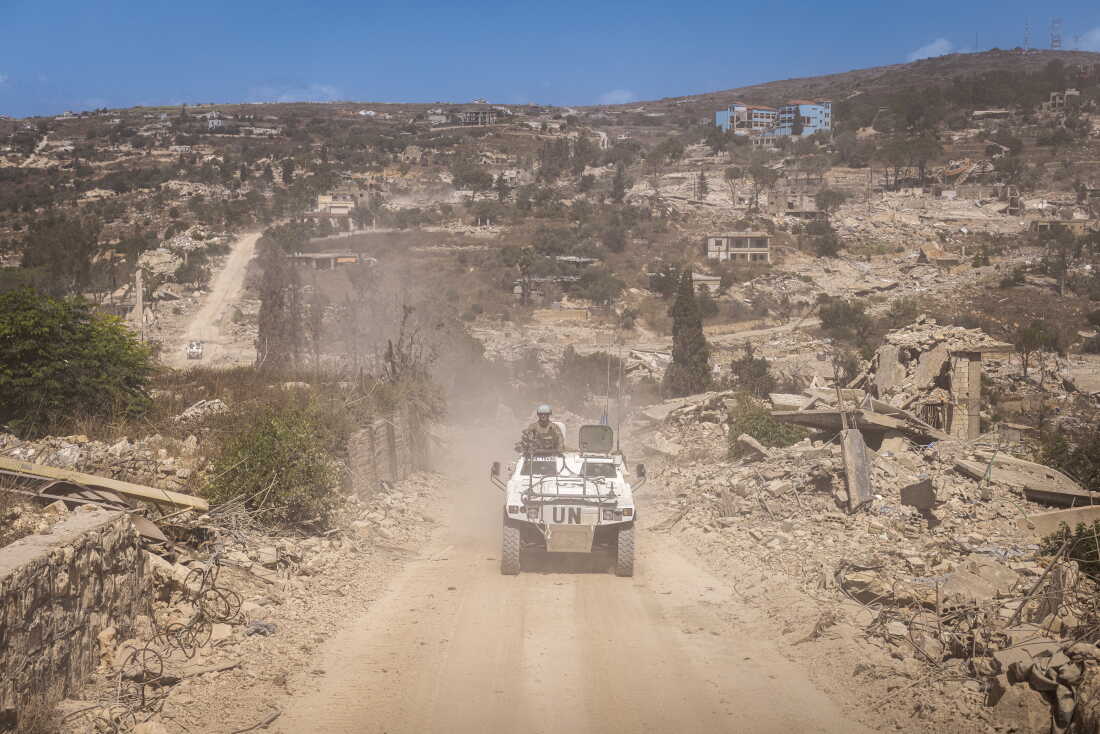
The French UNIFIL peacekeepers conduct operations beyond the ‘yellow line,’ the border established after the occupation by Israeli forces. They patrol through devastated towns like Houla, Kfar Kila, and Odaisseh, beyond a restricted buffer zone created post-ceasefire brokered by the U.S. this year.
The U.N. peacekeepers navigate this area in armored vehicles with caution, not due to terrain or threats, but to relearn a landscape reshaped by war. Since 1978, UNIFIL has been monitoring this region, a task first assigned to oversee Israeli troop withdrawal from Lebanon. The mandate expanded 20 years ago to include ceasefire monitoring between Israel and the Hezbollah faction, arising post the second Israeli invasion.
This year’s end marks the termination of UNIFIL’s nearly 50-year mandate, opposed by U.S. and Israeli interests. The Lebanese conflict remains unresolved despite a recent fragile ceasefire agreement in June, which came after Hezbollah fired rockets at Israel. The Lebanese government states over 4,300 fatalities and the displacement of more than 1.2 million individuals since March. Israel accounts 39 military and civilian casualties from Hezbollah assaults during the same period. Seven U.N. peacekeepers lost their lives.
The ‘blue line,’ set by the U.N. in 2000 following Israeli withdrawal, serves as a de facto boundary between nations, despite never formalizing it. Recent conflicts have blurred these lines, prompting new zones marked by blue barriers. Across these areas, devastation persists—landscapes altered and borders obstructed.
French UNIFIL peacekeepers observe the ‘yellow line’ near towns flattened from conflict, established by Israeli military action. This restricted zone prevents Lebanese civilian access, resurrecting memories of Israel’s 18-year occupation, concluded in 2000.
Kfar Kila’s Fatima Gate, once active, shows signs of past conflict, with graffiti rubbed out. This landmark borders Israel’s Metula and marks a point closed upon Israel’s withdrawal.
Houla, site of a massacre in 1948, now wracked by war-caused damage. Roads deteriorated into crude trails. Homes are rubble, remnants from shelling.
Though boundaries change, humanitarian efforts continue through military cooperation programs aiding vulnerable communities. Spanish peacekeepers run clinics providing essential medication.
Months of imposed restrictions eased as UNIFIL regains movement capability, with access restored following Israeli security withdrawal. This resumption aligns with the U.N. Security Council Resolution 1701 framework adopted post-2006 conflict, addressing security challenges anew.
A Lebanese resident, displaced to Beirut, attempts return amid ruined landscapes, impacting daily life and agricultural practices. Civilians grapple with access limitations amid ongoing conflict.
The Lebanese government voices concerns over restricted agricultural land hindering economic stability. Meanwhile, humanitarian activities, once dormant, now offer limited medical care amidst crises.
The Lebanon-Israel map still shows established lines but fails to denote shifts within ground realities reshaped by ongoing tensions. Southern Lebanon faces continuous airstrike reminders that peace remains elusive.