
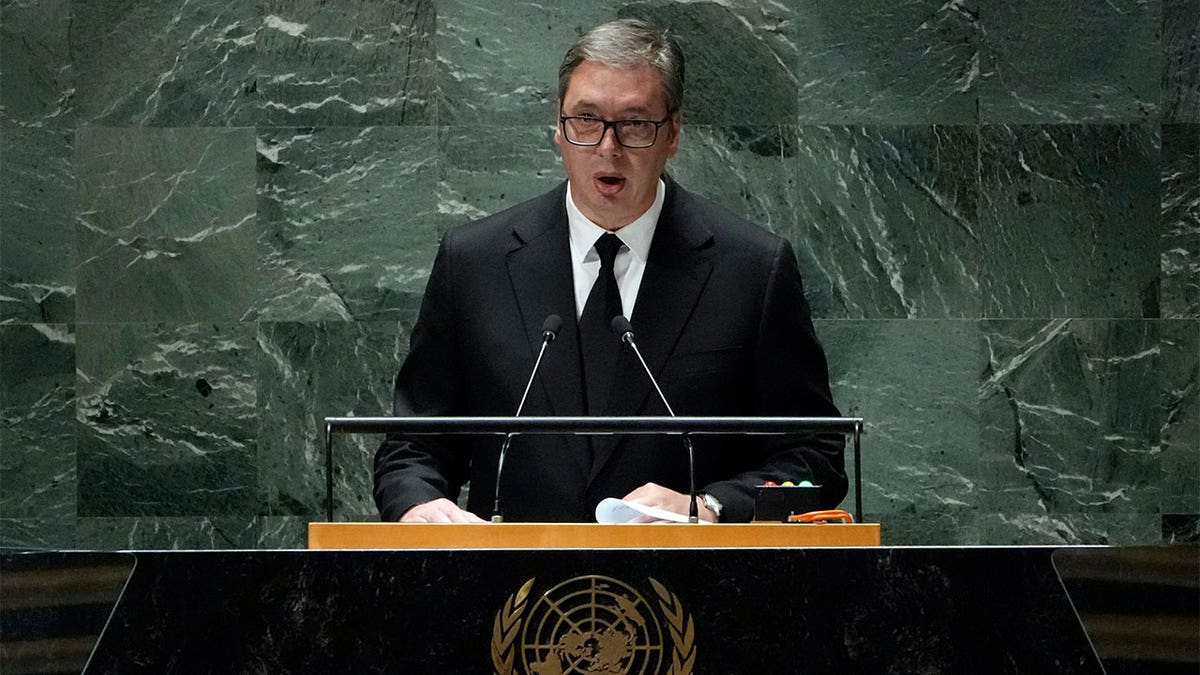
Serbian President Aleksandar Vučić notes a significant shift in Serbia’s relations with the United States under President Donald Trump. This transformation has altered public perceptions in Serbia where the memory of the 1999 NATO bombing remains strong.
In an exclusive discussion with Fox News Digital, Vučić commended Trump’s approach to the Balkans. He highlighted the administration’s emphasis on economic cooperation over political pressure, which resonates with many Serbs. “President Trump and his team have worked diligently on the Western Balkans,” Vučić stated. He added that many Serbs view Trump’s administration differently from prior U.S. governments.
“If you ask people in Serbia to compare Clinton and Trump’s administration, the response would be overwhelming in favor of Trump,” Vučić commented.
This comparison is noteworthy in Serbia where the United States is still associated with the NATO intervention during the Kosovo conflict. This military action, initiated to halt Serbian forces’ operations against ethnic Albanians, was a significant event in Serbian history.
Vučić reported extending an invitation to Trump, predicting an enthusiastic reception. “I hope we can host him,” he said. “Many will be ready to greet him, possibly more than expected.”
The evolving relationship prioritizes economics, investment, and technological partnerships. Both countries aim to start a strategic dialogue focusing on energy, infrastructure, artificial intelligence, defense, and investment potentials. Discussions include energy infrastructure projects, liquefied natural gas cooperation, data centers, and advanced computing technologies.
In an attempt to position itself as a regional economic center, Serbia is also advancing its efforts to join the European Union. Vučić mentioned preparations for Expo 2027 in Belgrade, with nearly 150 countries participating, as evidence of Serbia’s growing international stature.
Vučić, Serbia’s dominant political figure since 2014, attributed the nation’s economic transformation to its significant economic growth. “Our GDP was 32 billion euros when I became prime minister,” Vučić shared. “This year, it will exceed 100 billion euros, or $120 billion.”
Vučić’s relationship with Trump began during Trump’s first term when the White House facilitated economic agreements between Serbia and Kosovo. Emphasizing infrastructure and transportation links over political disputes, these efforts aimed to foster closer ties.
In September 2020, Vučić and then Kosovo Prime Minister Avdullah Hoti signed U.S.-facilitated economic agreements in Washington. These deals aimed to extend rail and highway connections and promote investment. Trump referred to the deal as a breakthrough achieved by emphasizing job creation and economic growth.
Regarding the politically sensitive topic of recognizing Kosovo, Vučić responded cautiously. “I’m not ready to defy our constitution,” he stated, emphasizing economic and political improvements over discussions of political status.
Serbia navigates complex international relations, maintaining ties with both Russia and China, which garners scrutiny. When questioned about choosing a geopolitical side, Vučić dismissed the notion, citing pragmatic diplomacy focused on national interests.
“President Trump visited China to enhance business opportunities for the U.S.,” Vučić noted, emphasizing economic gains over ideological divides.
On foreign conflicts, Vučić advocated for diplomacy over warfare, citing Serbia’s consistent support for Israel amidst Middle Eastern tensions. Vučić highlighted Serbia’s stance against rising antisemitism globally and pledged Serbia’s commitment to resist such trends as long as he remains president.