
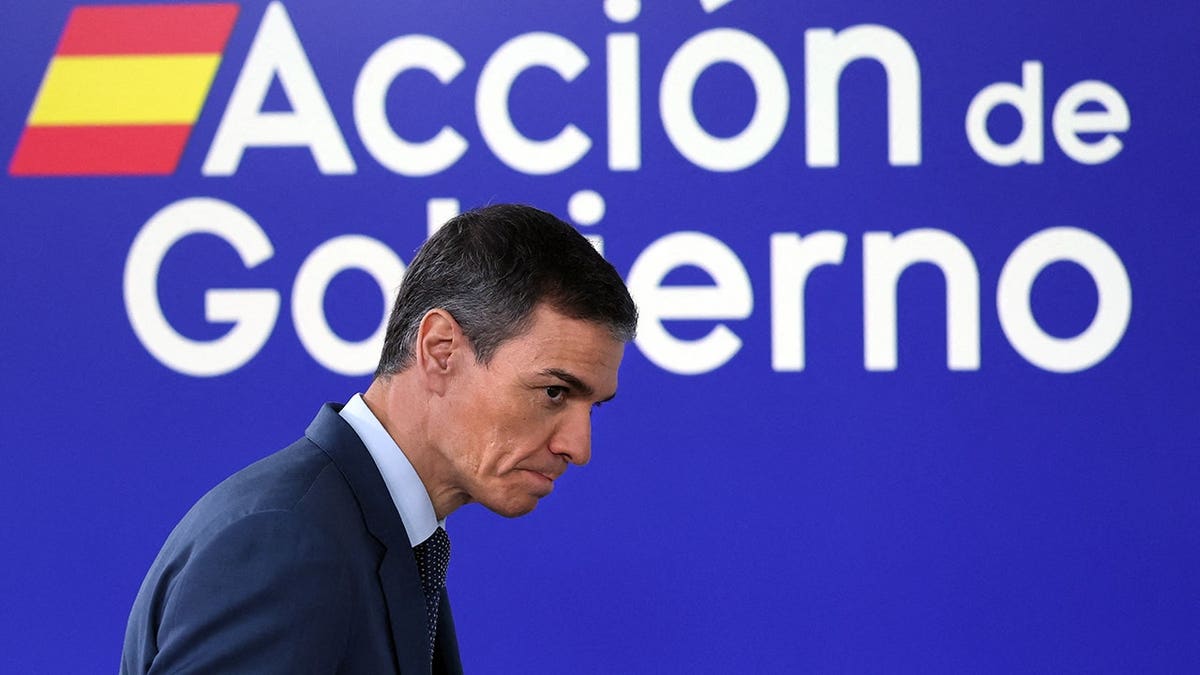
In Ceuta, Spain, Prime Minister Pedro Sánchez deployed military forces to tackle a massive influx of Moroccan migrants. This unexpected surge overwhelmed border crossings and created challenges for local resources. The situation has reignited discussions on immigration enforcement and national security across Europe, as Spain endeavors to restore control and prevent further border crossings.
Prime Minister Sánchez criticized European leaders for their reactions following the incident at the Spanish-Moroccan border. He seemed to address the actions of Italian Prime Minister Giorgia Meloni, who resumed European border controls temporarily, impacting the Schengen Area’s free-travel agreement, which allows for passport-free travel among 29 countries in Europe.
Sánchez argued, “In the current international context, the European Union cannot afford this kind of selfish, polarising and unlawful reaction.”
Sánchez sent a letter to European leaders calling for solidarity instead of division. He highlighted Spain’s efforts to promptly return the majority of the migrants to Morocco. Sánchez noted that around 50,000 to 60,000 migrants initially crossed the border, yet most were quickly returned.
In responding to the situation, Sánchez pointed out that several European governments offered support and assistance, whereas others called for Spain’s temporary exclusion from the Schengen Area. He criticized these actions, asserting that they oppose European law and humanitarian principles. According to Frontex, Spain maintains one of the less porous external borders in the European Union.
Prime Minister Sánchez also called for a formal meeting with the interior ministers of EU countries. His letter was addressed to European Commission President Ursula von der Leyen, European Council President António Costa, and Irish Prime Minister Micheál Martin. Under Ireland’s EU presidency, a meeting will be organized to discuss the ongoing crisis.
The mass migrant movement in Ceuta, an enclave sharing a land boundary with Morocco, led to worldwide reactions, including a statement from President Donald Trump. Prime Minister Giorgia Meloni of Italy emphasized the urgency of addressing illegal immigration in Europe through a letter signed by 22 EU countries. Meloni advocated for strengthened borders and effective anti-trafficking measures.
Irish Justice Minister Jim O’Callaghan announced an EU Justice and Home Affairs Council meeting in response to the crisis. Spanish authority figures estimated that at least 50,000 people crossed over from Morocco into Ceuta, leading to a rapid expulsion process.
Juan Jesús Vivas, the President of Ceuta, stated that around 70% of Ceuta’s population crossed over from Morocco during the incident.
European Commission President von der Leyen explained that none of these migrants had reached the European mainland. A significant number returned to Morocco following coordinated efforts by Spanish and Moroccan law enforcement.
In response to the incident, Spain announced plans to install a 500-meter-long sea barrier to deter future unauthorized migrations. Tragically, 67 individuals lost their lives during the border rush.
Efforts to contact the offices of the Spanish, Italian, and Irish prime ministers, along with the European Commissioner’s office, were made for additional comments on the issue.