
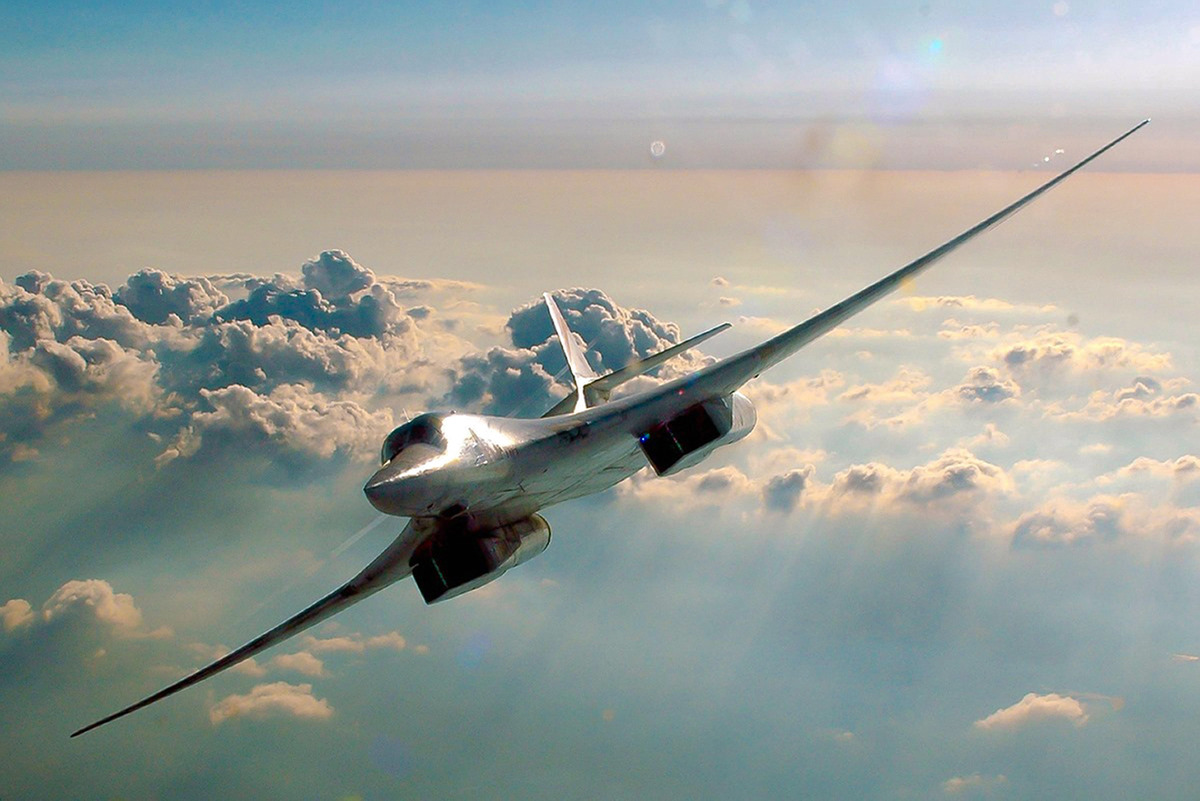
Two NATO fighter jets recently monitored Russian bombers equipped for long-range nuclear missions during a so-called scheduled training flight in the Arctic. Moscow’s defense ministry confirmed this flight, emphasizing that the bombers did not breach any international airspace boundaries. The presence of Russian nuclear-capable bombers near NATO territory often serves as a method of intimidation, especially in the Arctic, a region where NATO is wary of growing Russian and Chinese influence.
Russian defense announced that they dispatched several Tu-160 supersonic bombers for practice flights over the Barents and Norwegian Seas. These strategic bombers journeyed alongside Russian MiG-31 fighter jets on the 16-hour flight. According to the Russian government, certain legs of the flight saw foreign fighter escorts, yet they withheld additional details.
A senior NATO military official reported that two Norwegian F-35s responded. Videos from Russian sources appear to show at least one F-35 near the Russian aircraft. Norway, a NATO member with over 50 F-35s, has some stationed at Evenes Air Station, which oversees the Norwegian and Barents Seas. The nation shares approximately 120 miles of border with Russia, with its territory lying west of strategic Russian military hubs like Murmansk and Severomorsk. These cities are crucial for housing Russia’s strategic nuclear submarines.
Norway maintains a ‘quick reaction alert’ system with F-35s on standby to respond to unknown aircraft. The Norwegian military records about 40 such alerts yearly for NATO, with the jets airborne in under 15 minutes when needed. F-35s, American-made fifth-generation jets, represent the current pinnacle of fighter jet technology. The emerging sixth-generation jets promise advances in radar avoidance, system updates, and drone integration, though these remain under development.
Roughly one-third of NATO nations have purchased or ordered these F-35s. As Arctic ice melts, opening new routes for military and civilian use, the region faces increased geopolitical attention. Among the eight Arctic nations, most hold NATO membership, yet Russia maintains a dominant presence. Accustomed to operating in this challenging region, Russia has invested in city development above the Arctic Circle and reopened former Soviet sites while constructing new installations. Meanwhile, China views itself as a ‘near Arctic’ state, adding further complexity to the geopolitical dynamics.