
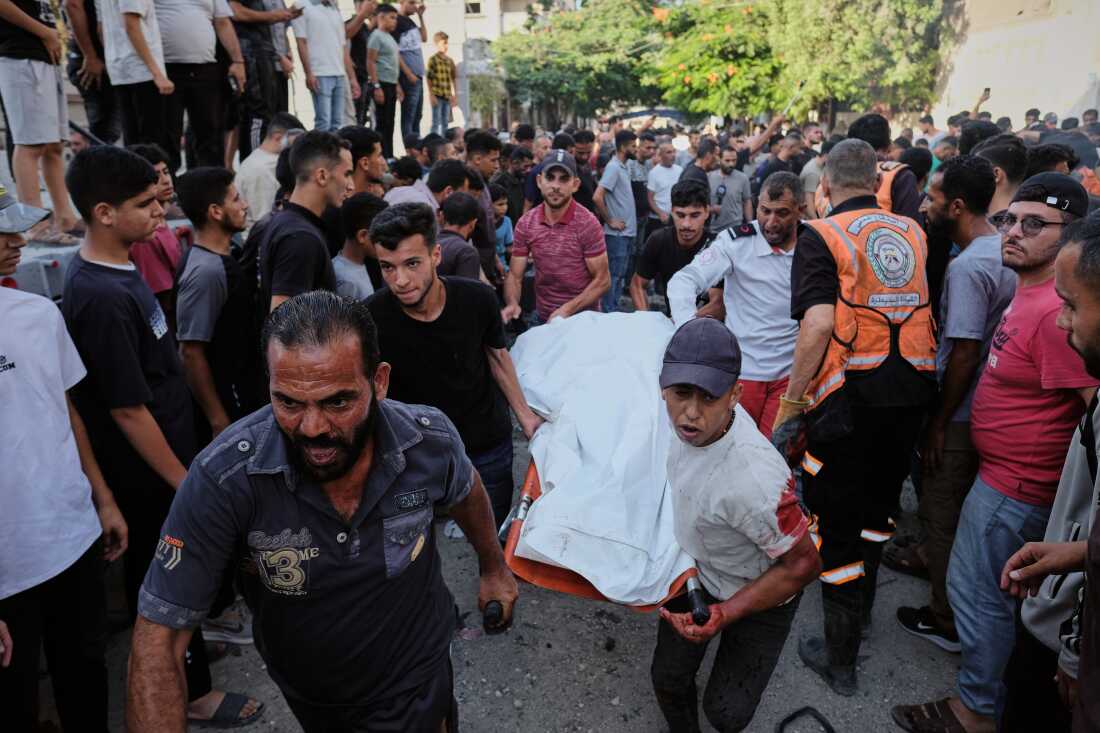
TEL AVIV, Israel — Israel recently expressed serious security concerns to the White House about a proposed disarmament deal with Hamas. On Sunday, Israeli military strikes in Gaza resulted in the deaths of at least 17 people, including children. Doron Spielman, spokesperson for Israeli Prime Minister Benjamin Netanyahu, conveyed these concerns following the announcement of the agreement by U.S. President Donald Trump.
According to Spielman, Israel believes Hamas is more focused on rebuilding its military than disarming. “Our assessment is that if we redeploy before Hamas is truly disarmed, it will quickly expand throughout Gaza, rebuild its terrorist infrastructure, and once again threaten Israeli communities,” said Spielman. He referred to an attack by Hamas on Israel in 2023 that triggered the current conflict.
Spielman’s comments come after Hamas announced it would begin disarming as per a U.S.-brokered ceasefire agreement signed nine months ago. This deal is considered a potential breakthrough in ending a nearly three-year-long conflict, but many hurdles remain. Trump’s ceasefire plan involves Hamas surrendering its weapons and destroying its tunnel network. It also calls for Israeli forces to withdraw from Gaza, the establishment of a new Palestinian government, an international security force, and the rebuilding of Gaza.
The deal has faced obstacles, particularly regarding Hamas disarming. Trump described the plan’s implementation as occurring in “carefully structured phases.” A verified copy of the agreement states that weapons held by Hamas-run police will be transferred to a U.S.-backed Palestinian committee upon its arrival. However, the exact timeline for this remains uncertain.
After the Palestinian committee and international forces arrive, decommissioning and storage of heavy weapons will commence. The process ties with a phased Israeli withdrawal. Areas under Israeli control in Gaza have seen significant destruction and depopulation. Most of Gaza’s 2 million Palestinians reside in other areas, many in tent camps or destroyed neighborhoods.
Israel seems unlikely to withdraw significant forces soon, particularly with October elections approaching. Prime Minister Netanyahu faces reelection challenges, with his far-right coalition urging continued pressure on Hamas. Meanwhile, opponents blame him for not preventing the 2023 Hamas attack that killed around 1,200 Israelis and led to hostages being taken.
More than 73,000 people have died since the conflict began, according to the Gaza Health Ministry. U.N. agencies and international organizations consider the ministry’s records generally reliable, though it doesn’t distinguish between civilians and militants. Women and children reportedly account for about half of the fatalities.
While Spielman appreciated Trump’s commitment to Israel’s security, he emphasized concerns about Hamas arming and recruiting fighters. The White House did not comment further on Israel’s assessment. However, U.S. officials confirmed Israel was consulted at each negotiation stage.
Two individuals familiar with the deal mentioned Israel communicated its concerns to Tony Blair, part of the Trump-led Board of Peace. Among Israel’s demands were the continuity of military operations in Gaza and exclusion of Qatar and Turkey from verifying the agreement’s stages.
Despite the ceasefire, Israel continues striking Gaza targeting Hamas infrastructure. At least 17 were killed in recent strikes, with reports of civilian victims, including a family with a 4-year-old child, according to local hospitals. The Israeli military insisted its operations targeted militant operatives.