
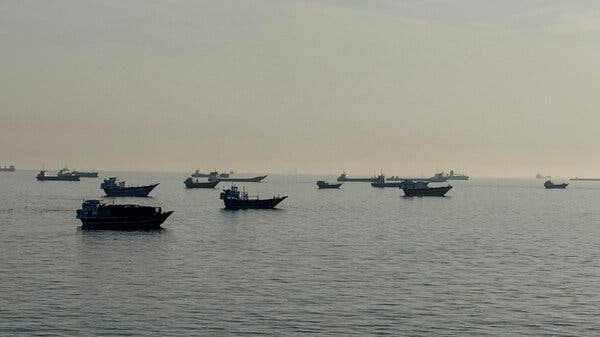
The U.S. military conducted a missile strike on Wednesday targeting Iranian cruise missile storage and launch sites on Greater Tunb. This island lies in the strategically significant Strait of Hormuz, an area marked by a long-standing territorial dispute.
Historically significant for Iran, Greater Tunb is a crucial point for monitoring and controlling shipping through the Persian Gulf. The island, along with Lesser Tunb and Abu Musa, was seized by Iran from the United Arab Emirates in 1971. Since then, these islands have been a source of contention between the two nations.
Iran has fortified Greater Tunb with drones, anti-ship missiles, and speedboats, furthering its strategic worth. Despite efforts by the U.A.E. to resolve their claim over the islands through negotiations and appeals to the International Court of Justice, the dispute remains unresolved.
The U.A.E. maintains that these islands historically belonged to the Qasimi tribe, who are among the founding rulers of the Emirates formed in 1971. The Emirates label the islands as ‘occupied’ and continue to assert territorial claims based on this historical context.
Iran’s control over Greater Tunb is reinforced by the Islamic Revolutionary Guards Corps presence on the island. Reports from 2023 indicated Iran’s initiatives to populate the islands and conduct military drills aimed at solidifying their hold.
The U.S. strike is part of a series of military actions targeting islands in the Gulf during conflicts with Iran. Such strategies build on previous threats from President Trump regarding other Iranian-controlled areas like Kharg Island, a major oil terminal. U.S. operations in this region would require navigation through the geostrategically critical yet risky waters of the Persian Gulf.
This report is provided by Zane Irwin, an international journalist participating in the 2026-27 Times Fellowship program designed to support journalists early in their careers.