
Introduction
President Donald Trump’s intensified economic campaign against Iran is not the only geopolitical complication the United States faces. A new and challenging rift has arisen between Israel and Turkey, adding complexity to the ongoing tensions in the Middle East.
Developments in the Israel-Turkey Situation
Recently, Israel carried out strikes on a Syrian airbase shortly after a Turkish defense delegation’s visit, accusing Syria of breaching security arrangements by welcoming Turkish military presence. Turkey vehemently opposed the strikes, claiming a violation of Syria’s sovereignty and calling for Israeli Prime Minister Netanyahu’s arrest on severe charges.
The exchange of sharp rhetoric continued as Israeli Prime Minister Netanyahu’s office labeled Turkish President Erdogan as an ‘antisemitic dictator’. The Turkish president’s office responded by criticizing Netanyahu’s political maneuvers and his depiction of Turkey as a potential threat.
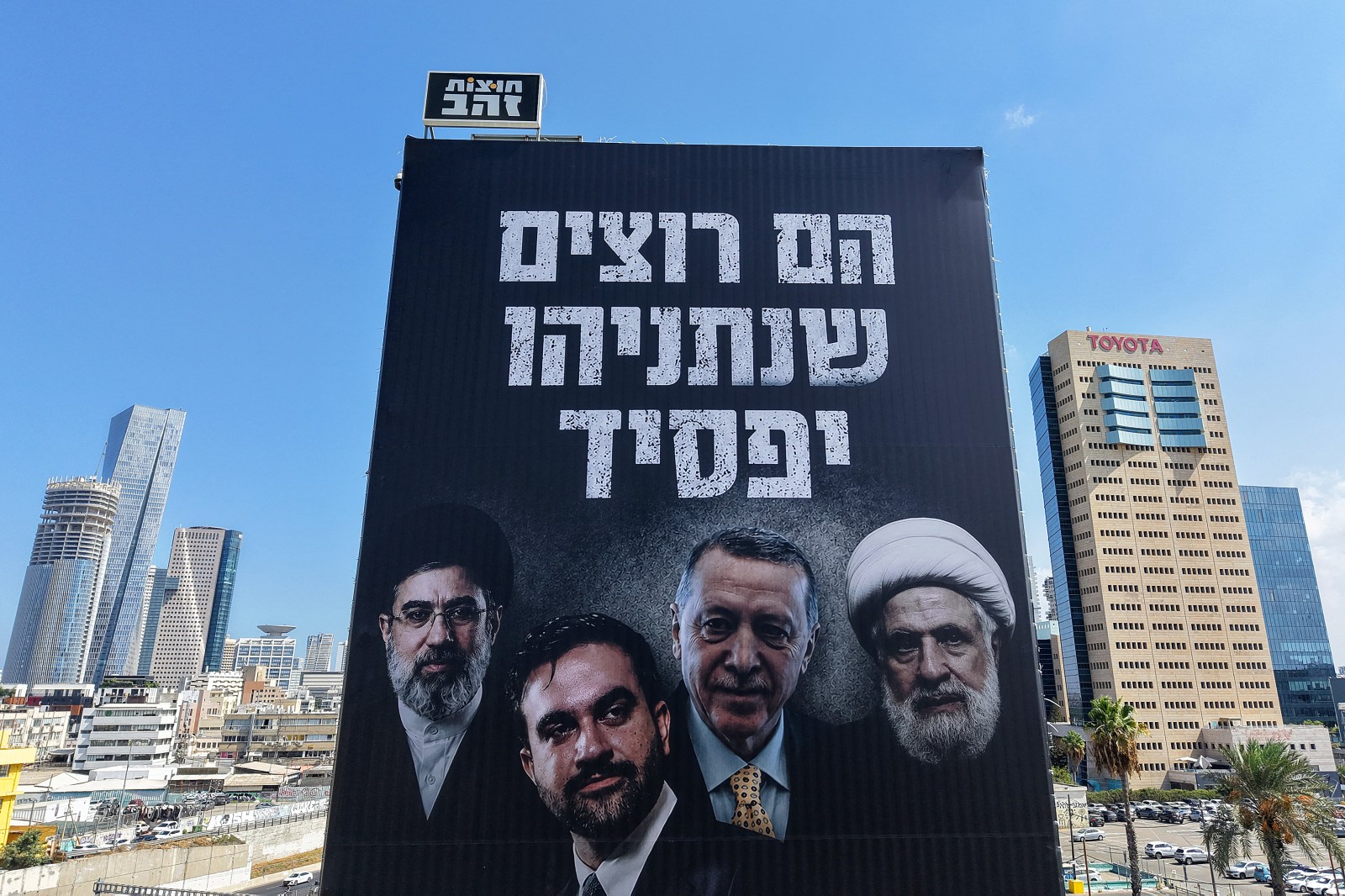
The backdrop of these hostilities includes an upcoming Israeli election, where controversial billboards in Tel Aviv feature images aligning various leaders against Netanyahu’s political future.
Analysts’ Perspectives
Ismail Numan Telci, a director at Ibn Haldun University’s Center for Gulf Studies in Istanbul, noted that a direct military clash between Israel and Turkey seems unlikely but should not be completely dismissed. The tense circumstances in Syria, rife with various actors and political agendas, makes this situation unpredictable.
Historical Context and the Rivalry’s Roots
Despite a history of fluctuating relations, Turkey was the first Muslim country to recognize Israel in 1949. During the Cold War, Turkey was aligned with the West and joined NATO, while supporting Palestinian self-determination. Relations soured beginning in 2009 after tensions in Gaza, despite initial attempts at positive engagement when Erdogan assumed power.
Recent harsh exchanges emerged following Hamas’ attack on Israel in October 2023, which led to further conflict in Gaza. Criticism has been voiced by Israeli officials against Erdogan for his supportive stance towards Palestinian activism against Israel.
Complex Relations in Syria
Syria serves as a volatile stage in this feud. Both Erdogan and Netanyahu once opposed the leadership of former Syrian President Bashar al-Assad. However, the new leadership under President Ahmad al-Sharaa aligns more closely with Turkey, while provoking direct intervention from Israel.
Telci pointed out that Turkey might take measures ranging from fortifying its presence alongside Damascus to strengthening its air defense along the Syrian border. Despite firm rhetoric, Turkey’s attitude is about restraint rather than weakness.
Shifts in U.S.-Turkey Relations
Erdogan is not the only leader showing support for Sharaa’s leadership in Syria. Trump has praised Erdogan’s role in laying the groundwork for a new relationship between Washington and Damascus. Meetings between Trump and Sharaa have led to deepened cooperation and the reduction of U.S. sanctions.
However, Trump’s enthusiasm for Erdogan and Sharaa has frustrated Netanyahu, who portrays Syria as subject to a Turkish expansionist agenda. This U.S. support becomes a concern as Israel faces intensified issues with both Turkish-backed Syrian initiatives and Iran-linked conflicts in the region.
Broader Implications and Strategic Divergence
Turkey’s alignment with Saudi Arabia and Pakistan through defense pacts signifies regional shifts. Trump welcomed these developments, indicating optimism for a more cohesive regional defense. Yet, Israel’s approach remains cautious, fostering partnerships with Greece, Cyprus, and other regions concerned about Turkey’s ambitions.
This landscape suggests competing visions for regional order; while one perspective focuses on Sunni alliances potentially challenging Israel, another through Trump’s administration sees Erdogan as a stabilizing partner. This divergence in strategy could significantly impact regional geopolitics based on how these new alliances evolve.
Potential for Conflict and Avoidance Strategies
Conflict risks between Israel and Turkey are significant, stemming from Israel’s proactive measures against perceived threats beyond its borders. Rich Outzen, a former adviser to the State Department, outlined increasing risks due to Israel’s widespread preemptive strikes. These strategies clash with Turkey’s attempts at stabilizing and economically supporting countries like Syria and Iraq.
To circumvent potential conflict, diplomacy and mediation have been suggested, including a communication channel to manage crisis situations. However, changing political sentiments in the U.S. might impede direct intervention in Middle Eastern affairs, provoking possible formation of antagonistic alliances.