
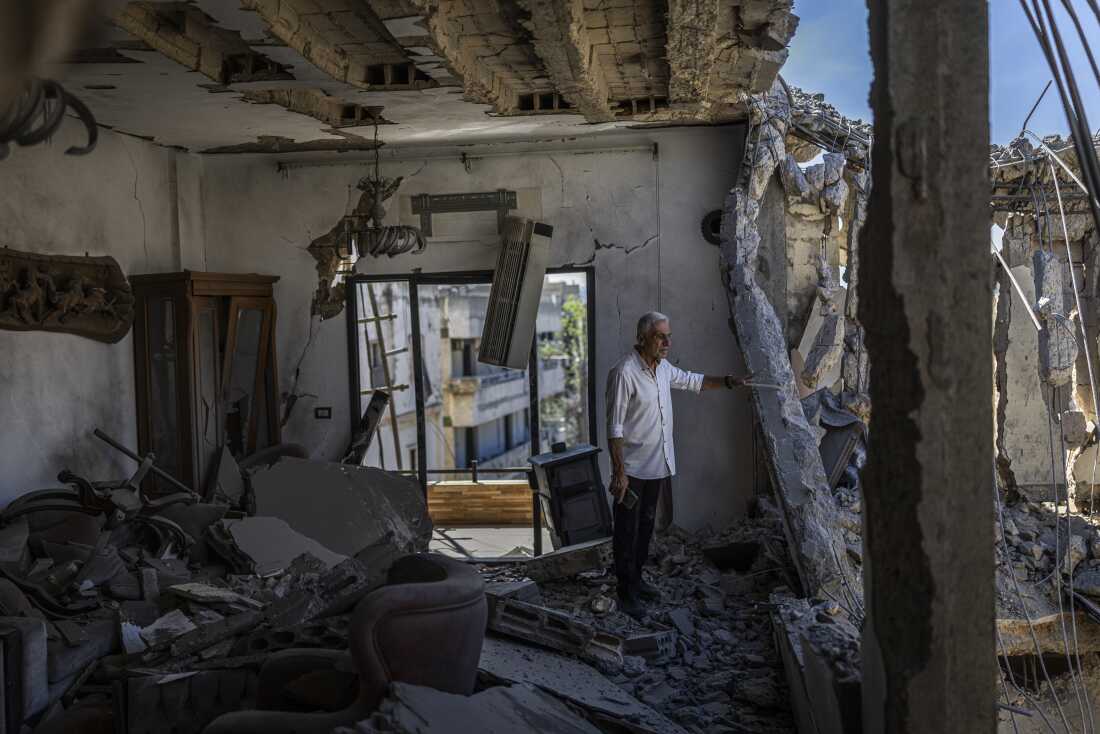
Nabatiyeh, Lebanon: Past shattered glass, Najib Ayyad surveys his devastated apartment, contemplating its likely demolition. His home overlooks Beaufort Castle, an iconic landmark now occupied by Israeli forces.
You see the castle?
, Ayyad asks, indicating Beaufort. Seized in May, the castle marks Israel’s extended reach beyond its claimed southern Lebanon security zone. They can see us clearly from there
, affirms Ayyad. Despite the apartment’s damage, he wouldn’t stay due to the conditions.
During a June visit, smoke from Israeli artillery shrouds Nabatiyeh, a key southern hub. Drones above accompany the optimistic rebuilding efforts.
Ayyad, employed by a parliamentary office, visits to reclaim possessions. Previously, he’d commute to Sidon’s parliament office from Nabatiyeh. With financial constraints, he resides with his daughter in Beirut.
The apartment remains challenging to access, with concrete debris blocking the entrance. Rubble and broken glass fill the stairway. Israeli air strikes have destroyed the city’s electricity.
On the third floor, light filters through jagged window frames onto shattered furniture piles. Outside, most homes are ruined or substantially damaged.
An elegant villa behind metal gates seems undamaged from the front yet bears severe back damage.
The City’s Historical Significance
Nabatiyeh, an administrative hub for Hezbollah, faces Israeli attacks purportedly targeting the group’s infrastructure. However, as Hezbollah fulfills roles of political leadership and social service provision, the devastation largely affects civilians.
Lebanese health officials report over 4,200 fatalities since the war’s onset on March 2, with one-fifth being women or children.
Israeli accounts list 37 soldiers, one military contractor, and two civilian deaths due to Hezbollah’s offensives.
Nabatiyeh once thrived as a market on routes linking Jerusalem, Damascus, and Mecca, later flourishing under Ottoman rule.
Israeli forces occupied the city in 1982 for three years, contributing to the city’s storied history.
The market, renowned for its red-tiled roofs and stone arches, once offered diverse goods but lies largely in ruins today.
We advise people to delay their return
, states Mayor Abbas Fakhreddin, citing security concerns and essential shortages.
He suggests Israeli intentions may include stifling the city’s commerce to hinder its recovery.
Demolition and Displacement
Israeli Defense Minister Israel Katz disclosed in July the demolition of over 15,000 homes in border villages, ostensibly to preclude resident returns.
Israel designates these zones as buffers to deter Hezbollah’s potential aggression.
Nearby Nabatiyeh’s covered market, Hanan Hamadi’s small shop exemplifies resilience and determination amidst adversity.
Returning from refuge in Beirut, she re-opened her shop post-damage cleanup.
A plastic sheet serves as a door replacement; residents express optimism in small ways, like stocking birthday candles.
Dismal reminders persist—bodies remain beneath the rubble, like those of the Basma family lost to March airstrikes.
Hamadi remembers the Basma family’s four children who animated their neighborhood. Now, they’re all I can think about,
she shares.
She reflects on past coffee moments shared with the mother, lamenting the family’s tragic absence.
Investigations reveal no military targets near the strike that claimed their lives, prompting Amnesty International’s war crime allegations against the attack.
Israel maintains it mitigates civilian risks but lacks transparency on its investigative progress.
Endurance Strained by Conflict
Hamadi reveals long-standing resilience despite ongoing conflicts. Earlier, we could withstand strikes. This time, we couldn’t,
she admits.
She perceives indiscriminate violence from Israeli forces.
During this war, civilians become collateral damage.
The persistence through devastation faces limits with human endurance tested to its brink.
Unlike others, we’re highly resilient,
Hamadi says, acknowledging the fatigue accompanying this resilience.
First Responders Confront Challenges
On Nabatiyeh’s outskirts, a first responders’ center serves as a haven for individuals bonded by shared peril.
Amid jokes and coffee, black smoke trails signal distant artillery strikes. Volunteers prepare aid for local families.
Israeli strikes claimed at least 130 Lebanese first responders, including three from Nabatiyeh Emergency Medical Services.
Among casualties, Jude Sleiman died while delivering aid; his youth and uniform symbolize the unit’s dedication.
Ali Rida, a software developer turned paramedic, shares aspirations yet remains committed locally. Whenever the country needs us, we’re there,
he affirms.
This war claims civilian lives unlike any before,
laments Mohammad Sleiman, the service commander.
Responders have fallen victim to follow-up strikes targeting the wounded.
Sleiman recalls Nabatiyeh’s past vibrancy; now, responders forego familial visits, remaining vigilant amid strikes.