
Two days after a new ceasefire announcement between Israel and Hezbollah, Yulia Bar-Dan stood outside her temporary residence in Kibbutz Manara, northern Israel, while the sound of an interceptor was heard overhead. ‘There will probably be another siren soon,’ Bar-Dan told Fox News Digital.
Shortly after, an alert prompted residents in northern Israel to seek shelter. This reflects the ongoing reality on Israel’s northern border, two years after Hezbollah joined the conflict against Israel in October 2023.
Persistent Threats and Diplomatic Efforts
After Hezbollah entered the conflict in support of Iran, the U.S. engaged in diplomatic initiatives to extend the ceasefire to broader negotiations involving Lebanon. Despite these efforts, Israeli communities like Manara continue to face rockets and drones.
‘A ceasefire is supposed to be on both sides,’ Bar-Dan observed. ‘Not while Hezbollah continues to attack us.’
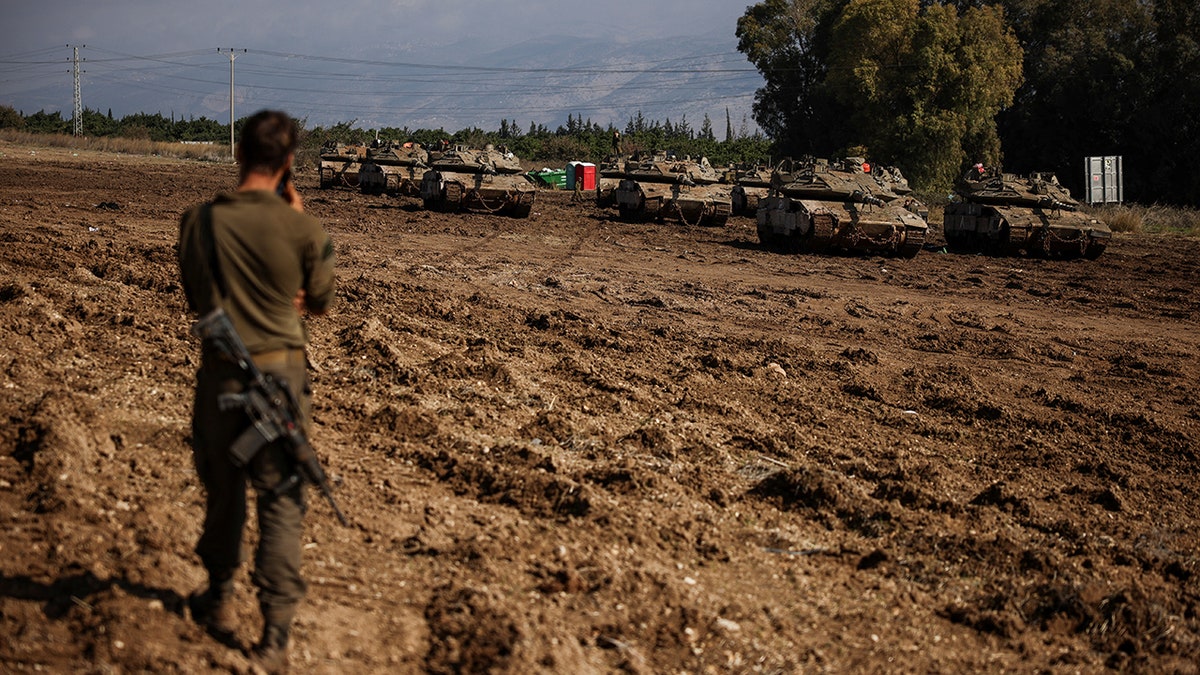
In late November, an Israeli soldier was seen near military vehicles during a ceasefire between Israel and Hezbollah. Bar-Dan had fled with her family during the war and lived in a hotel room. She mentioned that about 200 out of 280 residents had returned, but many, including her family, were unable to reside in original homes due to war damage.
Struggles with Normalcy
Despite ceasefire declarations, life remains unstable. ‘Since February, there hasn’t been a routine or quiet day,’ she stated. Schools reopened in June, but Bar-Dan fears for her children’s safety.
‘They take the bus to school. What if there’s a siren on the way? I can’t take that chance.’
Bar-Dan expressed frustration with political discourse: ‘Decisions need to match reality.’
Yochai Wolfin, a community leader, noted that residents termed the ongoing situation as ‘the ceasefire war.’
Community Challenges and Concerns
Children study in shelters, and parts of the kibbutz remain unprotected. Contractors hesitate to work near the border, leading to unfinished projects. Decision-making feels detached from community realities.
‘Who knows what tomorrow will bring?’ Wolfin remarked. The framework set up by Washington for peace has not resulted in significant ground changes.
Hezbollah’s Secretary-General Naim Qassem condemned the peace framework, further heightening border tensions.
Living with Uncertainty
In Manara, residents fear that temporary emergency measures may become permanent. Naor Shamia explained, ‘The fear is that this becomes years. We are in a deadlock.’
Adamit resident Yael Cohen-Arazi described the dissonance between the surrounding beauty and the threat. ‘Every morning feels like paradise,’ she shared, ‘then there are explosions.’
Her children are unfamiliar with normalcy. ‘I tell them there are children who don’t live like this,’ Cohen-Arazi said.
Back in Manara, another alert interrupted daily life. Bar-Dan expressed sadness rather than anger. ‘I feel bad for the soldiers. There is still no solution,’ she said, declaring her resolve to stay. ‘This is our home. Someone has to live on the borders of this country.’