
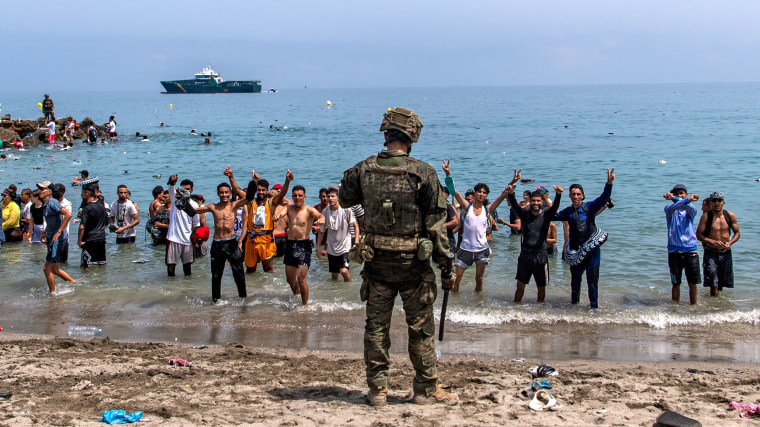
Ceuta’s Recent Migration Surge
Spanish Prime Minister Pedro Sanchez revealed signs of disinformation campaigns over Spain’s migration policy, indicating Russian and Israeli involvement, without evidence tying Morocco to the situation. Between July 30 and 31, over 72,000 migrants crossed irregularly from Morocco into Ceuta. This surge, occurring at one of the EU’s two land borders with Africa, raised alarms across Europe. Local authorities reported at least 100 fatalities during the crossing.
Disinformation’s Impact
Opposition parties and human rights groups accused Morocco of permitting the mass crossing, a claim Morocco rejected. Sanchez dismissed Moroccan involvement entirely during his interview with radio station SER. Misleading videos on social media platforms like Instagram and TikTok propagated claims that migrants arriving in Ceuta could stay in Spain, enticing thousands to attempt the perilous crossing.
External Influence and Criticism
The EU’s diplomatic service, EEAS, suggested Russian and Israeli networks, alongside far-right networks, played roles in spreading disinformation. Sanchez noted these countries exploited the crisis to disapprove Madrid’s stance on the conflicts in Ukraine and Gaza, though he did not provide specifics on the evidence.
Responses to Ceuta’s Situation
The tension in Ceuta persists, with approximately 5,000 migrants, including asylum seekers, remaining there after the rush. This situation has led to routine protests by locals, criticizing the Spanish government’s handling of the crisis. Additionally, there have been sporadic attacks on a temporary migrant facility at El Trampolin beach.
Recent Incidents and Economic Measures
Police arrested three Moroccan individuals for throwing bottles filled with corrosive liquid against an army patrol. Fortunately, no injuries occurred during this attack, as reported by the EFE news agency. Responding to economic concerns, Sanchez announced a deployment of an extra €168 million in emergency funds to reinvigorate Ceuta’s economy, which equals 8% of the enclave’s GDP. This is in addition to €180 million allocated for medium-term recovery plans.