
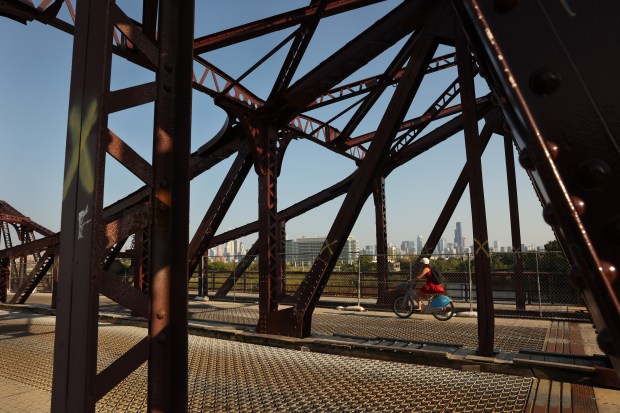
The Cortland Street Bridge in Chicago has been closed to vehicles for over a year, causing significant traffic issues for North Side residents. The bridge, 124 years old, is Chicago’s oldest trunnion bascule bridge and a protected city landmark. It was closed by the Chicago Department of Transportation (CDOT) for an 18- to 24-month rehabilitation project but now faces an indefinite shutdown.
Two Chicago aldermen have expressed interest in revoking the bridge’s landmark status to expedite the construction of a new bridge. Alderman Brian Hopkins described CDOT’s handling of the situation as inadequate, emphasizing the need to facilitate transportation for residents. Alderman Scott Waguespack cited public frustration, noting constituents frequently voice complaints about the ongoing situation.
Compounding the issue, two other bridges in Chicago are also closed, prompting the city council to require CDOT to notify members of closures lasting more than a month. Resident anger grows as alternate routes cause extended commutes.
However, preservationists argue the bridge is a critical piece of Chicago’s historic identity. Organizations like Landmarks Illinois emphasize the need to protect Chicago’s architectural heritage, which includes its bridges.
CDOT’s assessment of the Cortland Street Bridge revealed severe structural degradation, necessitating more extensive repairs. Options considered include replacing the historic bridge entirely, although preservation advocates caution against undermining landmark protections.
Federal and state historical reviews also complicate the process, even in the event of landmark status removal. Such reviews are required for all bridges eligible for the National Register for Historic Places.
Over the past year, CDOT has completed various stabilization tasks on the bridge, but the timeline for full repairs or replacement remains uncertain. Even while residents like Sean Smith describe daily inconveniences, CDOT argues simultaneous bridge closures are unavoidable due to their complexity.
The Cortland Street Bridge remains open for pedestrians and cyclists, but discussions on vehicle traffic solutions are ongoing. Local residents like Emily Marzonie hope for a solution that preserves the historical essence of Chicago while addressing traffic concerns.