
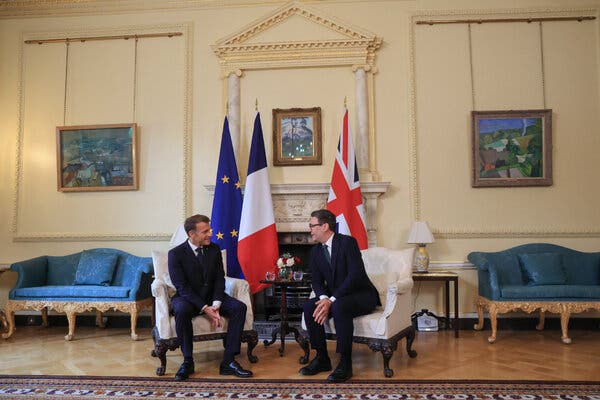
Britain once followed France’s lead in pressuring Israel, but now takes an assertive role under new leadership. Prime Minister Andy Burnham recently met with France’s President Emmanuel Macron to discuss their united stance against Israeli settlements. The meeting highlighted Britain’s shift from being influenced by France to spearheading opposition.
Last September, Britain declared its recognition of a Palestinian state, a move following France’s symbolic decision months earlier. Now, nearly a year later, Britain acted decisively. It announced the cessation of trade with Jewish settlements in the West Bank, an action imitated by France and Canada. This decision included serious accusations against some settlers, labeling their actions as “ethnic cleansing” of Palestinians.
This new diplomatic action reflects internal politics within these countries. In France, President Macron seeks legacy accomplishments as his term nears its end. Meanwhile, Prime Minister Burnham, facing pressure from Labour Party members concerned about the situation in Gaza, seeks to address their discontent by taking stronger measures against Israeli policies.
The joint European pressure presents a significant challenge to Israel, distancing it from its past European allies such as Britain and France. The potential economic repercussions could be substantial, moving beyond symbolic gestures. Analysts, like former U.S. ambassador to Israel Daniel C. Kurtzer, note that previously discussed measures like boycotting settlement goods or imposing different customs duties have seen little action.
Kurtzer emphasized, “Clearly labeling goods from settlements as separate from ‘Made in Israel’ has not gained traction.”
Kurtzer, now a professor at Princeton, believes that these recent moves could deliver a severe economic impact on the settlements and any Israeli government supportive of them.