
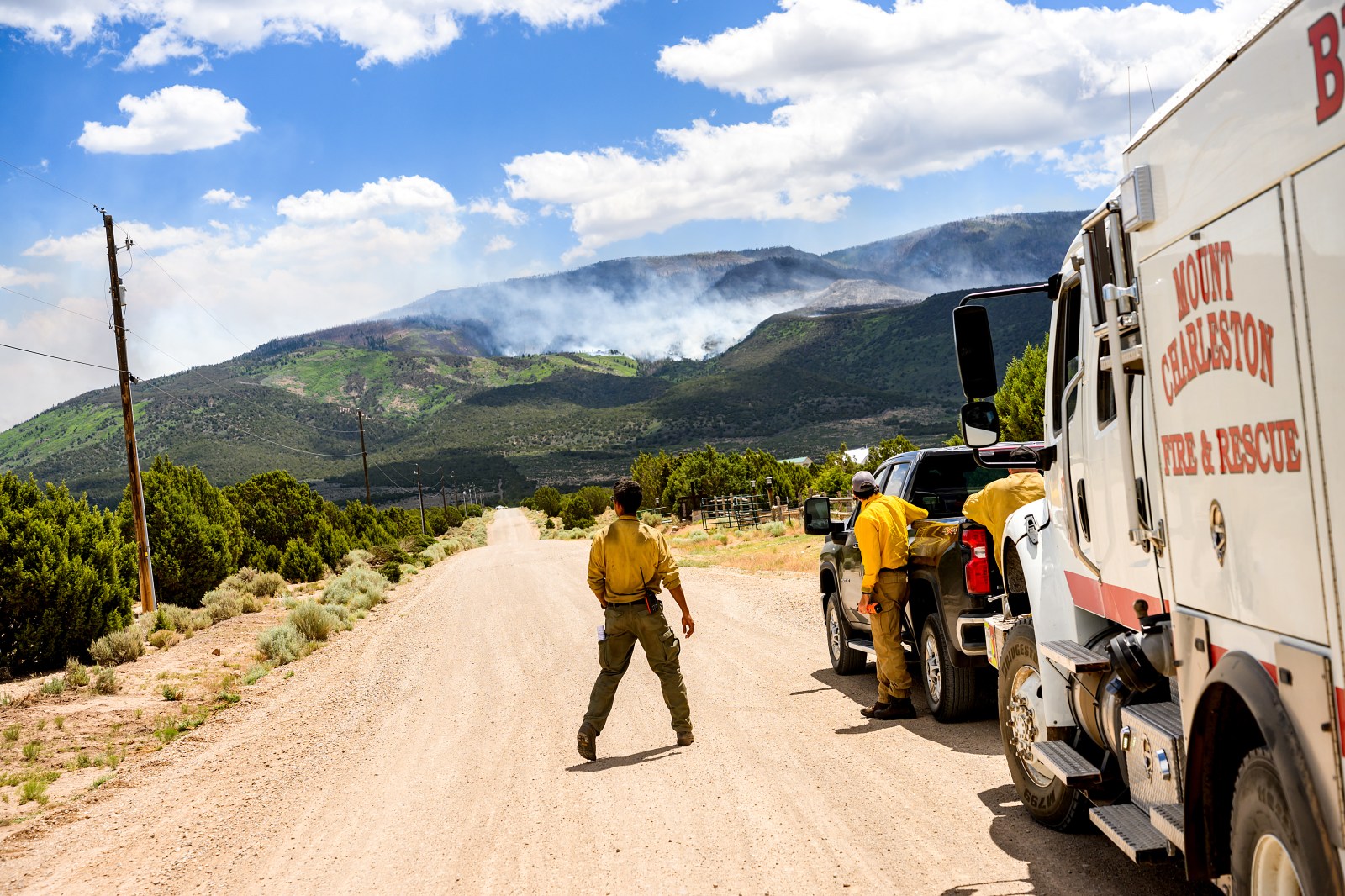
Three firefighters lost their lives, and two others sustained injuries while combating wildfires near the Colorado-Utah border. The U.S. Wildland Fire Service (USWFS) confirmed these casualties amid escalating fires driven by extreme weather conditions.
The deceased firefighters were part of a coordinated effort against the Knowles and Gore fires, now merged into the Snyder Fire. The injured personnel are receiving medical attention, and the identities of those who died have yet to be disclosed. USWFS expressed that their priority is to offer support to the families and colleagues of the victims.
“Our immediate focus is on supporting their families, friends, and fellow crewmates during this incredibly difficult time,”
These fatalities highlight the increasing risks across the region, exacerbated by dry and windy conditions. As fire behaviors push limits, firefighting resources are stretched thin, leading to emergency declarations state-wide.
Rapid Fire Spread Across the Western States
The Cottonwood Fire in southwestern Utah has expanded dramatically, engulfing over 92,000 acres without containment. Firefighting teams face severe challenges due to steep, rugged terrain. InciWeb reports an ongoing investigation into the source of the blaze.
Efforts to control the fire involve 1,200 responders at Fishlake National Forest, tasked with constructing containment lines. Officials have issued a Fire and Fuels Advisory for Utah, citing low moisture levels and potential for intense fire growth.
Nearby, the Snyder Fire has scorched tens of thousands of acres, prompting evacuation warnings. Across the nation, teams worked to manage multiple large, uncontained fires from Alaska to Florida.
Unpredictable Conditions Amplify Fire Threat
The National Weather Service has issued red flag warnings across several Western states, driven by high temperatures, strong winds, and humidity levels as low as 10%. In Utah, the outlook has been labeled a “particularly dangerous situation,” signaling volatile fire behavior.
The wildfire season of 2026 connects to broader climate patterns, with drought, scarce precipitation, and high temperatures. This year, nearly 3 million acres have burned nationwide, surpassing the 10-year average.
Arizona Flames Trigger Power Shut-offs
Fire threats also extend into Arizona, particularly near Grand Canyon National Park, where flames have emerged. In response, Coconino County issued evacuation orders, and parts of northern Arizona experienced power shut-offs to mitigate risk.
These shutdowns are becoming common as utility companies react to elevated wildfire threats. Decisions to cut power account for winds, available fuels, and terrain. Rocky Mountain Power executed shutdowns in Utah’s Beaver County as extreme fire conditions persisted.
Emergency Measures ahead of Holiday
The escalating situation has prompted states to declare emergencies as the July Fourth holiday approaches. Utah’s governor implemented a state emergency and a fireworks ban statewide. Unprecedented fire behavior has challenged resources.
Similarly, Colorado’s governor activated the National Guard to aid local efforts. The situation remains critical with forecasts indicating sustained heat and wind furthering the wildfire threat.