
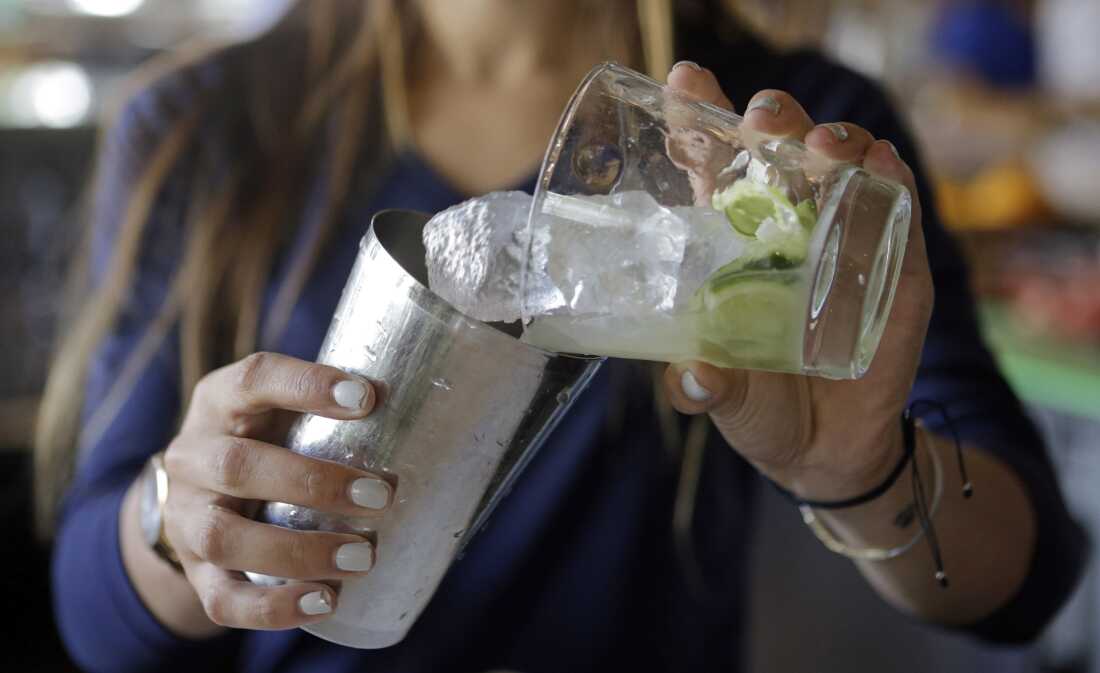
RIO DE JANEIRO, Brazil — Bartender Rafaella Demelo expertly combines sugar, 1.5 ounces of Leblon, and half a lime over ice in a shaker while crafting the renowned caipirinha, Brazil’s iconic cocktail. This exemplifies the potential of Brazilian cachaça, which is gaining new business opportunities due to shifting international relations.
The Trump administration’s tariffs have catalyzed a diplomatic shift, prompting Europe and South America to collaborate more closely. This change is proving advantageous for Brazil’s cachaça producers. Distiller Assja Schymura from Pindorama foresees significant growth, contingent upon overcoming initial obstacles.
Cachaça, made from sugarcane and integral to the caipirinha cocktail, has been recognized in European competitions. Nonetheless, import taxes and unfamiliarity have limited its penetration in the market. Recent developments offer a chance to alter that landscape.
In May, significant progress was made between the European Union and Mercosur, a South American trade bloc comprising Brazil, Argentina, Uruguay, and Paraguay. This trade agreement reduces tariffs on various goods, including airplane parts and cachaça. Bolivia, a recent Mercosur member, is expected to join the agreement in the coming years. The conclusion of the deal followed U.S. tariffs impacting both regions.
Former Brazilian trade official Roberto Jaguaribe noted that uncertain U.S. relations drive the pursuit of alternative trade partners. The EU-Mercosur agreement encompasses more than trade; it binds members to uphold democratic standards and maintain commitment to the Paris climate agreement, addressing a gap left by the U.S.’s retreat from these initiatives.
Renewed enthusiasm has influenced other discussions. At a Brazilian conference focused on strengthening European-Latin American ties, Finnish diplomat Anna-Kaisa Heikkinen emphasized the necessity of cooperation among nations supportive of the rules-based international order.
Despite positive momentum, disagreements persist. European legislators representing farming areas fear exposure to cheaper imports, leading them to refer the agreement to the EU Court of Justice in January. A verdict within two years might prompt adjustments to the deal.
Beyond the EU-Mercosur agreement, Mercosur has accelerated negotiations with other entities since Trump’s presidency. Recent agreements involve non-EU European nations, with ongoing discussions with Canada, Japan, and the United Arab Emirates. This reflects a departure from Brazil’s historical preference for high tariffs, driven by recent trade pressures and pandemic-induced shortages.
Larissa Wachholz, former Brazilian official, acknowledged these disruptions as catalysts for substantial policy changes. She expressed confidence that Brazil won’t revert to absolute protectionism.
Pindorama cachaça directors recognize trade openness as more than financial benefit; it offers cultural exchange opportunities. Rafael Daló, Pindorama’s creative director, remarked on Brazil’s traditional carnival image. He noted that understanding Brazilian cachaça also means appreciating the forests that imbue it with unique flavors and scents. He described cachaça as another narrative of Brazil.