
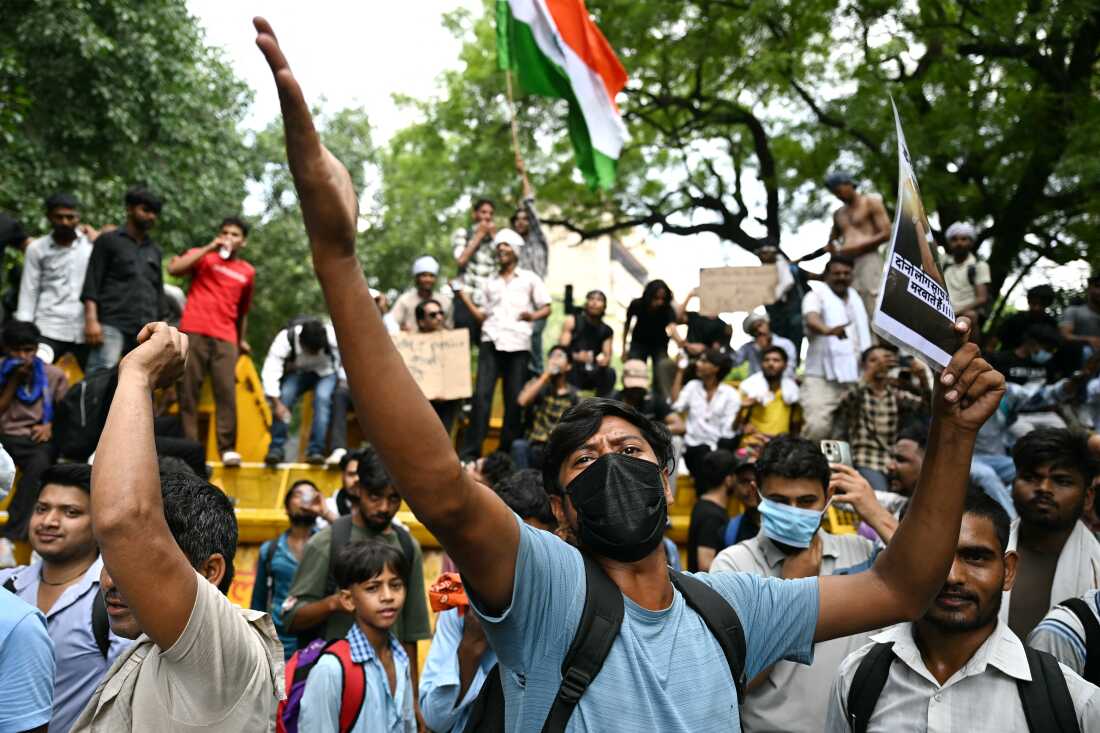
A supporter of the Cockroach Janta Party (CJP) raised slogans at Jantar Mantar in New Delhi during ongoing protests demanding the resignation of India’s education minister, Dharmendra Pradhan. The protests gained further momentum when Chief Justice Surya Kant’s remarks were perceived as derogatory towards unemployed youth.
In September 2025, Nepal’s government banned 26 popular social media platforms, alleging non-compliance with new regulations aimed at curbing misinformation. Critics argued the move was to suppress viral content about politicians’ lavish lives. Protests erupted, and Prime Minister K.P. Sharma Oli resigned shortly after. A similar situation unfolded in August 2024 in Bangladesh, where student protests led to the resignation of Prime Minister Sheikh Hasina. These protests stemmed from a quota system that favored certain groups for government jobs. In both countries, Gen Z led the protests, highlighting the enduring issue of elite privilege amidst limited youth opportunities.
India, with the world’s largest young population, is witnessing similar unrest. Despite economic growth, many youths face unemployment. A report by Azim Premji University noted that nearly 40% of graduates aged 15 to 25 and 20% of those aged 25 to 29 are unemployed. Recently, India’s education minister resigned following pressure from student protests over leaked exam papers. The protests intensified after the Chief Justice’s remarks likened unemployed youth to “cockroaches,” which became a rallying cry for the movement.
The repetition of such protests across South Asia can be attributed to three main factors:
- Economic Growth vs. Equality: While the region has experienced economic growth, it has not translated into equal opportunities. In Bangladesh, the richest 10% own 58.4% of the wealth, and in Nepal, 20% of young people are unemployed, many of them college graduates.
- Frustration with Corruption: Young South Asians express discontent with widespread corruption. Issues such as preferential job access in Bangladesh and exam paper leaks in India foster the belief that meritocracy is failing.
- Impact of Internet Access: Widespread internet access has raised awareness of democratic rights and empowered youth to organize protests. In Nepal, attempts to restrict social media intensified public anger.
The dark side of the demographic dividend becomes evident when opportunities are scarce, turning potential demographic advantages into challenges.
The resignation of India’s education minister temporarily paused protests in New Delhi. However, youth frustrations persist and call for substantial efforts from leaders to address long-term systemic issues. Leaders in South Asia must recognize that the so-called demographic dividend contains potential pitfalls if not managed effectively.