
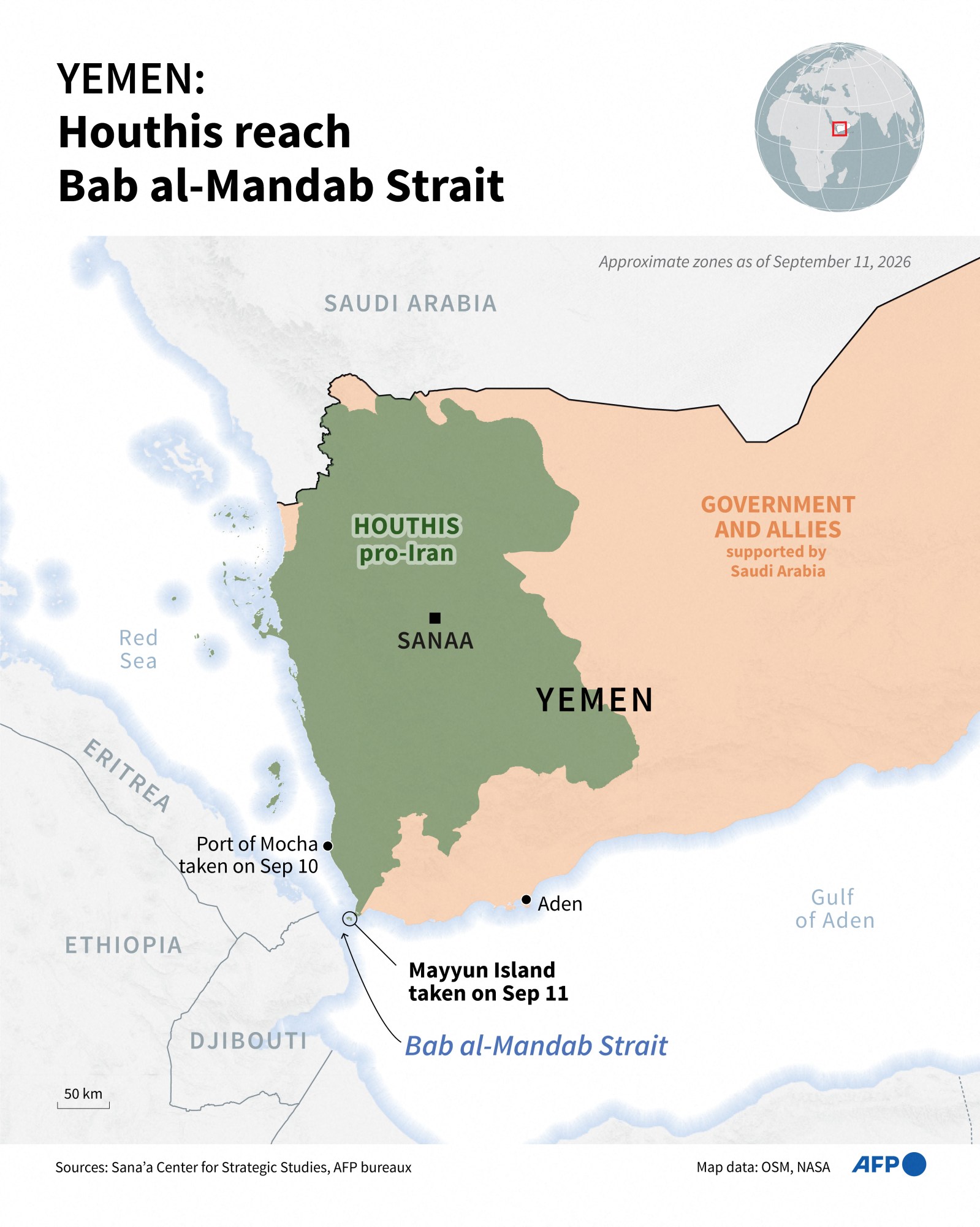
The Yemeni Ansar Allah movement, often called the Houthis, has gained control over Yemen’s Red Sea coast. This strategic location impacts a vital maritime route, the Bab el-Mandeb, between Yemen and Djibouti that connects the Gulf of Aden and the Red Sea to the Mediterranean via the Suez Canal. With a width of just 16 miles at its narrowest point, the Houthis could threaten global shipping, particularly affecting Saudi-backed Yemeni government forces now in retreat.
If Ansar Allah’s missiles and drones support a new blockade, the flow of approximately 8.1 million barrels daily—about 10% of global maritime oil trade—could be disrupted. This is notable given the Bab el-Mandeb’s significance as an alternative route after Iran restricted shipping through the Strait of Hormuz as a response to the US and Israeli war.
Hisham al-Omeisy, a Yemeni analyst, explained that Ansar Allah doesn’t need to completely close the Bab el-Mandeb. They could make it perilous enough that shipping companies avoid the area, resulting in increased insurance costs, longer delivery times, and higher prices for goods.
This threat coincides with the situation in the Strait of Hormuz, which pressures both sides of the Arabian Peninsula. The Bab el-Mandeb also channels 10% of global oil and 8% of gas trade by sea, and it was a crucial juncture for 30% of worldwide container traffic before conflicts escalated.
Nitya Labh from Chatham House noted the increased significance of the Red Sea following Iran’s actions at Hormuz, as Saudi Arabia rerouted some oil exports through overland pipelines to the Red Sea. Yet, these routes are vulnerable too, with reported Ansar Allah attacks on Saudi pipelines leading to disruptions.
The crisis affects the Suez Canal, the last viable shipping pathway in the Middle East. After Ansar Allah’s campaign against Red Sea shipping in response to current Middle East tensions, traffic decreased substantially. Many ships chose the longer path via South Africa’s Cape of Good Hope. Although traffic recovered post-ceasefire between Israel and Hamas, it now faces renewed risks.
Lab director Nitya Labh warned of new risks associated with trade diversion, including port congestion and piracy. These lead to added costs that are transferred to consumers, impacting global inflation and making some imports too expensive.
Saudi Arabia confronts mounting threats from various regional actors, with Ansar Allah posing a formidable challenge from the Yemen front. Journalist Hussein Albukhaiti shared that Ansar Allah would close the Red Sea for nations allied with Saudi Arabia if attacked. This blockade strategy threatens the stability of Saudi Arabia, including its energy infrastructure.
Since Saudi Arabia intervened in Yemen in 2015 after Ansar Allah occupied the capital, conflicts have persisted. The Ansar Allah-aligned council claims legitimacy, whereas the internationally recognized council governs from Aden.
Earlier ceasefires had maintained stability until regional tensions and the US-Israeli war against Iran reignited conflicts. Ansar Allah accused Riyadh of striking Sanaa’s airport, and subsequently threatened Red Sea and Saudi access.
As Saudi forces face uncoordinated opposition, Omeisy attributes government losses to Ansar Allah’s focused campaign and advanced use of drones and missiles.
Despite setbacks, the Yemeni government’s defeat isn’t final. Past alliances have shifted control back, as seen with UAE-backed Southern Transitional Council’s temporary victory. Omeisy highlighted serious implications for Saudi Arabia, emphasizing the importance of securing Yemen’s Red Sea coast, as global trade depends on it.
Recent reports suggest Saudi requests for US air support have been declined amidst ongoing US-Iran tensions. Sherwan Hindreen Ali from ACLED outlined limited choices for Saudi Arabia: escalating conflict with advanced Houthi weaponry could jeopardize Saudi infrastructure, or concessions might strengthen Ansar Allah, leaving the region vulnerable.
Labh from Chatham House conveyed how Ansar Allah and Iran leverage global economics via conflict, increasingly pressuring nations for resolution.
Newsweek reached out to relevant parties for additional comments.