
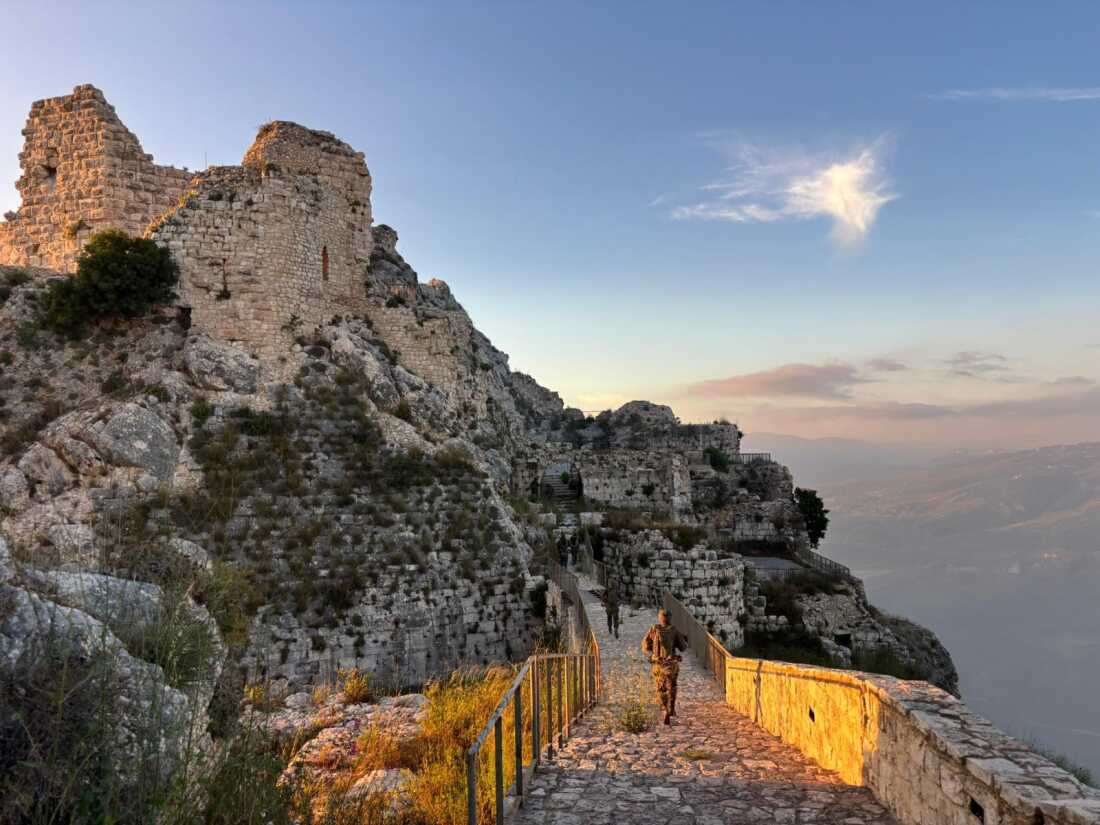
Israeli troops have taken control of the 900-year-old Beaufort Castle in southern Lebanon. The castle provides strategic visibility over southern Lebanon and northern Israel. Israel’s recent military push in the region marks its deepest incursion into Lebanon in 26 years. Footage displays the Israeli flag atop the historic castle, casting a shadow over the nearby town of Arnoun enveloped in smoke.
Israel’s military operations in Lebanon are intensifying, with a significant number of villages destroyed. This signals an intention to maintain a protracted presence in the area. Two decades earlier, Israel occupied the castle during an 18-year military presence that concluded in 2000. Hostilities with Hezbollah, supported by Iran, continue as Israeli forces surge ground troops and escalate air strikes. Prime Minister Benjamin Netanyahu has vowed to ‘crush’ Hezbollah, despite a standing U.S.-brokered ceasefire.
The unfolding conflict complicates diplomatic efforts between the U.S. and Iran to halt the war. Iran insists that any resolution must also address the conflict in Lebanon. Israeli Defense Minister Israel Katz declared the castle recapture as a permanent part of Israel’s security zone in Lebanon. Conversely, Lebanese Prime Minister Nawaf Salam condemned the invasion, describing Israel’s tactics as exacerbating Lebanese division.
Israeli attacks have razed numerous villages in southern Lebanon, displacing over 1.2 million individuals. The Lebanese Ministry of Public Health reports over 3,300 fatalities, including women, children, and first responders. Israel cites the death of two civilians, 23 soldiers, and a military contractor due to Hezbollah’s assaults. Most Israeli soldiers were killed within Lebanon.
Prime Minister Salam called for an immediate ceasefire and Israeli withdrawal. While negotiations remain uncertain, Salam emphasized dialogue as a means to avert further harm. Israeli and Lebanese representatives have met in Washington, despite decades of official hostilities. Lebanon has agreed to disarm Hezbollah, but lacks the capability. Hezbollah maintains its right to arms under ongoing Israeli attacks.
The Beaufort Castle: A Historical and Strategic Site
The Beaufort Castle, dating back to the Crusader era in the 12th century, stands as a significant medieval structure. The stone edifice offers extensive views over southern Lebanon and northern Israel. It has been at the center of modern conflicts, including Israel’s bloody battle for its capture in 1982. This effort expelled the Palestine Liberation Organization, and both the PLO and Hezbollah have attacked the castle to expel Israeli forces. Despite withdrawing in 2000, Israel retook the castle, accusing Hezbollah of utilizing it for assaults on Israel.
Strategically located nine miles from the Israeli border, the castle affords Israeli forces oversight of the area. Simultaneously, Israel has amplified its operations in and around Nabatiyeh, situated over 20 miles from the border. Defense Minister Katz underscores the strategic message to adversaries that threaten Israeli civilians, warning of losing tactical assets. Recently, Lebanese Culture Minister noted the castle sustained damage from Israeli bombardment prior to its recent capture.
In the past week, Israel dispatched tanks and troops into Lebanon and launched hundreds of daily strikes. United Nations peacekeepers indicate Hezbollah retaliations were significantly fewer. Hezbollah employs fiber-optic drones capable of penetrating Israeli defenses, resulting in Israeli soldier casualties.
According to U.N. data, between May 24 and May 30, Israel conducted over 3,300 projectiles and airstrikes. Meanwhile, Hezbollah and its allies launched 187 projectiles. Netanyahu’s disclosure of operations crossing the Litani River suggests Israeli forces have advanced 20 miles into southern Lebanon. Iran, a longstanding supporter of Hezbollah, insists peace discussions address conflicts in Iran and Lebanon; however, Netanyahu remains adamant in continuing strikes against Hezbollah.
In Washington, Israeli and Lebanese military officials convened but reported no progress on stabilizing the ceasefire. The Lebanese delegation included military representatives, excluding Hezbollah from discussions.