
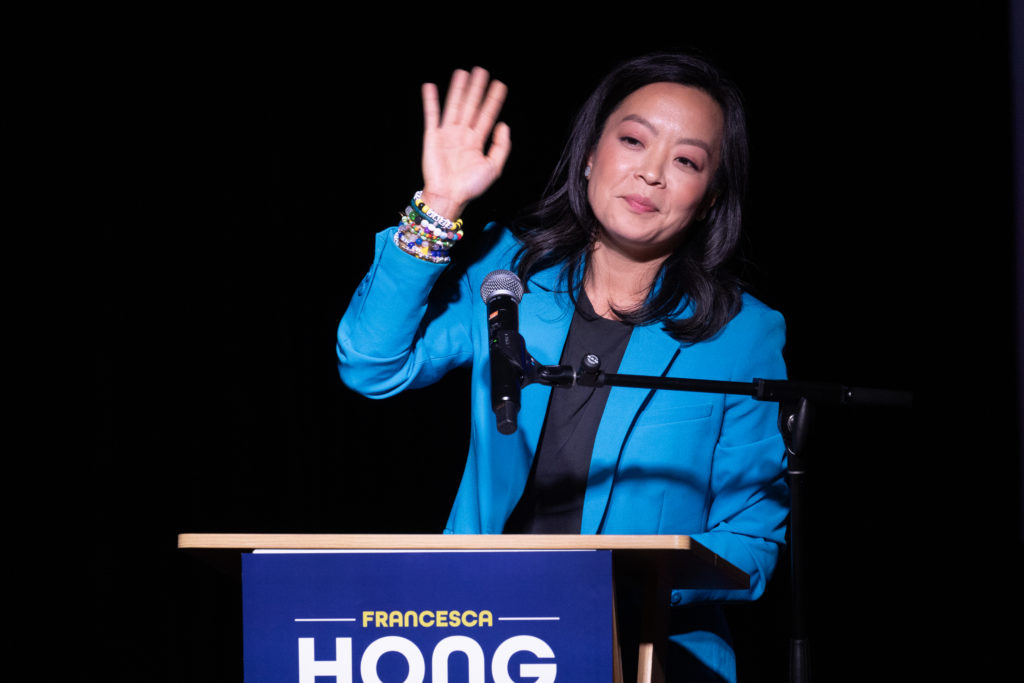
In the Wisconsin primary for governor, moderate Democrat David Crowley emerged victorious. Crowley defeated Francesca Hong, a democratic socialist, marking another mixed result for progressive candidates in a key battleground state.
Crowley, the current Milwaukee County Executive, aims to become Wisconsin’s first Black governor. He positions himself as a candidate capable of defeating Republican U.S. Representative Tom Tiffany in the November elections. Tiffany is supported by former President Donald Trump, adding pressure to the race.
Hong sought to build on recent successes of progressive candidates like Abdul El-Sayed, who recently triumphed in Michigan’s U.S. Senate race. El-Sayed’s victory was significant for the movement in politically mixed states. However, party leaders express concern that candidates with bold past positions might face difficulties in Republican-leaning contests.
“Now, David is focused on bringing people together, earning the support of Democrats, Republicans, Independents, and anyone who believes Wisconsin is at its best when we work together and deliver results,” said Crowley’s campaign manager, Garren Randolph.
Despite Hong’s narrow loss, her campaign signified growing dissatisfaction among certain Democratic voters. Hong emphasized that the campaign’s efforts have lasting impacts, and her team remains committed to addressing ongoing issues. She refrained from requesting a recount, despite Crowley’s margin being less than 1 percent, due to the cost involved.
Notably, progressive figures like Bernie Sanders and Alexandria Ocasio-Cortez did not participate in the Wisconsin race, reflecting a varied alignment within the movement. The progressive wave, however, has seen gains elsewhere, such as in New York City where democratic socialists influenced primary results.
In Wisconsin, Democrats are strategizing to counter low approval ratings for Trump as they aim to retain and expand their political control. Both Crowley and Hong campaigned for party unity against Tiffany, stressing the importance of preventing a MAGA-aligned governorship.
The race also witnessed unexpected developments. Other candidates left the race under various circumstances, creating shifts in support. Crowley himself rejoined the race with Governor Tony Evers’ endorsement after initially withdrawing.
Francesca Hong, with her outspoken style, mobilized the party’s left-leaning segment. She advocated policies like free childcare and healthcare. Despite criticisms for her previous positions and social media presence, Hong’s message resonated with many supporters.
The Democratic primary was additionally shaped by technical hitches, such as the delayed reporting of absentee ballot results in Milwaukee, attributed to a human error in data processing. This further underscores the complexity and unpredictability of the race.
As the election landscape evolves, Wisconsin Democrats look to unify for a consolidated challenge in November, focusing on cementing their presence in a state known for razor-thin election outcomes.