
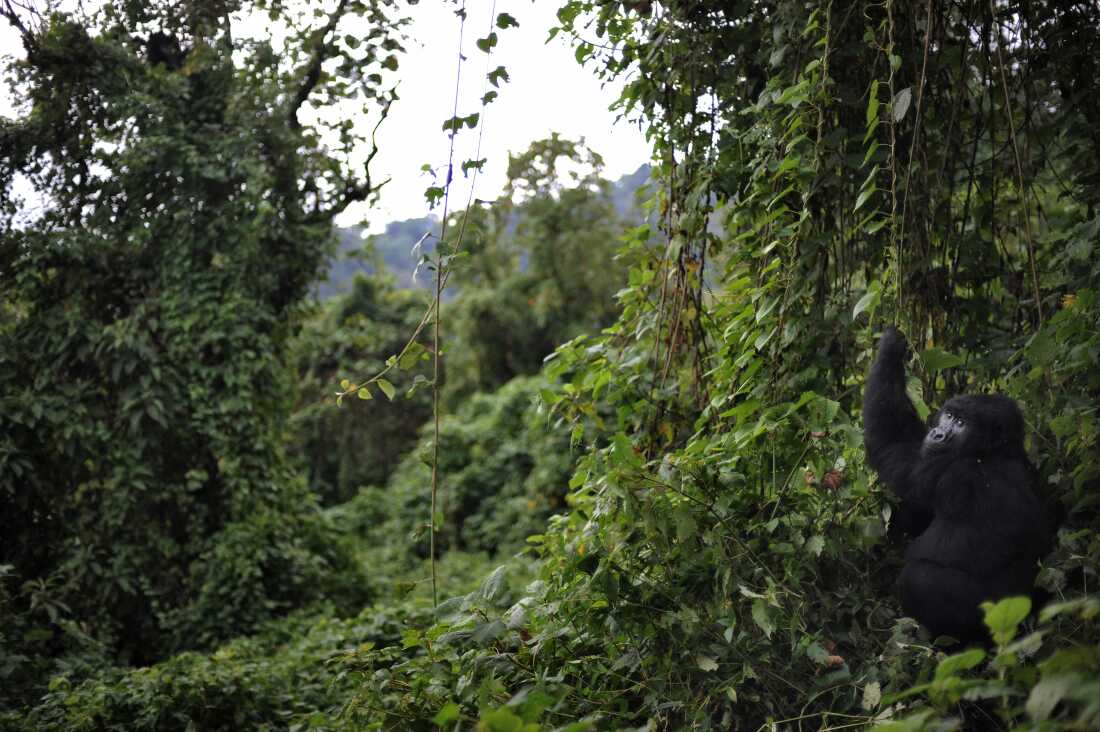
Virunga National Park in the Democratic Republic of Congo shelters several hundred mountain gorillas, representing about a third of their global population. Park rangers are screening visitors for Ebola to protect these primates, who are highly vulnerable to the virus.
Emmanuel de Merode, the director of Virunga National Park, describes the area as a scene of natural beauty, with elephants and pods of hippos visible at sunset. Yet, this beauty masks a harsh reality of rebel violence and an Ebola outbreak.
De Merode and over 800 rangers are combating these threats with limited resources. Despite decades of conflict and a recent Ebola outbreak from 2018 to 2020, he describes the current situation as the worst in 30 years. The current Ebola strain lacks a vaccine, international aid has decreased significantly, and violence persists.
Ebola Screening Efforts
Virunga National Park, about 180 miles long from north to south, is crucial in the Ebola-affected region. De Merode emphasizes the role of the park as a natural screening barrier. Screening posts on roads crossing rivers offer a nearly impenetrable checkpoint.
These screening posts are important for tracking any potential spread of the virus to East Africa, including Uganda, Rwanda, and Kenya. Additionally, the Okapi Wildlife Reserve helps prevent the disease’s westward spread toward Kisangani and Kinshasa.
De Merode’s team is funding five screening posts, costing $44,000 each. These complex constructions include multiple buildings, internet connections, diagnosis and analysis rooms, isolation centers, and security.
Impact of Decreased Aid
Foreign aid reductions have drastically impacted the region’s Ebola response. U.S. aid fell from $1.4 billion in 2024 to just over $400 million for 2025. This decline hampers preparedness and strains health services, risking further spread of the virus.
The National Park has swiftly purchased and delivered essential supplies, such as body bags and infrared thermometers. They have also assigned park vehicles to assist health services in managing Ebola cases.
Ongoing Violence
Rangers face extreme violence while carrying out their duties. Recent militia attacks have led to staff casualties and injuries. The connection between Ebola and escalating violence is unclear, but it complicates efforts to handle the outbreak.
Protecting Mountain Gorillas
Mountain gorillas in Virunga National Park remain susceptible to Ebola, with past epidemics devastating gorilla populations. De Merode highlights protective measures for these animals, including closing tourism to minimize human contact.
Around 200 rangers patrol the southern part of the park to safeguard gorillas and prevent poaching. Previous efforts during the 2018-2020 Ebola outbreak were effective, and there is confidence in managing this threat again.