
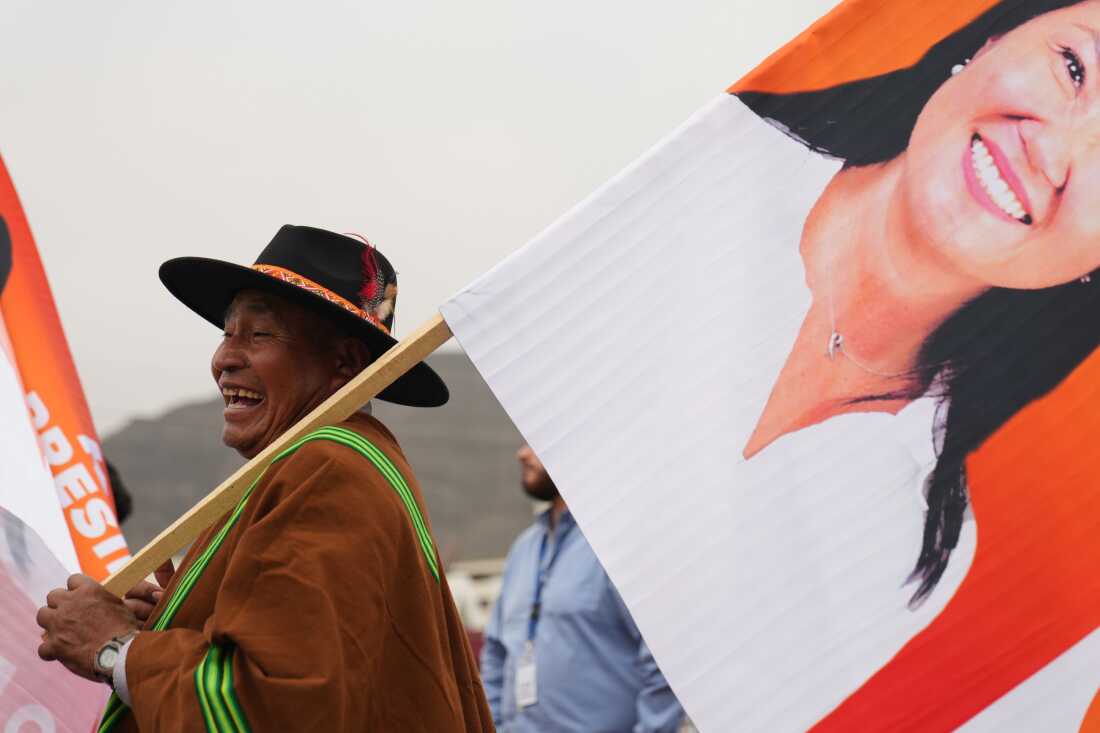
Lima, Peru — The population of Peru is set to choose its new president this coming Sunday. Current polls suggest a tight contest between two polarizing candidates: Keiko Fujimori, representing the hard-right, and Roberto Sánchez, a leftist hopeful. Keiko Fujimori has been slightly ahead in the polls, yet approximately 25% of voters remain undecided. Reuters indicates Sánchez might have gained some ground in the past week.
Keiko Fujimori, widely known simply as Keiko in Peru, is attempting to reestablish the legacy left by her father, Alberto Fujimori, a former president who has a complicated past. His tenure saw both destructive hyperinflation and violent Maoist uprisings. Alberto Fujimori’s methods included death squads and corruption, leading to his eventual imprisonment for 25 years. Political analyst Paula Távara warns that if Keiko succeeds, she’s likely to adopt an authoritarian style despite any claims of promoting democracy. Távara cautions about possible repressive measures if protests arise during her presidency.
Having previously contested in three presidential runoffs, Keiko Fujimori has faced criticism for being an ungracious loser. After losing narrowly in 2011, 2016 and 2021, she purported electoral fraud without evidence, particularly in the 2021 elections. Her critics accuse her of using her Popular Force party to thwart investigations into corruption and organized crime, contributing to Peru’s political instability with nine presidents in the past decade. Keiko advocates for a strong approach known as ‘mano dura’ to tackle crime, which she argues has overwhelmed the nation.
Sánchez, on the other hand, is also viewed unfavorably by a significant demographic. Sporting a sombrero gifted by Pedro Castillo, a former president whose brief stint ended in controversy, he is struggling to win support. Castillo was ousted and jailed in December 2022 after attempts to impede corruption investigations by trying to shut down congress and the courts. Initially, Sánchez proposed nationalizing sectors and shifting to local production, echoing economic policies seen in Cuba or North Korea. Despite attempts to present himself as more moderate, his association with Antauro Humala, a radical figure known for orchestrating a violent uprising, undermines his claims.
The election will conclude with polls closing at 5 p.m. local time. If the result is decisive, an announcement could come later that night, though delays are possible if the race remains close.