
The debate about America’s political direction intensifies with every electoral victory of a Democratic Socialist or a progressive outsider. Questions arise about whether the country is indeed moving significantly to the left. Recent events such as Mayor Zohran Mamdani’s rise in New York and Graham Platner’s brief political surge in Maine have reignited this discussion. As Democrats seek a replacement for Platner, many are focusing on Troy Jackson, who refers to himself as a ‘pickup truck progressive.’
These elections frequently lead to the assumption that America is gradually adopting more liberal ideas. However, this viewpoint may oversimplify the situation. Instead, these developments may signify a broader issue. A failure of confidence is eroding Americans’ faith in the very institutions that once provided solutions, opportunities, and functioning governance.
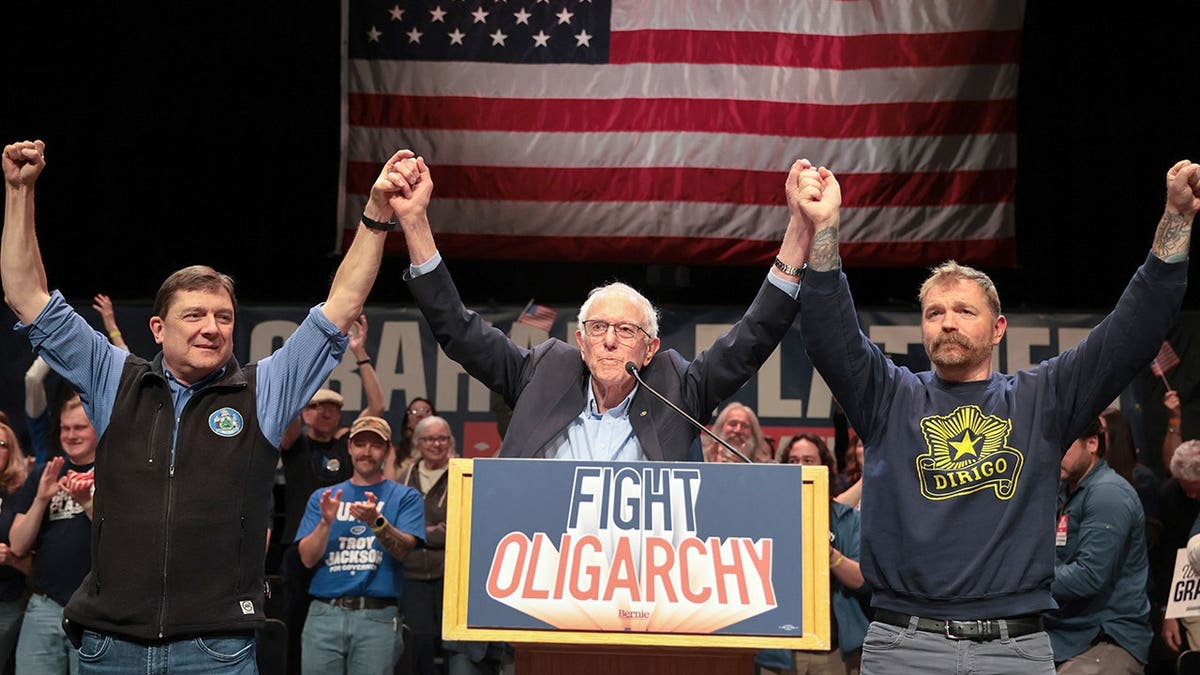
Senator Bernie Sanders stands with Troy Jackson and former Senate candidate Graham Platner during a tour in Maine, demonstrating solidarity with anti-establishment candidates. Their appeal is not solely based on their progressive policies. They reflect a growing desire to reject conventional politics and challenge the status quo.
Recent data from Gallup indicates a sharp decline in trust in American institutions. Only 9% of the population currently has confidence in Congress. Other critical institutions, such as the criminal justice system, organized religion, higher education, and big business, have also seen their credibility deteriorate over the years.
Americans are looking beyond mere policy proposals. Voters are evaluating if these institutional frameworks can deliver real results. As trust in these institutions wanes, people are more inclined to support candidates who promise to upset the existing order.
The decline in institutional trust underscores a broader crisis, not confined to a single institution. This crisis is affecting the entire system. The trend has paved the way for candidates like Graham Platner and Zohran Mamdani, who represent an alternative to traditional politics.
In Maine, following Platner’s departure, Democrats did not rush to back an establishment candidate. Instead, they gravitated towards Jackson, emphasizing his positioning as a champion for ordinary people. This scenario is not isolated to one state or ideology; it is a national phenomenon. Candidates challenging institutional frameworks are resonating more with the electorate than those who seek to maintain them.
The political narrative in America is experiencing a transformation. The main divide is no longer between Democrats and Republicans or liberals and conservatives. It is between the establishment and the anti-establishment, between institutions and outsiders. The emergence of democratic socialism and right-wing populism are responses to this larger systemic issue.
A significant concern is the loss of public confidence in institutions that are supposed to be legitimate, fair, and effective. When this faith is absent, people are more willing to embrace uncertain disruptions over predictable stability. Change movements often gain traction not from new ideologies but from skepticism about existing institutions.
The true concern is not merely the rise of democratic socialism. It is the loss of institutional trust that has facilitated its emergence. Without a restoration of this confidence, the political landscape will likely continue to see more figures like Mamdani, Platner, and Jackson.