
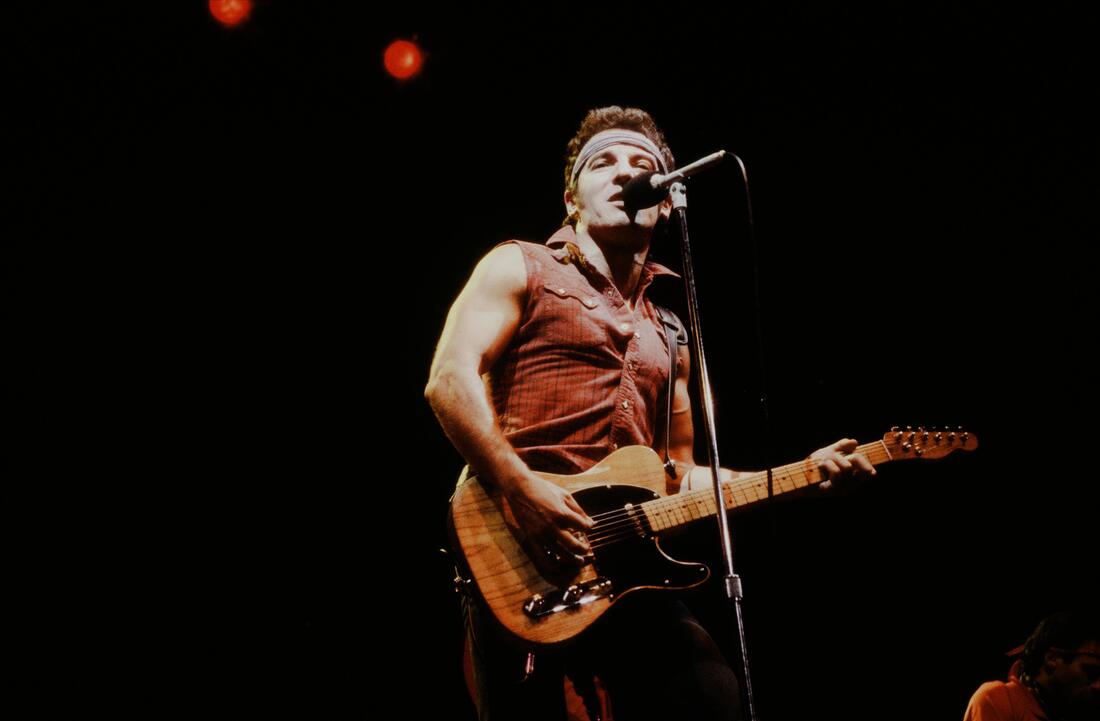
Bruce Springsteen captured onstage during the Born in the U.S.A. Tour in 1984 (Shinko Music/Getty Images)
This article belongs to the American Anthem series which explores songs that inspire, unite, and call to action. More details available at NPR.org/Anthem.
The lyrics of “Born in the U.S.A.” by Bruce Springsteen clearly paint a picture of a Vietnam War veteran who finds himself in dire straits upon returning home. However, the powerful refrain can be mistaken for a straightforward anthem of patriotism.
NPR’s American Anthem series reveals how Americans connect with songs and what they reveal about us. “Born in the U.S.A.” is a prime example of a historically misunderstood song. Lauren Onkey from NPR Music shared insights with Morning Edition, highlighting that it took time for Springsteen himself to comprehend the true message of his song.
“He performed at a benefit in 1981 for Vietnam veterans, which influenced his songwriting,” Onkey notes. “The initial version was called ‘Vietnam,’ focusing on the veteran’s struggles after returning home.”
The rough demo of “Vietnam” includes a poignant scene where a veteran seeks his old job but is met with disappointment: “Son, understand, if it was up to me … about half the town’s out of work. Ain’t nothing for you here … you died in Vietnam.” Springsteen kept these themes but added the memorable “Born in the U.S.A.” refrain to a more haunting version.
Onkey explains, “In the story of one American, many stories are captured. Lines such as, ‘I’m 10 years burning down the road / Nowhere to run, ain’t got nowhere to go,’ resonate with many of Springsteen’s male characters who feel lost and disconnected.”
The song evolved into its final form as the title track of Springsteen’s 1984 album. He amplified the song with energy, portraying triumph with a powerful chorus, even as the verses told a different story.
During an interview with WHYY’s Fresh Air, Springsteen explained, “The pride was in the chorus. The spiritual and hopeful parts are in the choruses, while the daily realities are in the verses.”
Fans felt the energy of the anthemic chorus, even if the verses’ message was missed. Chris Christie recalls watching Springsteen perform, wearing a bandanna and conveying a celebratory vibe. He understood it later as a defiant claim of deserved betterment rather than mere patriotic fervor.
In 1984, President Ronald Reagan used Springsteen’s message, emphasizing hope in America, yet missed the underlying despair. Influenced by George F. Will, who attended a concert, Reagan’s reading was limited to optimism.
Springsteen acknowledged misinterpretations, humorously noting the commercial benefit of such misunderstandings. In a 1995 performance, he remarked, “If there were misunderstandings, my family thanks you, because that’s where the financial success lies.” Yet, he maintained that a songwriter could always seek clarity.
Springsteen occasionally altered the song’s presentation, using acoustic versions or omitting the chorus to emphasize the darker story. During the Iraq conflict in 2003, he declared the song a peace prayer.
Onkey emphasized that the song’s depth ensures its lasting relevance: “It encapsulates the contradictions and challenges of America. Its powerful rock-and-roll elements affirm its significance to narrate such a story.”
The essence of “Born in the U.S.A.” lies in balancing grim realities and exuberant pride, urging a gradual alignment of American experience with ideals.