
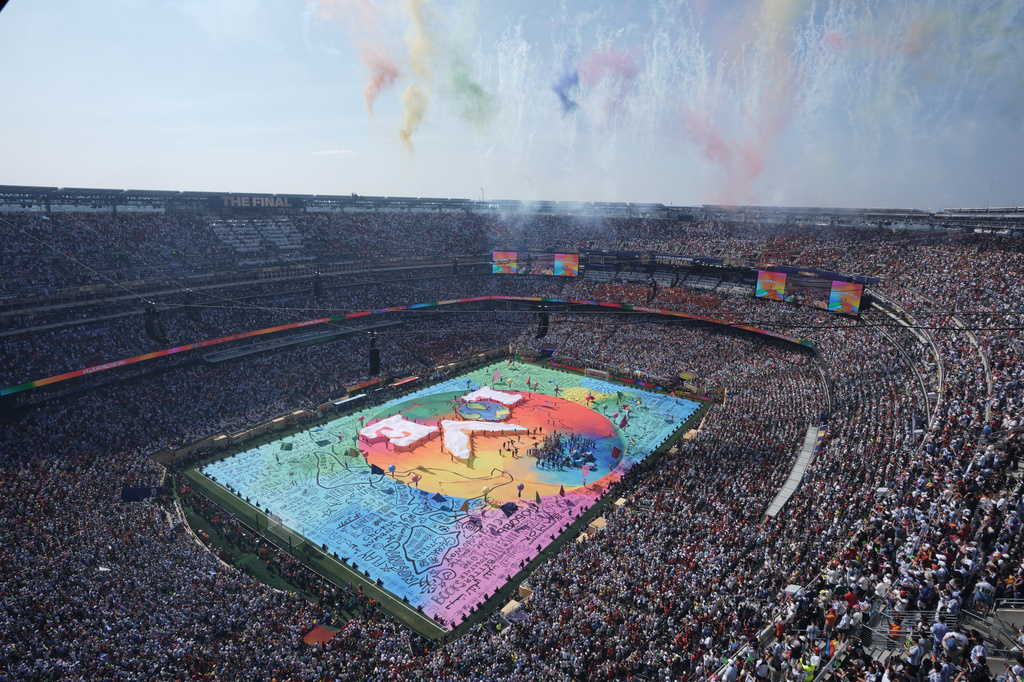
Fans eagerly watched the half-time show during the World Cup final match between Spain and Argentina in East Rutherford, N.J. near New York on Sunday, July 19, 2026. While the excitement of the World Cup captivates the nation, a controversial retweet by President Trump went largely unnoticed. In a society accustomed to divisive statements from leaders, this particular message concerned some.
Trump and certain followers expressed anger over Somali immigrant children participating in kindergarten graduation ceremonies while wearing hijabs. This reaction underscored a perceived bias against religious expressions outside of Christian nationalism. Yet, it also missed the fact that these children were engaging in a significant milestone within a public charter school, proudly sporting caps and gowns.
When setting aside biased perspectives, people recognize these children’s involvement in societal norms, embodying the integration expected of immigrant families. The ongoing conflict between calls for multiculturalism from liberals and demands for assimilation from conservatives was disrupted. The World Cup illustrated how both processes coexist in the U.S.
Sports do indeed foster unity, as demonstrated by passionate fans from diverse backgrounds who come together to support their teams. American soccer fans often cheer for their national team while harboring affection for other international teams due to personal or ancestral ties. Examples include rooting for Argentina with Lionel Messi or supporting Norway.
In Anaheim, Calif., local celebrations for the Fourth of July were followed by festivities when Mexico triumphed over Ecuador. Community members displayed patriotism with red, white, and blue, then switched to green for Mexico’s match against England. The World Cup provided a platform for people to express national pride while honoring cultural heritage.
Recent adaptations to the soccer experience include halftime shows, hydration breaks, flyovers, and tailgating. These features reflect America’s unique contributions to the sport. Visitors enjoy American cuisine and hospitality, further appreciating a nation enriched by 250 years of cultural amalgamation. Immigrants learn the language, attend schools, serve in the military, engage in politics, and purchase property, enhancing American culture with food, fashion, music, and art.
U.S. soccer fans initially emulated European traditions to gain recognition. Names like Real Salt Lake and Houston Dynamo FC aimed to legitimize the sport here. However, Americans have since embraced unique traditions, such as singing John Denver’s “Take Me Home, Country Roads” during games. This anthem, rooted in West Virginia football, has been adopted by fans nationwide, reflecting the national team’s multicultural and assimilation-driven composition.
Politicians often argue for either multiculturalism or assimilation independently. Yet, neither perspective is entirely accurate. True multiculturalism might disregard traditional graduation elements or English language acquisition, while absolute assimilation might dismiss cultural attire like hijabs. America thrives when immigrants blend their heritage with American customs.
Confusion over why this unsettles Trump and MAGA supporters persists. The notion that immigrants don’t assimilate or shouldn’t share their culture remains controversial. Embracing maturity and rational thought toward immigrants might alleviate such fears.
The World Cup’s presence in the U.S. highlighted the nation’s ability to coexist harmoniously. Ideally, this lesson doesn’t hinge solely on major sporting events. Joslin Joseph, a former Marine and decorated commentator, explores these themes from Anaheim and advocates for nuanced discourse on immigration.
Copyright 2026 Nexstar Media Inc. All rights reserved. This material may not be published, broadcast, rewritten, or redistributed.