
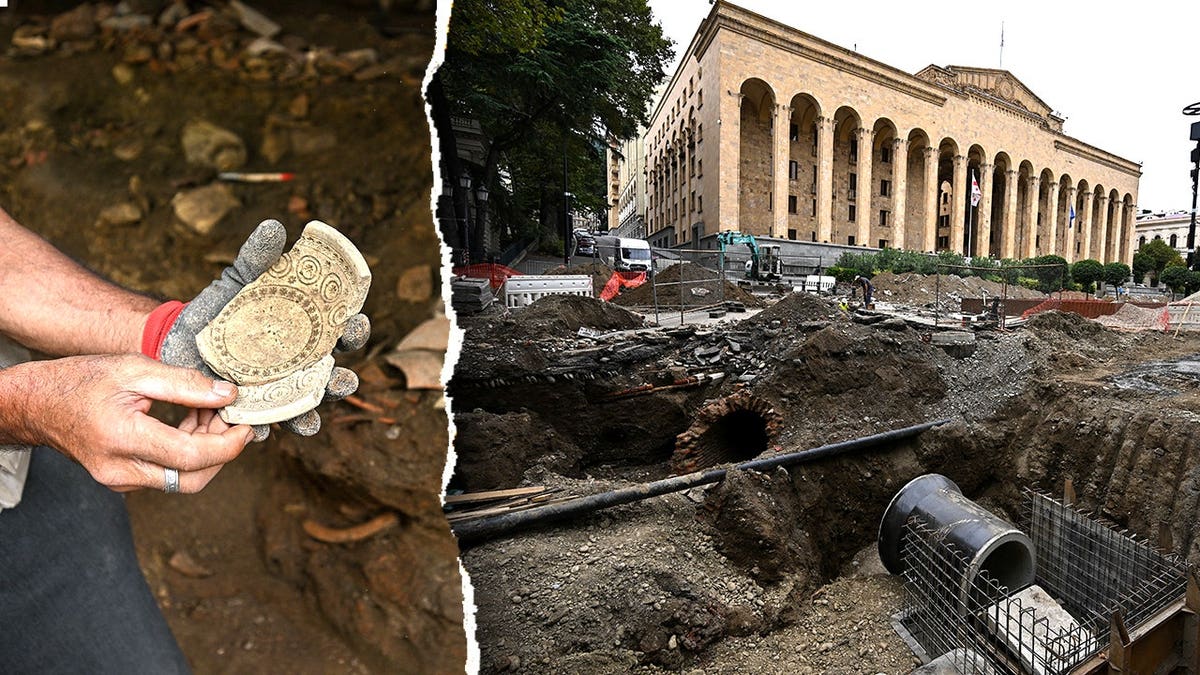
Workers renovating Rustaveli Avenue in Tbilisi, Georgia, discovered ancient pottery dating back around 1,000 years during excavations beneath the city’s main boulevard. The artifacts were found approximately 20 feet underground.
Uncovering History
Archival images reveal intricate pottery fragments, centuries-old jugs, and various shards, highlighting the significance of the discovery. This unexpected find was made during an ongoing project to improve Rustaveli Avenue with new pedestrian crossings and signage.
Historical Significance
David Lordkipanidze, director of the Georgian National Museum, indicated that this discovery aligns with Tbilisi’s rich archaeological past. He stated, “Tbilisi is very rich with archaeological material, so it’s very logical to find workshops of different periods.”
Tbilisi’s history as a multicultural hub and economic center, especially during the 10th and 11th centuries under Arab rule, contributed to the city’s significance on the Silk Road.
“Tbilisi was always multicultural,” Lordkipanidze noted.
Future studies, including 3D scanning, aim to determine the exact age of the pottery fragments.
Broader Context
Tbilisi, founded in the fourth century, has experienced control by various powers over time, including Mongols, Persians, Russians, and Arabs during the Middle Ages.
Worldwide, workers frequently unearth ancient sites during routine construction. For instance, during Italian highway upgrades, construction crews revealed a fifth-century B.C. sanctuary. Similarly, in Peru, utility workers uncovered pre-Incan tombs, dating back to the Chancay culture.