
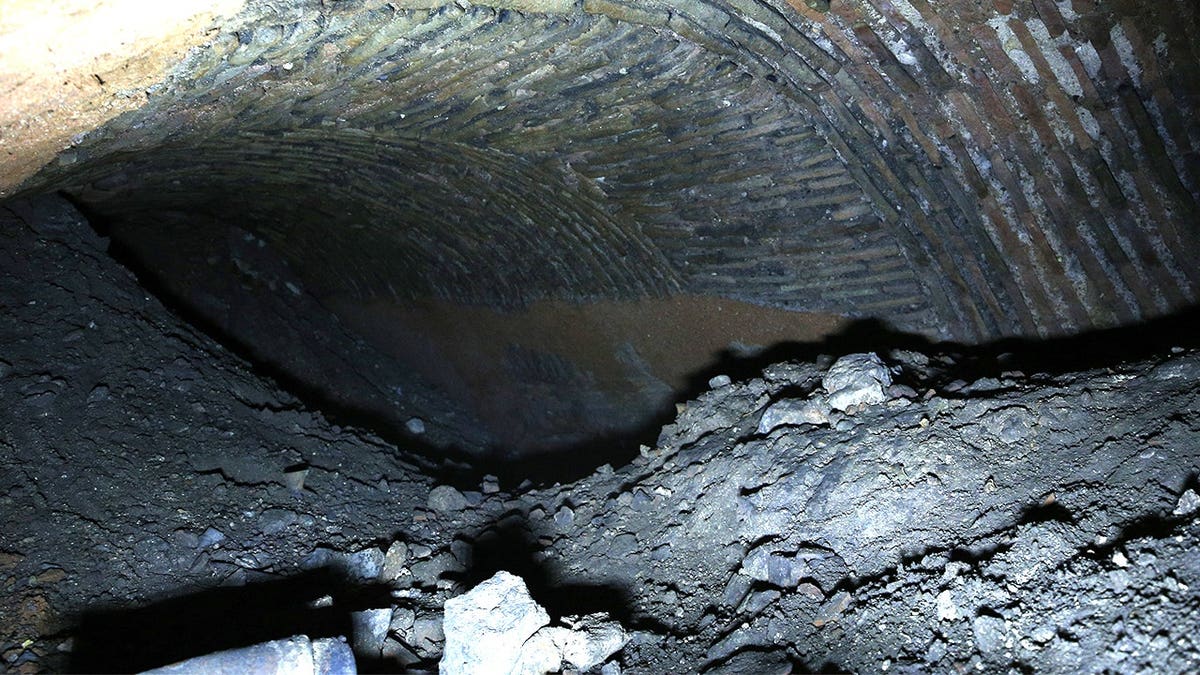
Archaeologists have unearthed a vast network of ancient tunnels beneath Istanbul’s Hagia Sophia, removing approximately 3,000 tons of debris. This discovery sheds light on previously inaccessible underground passages located under one of the world’s most historic religious sites.
Hasan Fırat Diker, an archaeologist, made the announcement about these findings during a fall presentation in Istanbul, as reported by Türkiye Today. Since February 2025, the tunnels have been the subject of extensive excavation and cleaning efforts, allowing researchers to explore areas once buried under mud and debris.
“NOAH’S ARK SITE YIELDS FIRST LOOK AT CHARRED WOOD FRAGMENTS RECOVERED DEEP BELOW SOIL.”
In the presentation, Diker noted that these tunnels, built around 1,600 years ago by the Romans, were initially part of the city’s water management system and offered a sheltered underground pathway. Some of these tunnels date back further than the current Hagia Sophia, completed in 537 A.D. during the reign of Byzantine Emperor Justinian I.
The excavation of these ancient tunnels, difficult to access for decades, offers new opportunities for exploration and study of this historic site. Diker compared the intricate tunnel network to a modern subway system.
“DIG OF THE CENTURY’ BENEATH NOTRE DAME REVEALS MYSTERIOUS MARKINGS, ANCIENT SECRETS.”
The tunnels served to direct rainwater from nearby streets into the sea. Researchers cleared about 558 feet of a route connecting to a fifth-century Roman street, extending from Sarayburnu to Little Hagia Sophia. This excavation uncovered portions predating the present Hagia Sophia.
This landmark, part of a UNESCO World Heritage Site, is recognized as the third construction on the site. It draws millions of tourists annually. Both the upper and lower sections of a burial complex, discovered in 1946, have been cleared, with excavation extending an additional five feet beneath these chambers. The burial sites are older than the current Hagia Sophia and had accrued substantial mud over the centuries.
Looking forward, Diker’s team plans to open more of Hagia Sophia’s underground passages to visitors, aiming to present an exhibition of the archaeological findings. The Hagia Sophia, translating to “Holy Wisdom” in Greek, was a pivotal center of Eastern Christianity for nearly a millennium. It was converted to a mosque after the Ottoman conquest of Constantinople in 1453, later became a museum in 1935, and reverted to a mosque in 2020.
Modern excavations like this are part of a broader global effort to uncover ancient underground tunnels. Earlier this year, a 164-foot tunnel was found in Jerusalem at a site linked to the biblical Kingdom of Judah, with its purpose still a mystery. In Germany, a new tunnel was found beneath a prehistoric burial site, initially thought to be a grave entrance.