
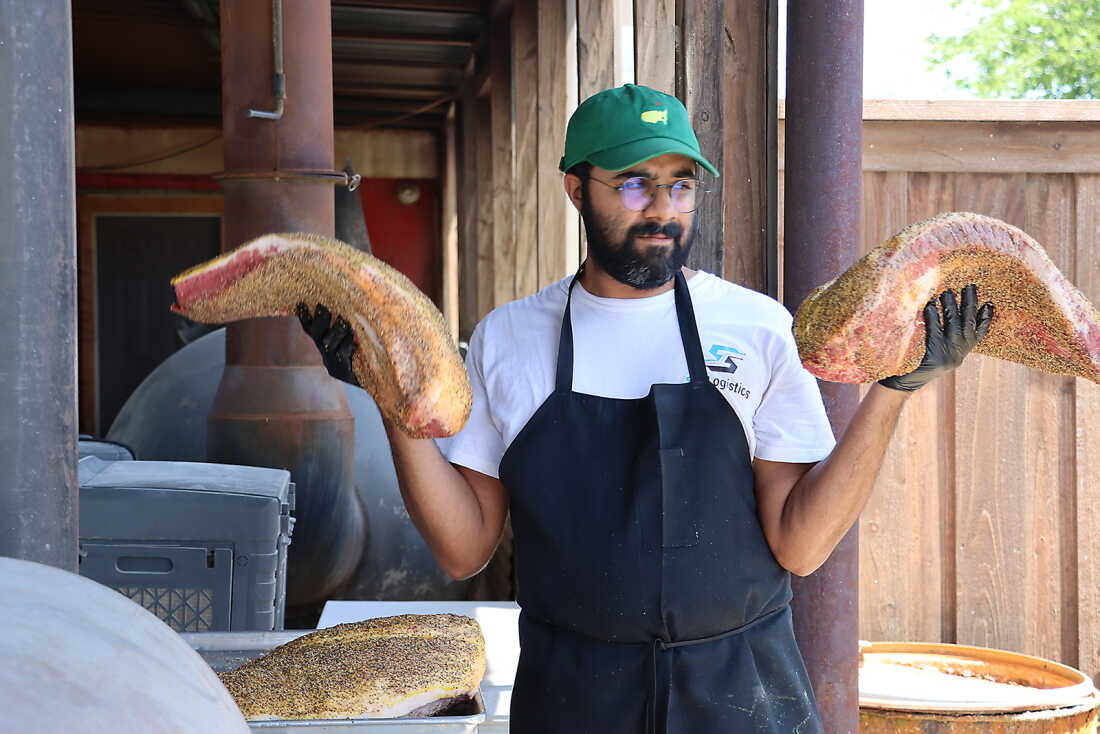
At Goldee’s BBQ in Fort Worth, Texas, Zain Shafi readies briskets for the smoker. The scent of smoked meats surrounds those standing outside the restaurant on a hot Saturday morning. By 9 a.m., nearly 100 individuals wait in line, eager for classic Texas barbecue. Thanh Huynh, first in the queue, has been waiting since 6:30 a.m., ready to place a large order.
Opened in 2020, Goldee’s BBQ rose quickly in prominence. It was named Texas’s top barbecue spot by Texas Monthly and received a Bib Gourmand award from the Michelin Guide for offering great value. The restaurant serves traditional dishes like pork belly, sausage, and ribs. It also offers halal brisket, turkey, and lamb, accommodating Islamic dietary standards.
Goldee’s isn’t the only place providing halal barbecue. As Texas sees increased focus on its Muslim communities by Republican leaders, more barbecue joints are including halal options, drawing attention to Muslim pitmasters adding their twists to Texas barbecue. Yearby’s Barbecue & Waterice, soon in Plano, and Levant Mediterranean BBQ in Houston and Frisco, also serve halal meats.
Haris Ghaffar, visiting from Celina, reflects on his limited options for halal dining during his youth. Today, halal has entered the American culinary scene as a multibillion-dollar industry, says food writer Farhan Mustafa. He emphasizes that halal is as American as any other food.
Texas barbecue traditionally consists of salt-and-pepper brisket and pork ribs. However, Muslim pitmasters innovate with flavors from their heritages. Zain Shafi’s previous venture, Sabar Barbecue, featured Pakistani-infused dishes like spiced brisket. At Goldee’s, he now offers tandoori smoked turkey, choosing halal cuts for their quality.
Kafi BBQ in Irving, owned by Salahodeen Abdul-Kafi, introduces halal Wagyu beef and Iraqi spices to Texas barbecue. Abdul-Kafi aims to excel at his craft, inspired by the Islamic concept of “Ihsan,” which emphasizes doing work with excellence for God’s sake. Kafi BBQ attracts diners with its unique 13-spice Wagyu brisket and pomegranate-glazed beef belly burnt ends.
Despite rising anti-Muslim sentiments and discussions of banning halal food by some lawmakers, Abdul-Kafi views the success of halal barbecue as a counter-narrative. He argues that Muslims significantly contribute to Texas’s renowned cuisine.
At Kafi BBQ on a summer afternoon, Areeba Ali and her family enjoy their meal. Ali believes that the restaurant’s popularity transcends demographics, indicating broad appeal for halal barbecue in Texas.
For Farhan Mustafa, the acceptance of halal food underscores Muslim American communities’ resilience. He asserts that halal food’s place in the U.S. culinary landscape is firmly established and aligns with the country’s diverse culinary heritage.