
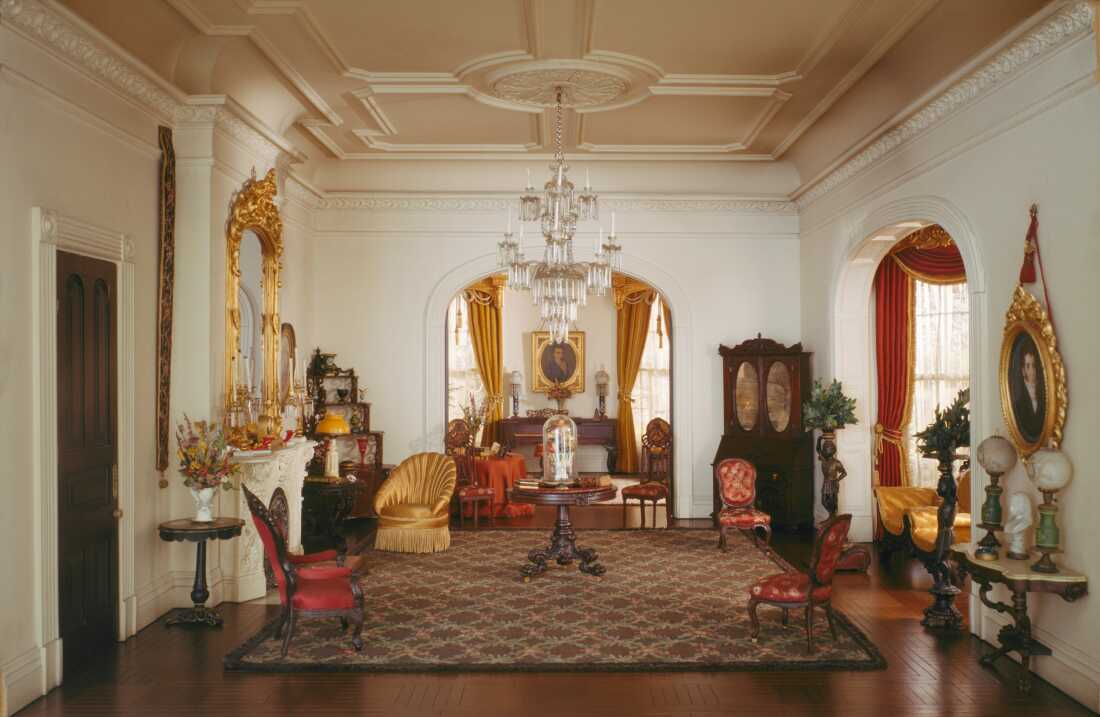
The Georgia Double Parlor is a famous miniature diorama created by Mrs. James Ward Thorne. This 1:12 scale model represents an antebellum southern plantation manor and is part of the Art Institute of Chicago’s collection.
At the Art Institute of Chicago, a team of experts is dedicated to the meticulous cleaning of an exhibit featuring 68 miniature rooms that chronicle the history of interior design. These rooms are arranged behind numerous windows within the gallery walls. Inside, each room’s furnishings mirror the design trends from various times and places. The rooms are fashioned at a scale of 1:12, about the size of a shoebox.
“These miniature rooms are among the most popular galleries in the museum,” explained Kit Maxwell, a department curator. “Many Chicagoans cherish memories of their childhood visits, peering into these detailed worlds.”
Narcissa Niblack Thorne, originating from one of Chicago’s affluent families, created these rooms. She traveled extensively, gathering miniatures and assembled a skilled group of artisans in the 1930s to produce these intricate rooms. Thorne passed away in her Chicago residence in 1966.
Maxwell, who has worked in the department for over four years, stands beside California Hallway, c. 1940. Thorne emphasized these were not dolls’ houses but educational exhibits on good taste and interior decoration.
“They were meant to educate and inform visitors,” said Maxwell.
One room illustrates a 1930s London living room, complete with a cocktail set, a copy of Country Life magazine, and a card game ready to be played. It features creamy walls and high ceilings, part of several English drawing rooms from different historical eras designed by Thorne.
“This is one of my favorite rooms,” Maxwell admitted. “I feel like I could live here.”
The exhibit undergoes cleaning at least twice a year, tasked to Jonathan Worcester, the department’s primary art handler. Worcester manages the preservation and display of the art, from storage maintenance to coordinating displays and prepping artwork for repairs. He and a co-worker clean the decor in detail, which can take from one to three hours per room.
The cleaning process consists of dust and soot removal, addressing both aesthetic and preservation concerns. “The primary strategy is patience,” Worcester noted, emphasizing the importance of care and diligence in handling the materials.
To aid in cleaning, Worcester uses a plastic utility cart laden with precise tools like brushes, spatulas, tweezers, and an air blower. He employs a chandelier holder for dusting and inspecting each tiny fixture. His process involves unlocking the glass front, dismantling the room’s furniture, and cleaning the interior. He also addresses the ancillary rooms through the gallery’s back, using photographs to return everything to its original arrangement.
Narcissa Niblack Thorne’s California Hallway, a modern art gallery, includes tiny original paintings commissioned from artists like Fernand Léger and Léopold Survage.
“Repetition is part of the process,” Worcester stated, “achieving a meditative state is essential, sometimes helped by listening to an audiobook.”