
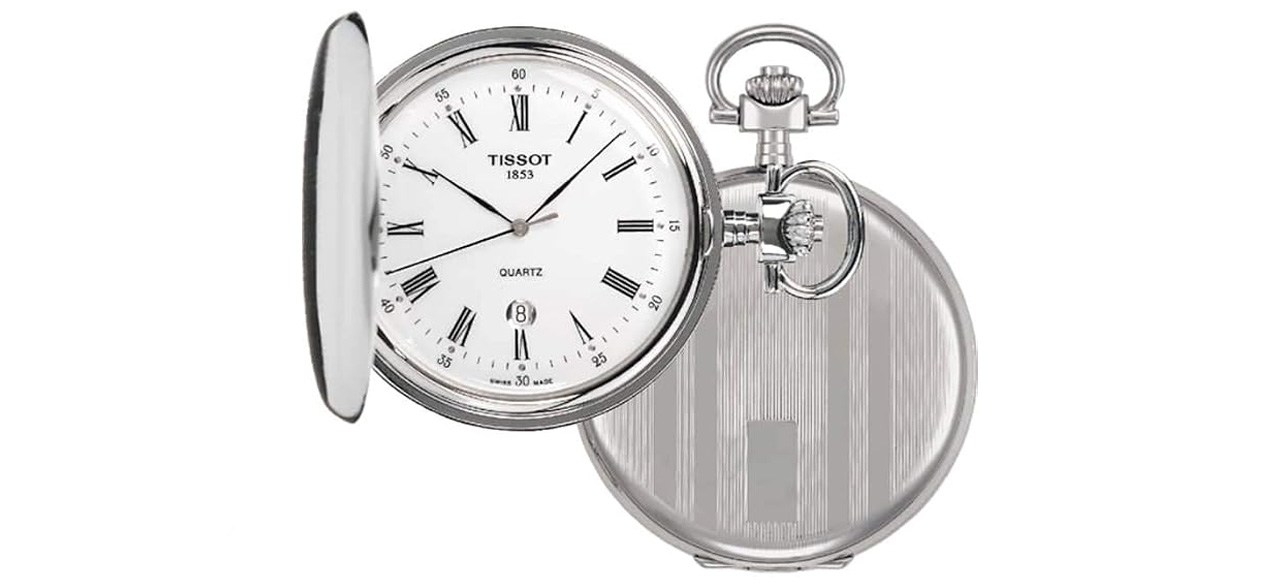
Luxury and Practicality in Pocket Watches
Pocket watches serve as a symbol of elegance and sophistication. They offer an aesthetic charm that surpasses the functionality of modern devices like smartphones or smartwatches.
The Tissot Savonnette Pocket Watch, Charles-Hubert Paris Men’s Classic Mechanical Pocket Watch, and Stuhrling Original Men’s Vintage Mechanical Pocket Watch represent high-quality choices that signal a preference for style over mere functionality.
Types of Pocket Watches
Pocket watches come in various styles, each with unique designs and functions.
- Traditional Watches: These are typically closed-faced, crafted from gold or silver. Often engraved, they embody a timeless appeal.
- Railroad Watches: Designed for precision, these open-faced watches fall within size 16 or 18, featuring at least 17 gear bearings. They ensure accuracy in a range of temperatures.
- Skeleton Watches: Known for their visible gear mechanics, skeleton watches combine with other styles, offering a glimpse into the intricate workings of the watch.
- Unisex Watches: Reflecting the pocket watch’s origins, unisex designs appeal to both male and female styles.
Key Dimensions
Understanding pocket watch dimensions involves recognizing two key aspects: the movement and the case diameter.
- Movement: The size refers to the watch’s inner mechanics or “engine” that moves the hands. Larger movements often provide greater accuracy.
- Diameter: This measurement concerns the case design, affecting the watch’s stylistic appeal rather than its mechanical precision.
Power Sources
Pocket watches are powered in two main ways.
- Mechanical Mechanism: These require manual winding daily to activate the spring-driven gear system.
- Quartz Mechanism: These utilize a battery to power quartz crystals, which vibrate and convert those vibrations into electrical signals to drive the gears.
Face Design
Faces can be closed or open, with materials ensuring durability.
An incident in the late 1800s involving a train conductor led to open-faced designs for better timekeeping in railroad watches. Today, the choice between face designs remains largely stylistic, as technological advancements have addressed previous limitations.
Quality Indicators
Identifying a good pocket watch involves examining materials and style.
- Material: Cases are often made from stainless steel, prized for its strength and affordability. Bronze, silver, and gold metals bring varying cost implications. Non-magnetic metals ensure gear functionality.
- Style: The case and face incorporate stylistic elements like engraving, material choice, and numeral style.
Price Expectations
Pocket watch prices vary widely. While entry-level designs start below $20, elegant models begin around $100. Reasonable styles can be found between $50-$100.
Maintenance and Style Tips
Maintaining a pocket watch involves regular winding and occasional lubrication with watch oil. Repair is complex, requiring skilled professionals.
Whether using a chain is a matter of personal style and functionality. Chains facilitate easy handling and can enhance your watch’s style.
Top Pocket Watch Recommendations
Tissot Savonnette Pocket Watch
A Swiss-made, quartz-powered watch. Features include a high-quality stainless steel exterior, durable hesalite crystal, and water resistance up to 30 meters. Costs are higher due to its quality craftsmanship.
Charles-Hubert Paris Men’s Classic Mechanical Pocket Watch
This watch adds traditional flair with a handsome skeleton face design. It ensures accurate time, but engraving isn’t possible. Comes with a lifetime warranty.
Stuhrling Original Men’s Vintage Mechanical Pocket Watch
A diverse, stylish choice with a kickstand for display. It requires daily winding. The Krysterna crystal is scratch-resistant, though some designs experienced wear issues.
For more shopping guidance, consider subscribing to newsletters for deals and insights. Pocket watches offer a gem of luxury despite modern alternatives.