
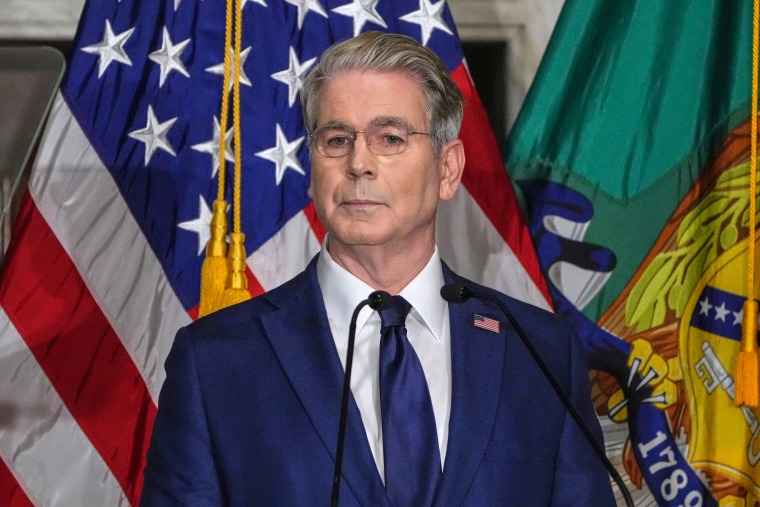
Treasury Secretary Scott Bessent unveiled plans for new sanctions to further isolate Iran, after labeling the initiative as an “economic D-Day.” These sanctions target global entities aiding Iranian trade in sectors like shipping, oil, cryptocurrency, gold, and aviation.
Bessent stated that President Donald Trump has been reaching out to world leaders with requests to halt trade with Iran. The U.S. aims to disconnect Iran’s financial networks worldwide to cut off every economic supply line until Iran stands isolated. This week, the Treasury slapped sanctions on nearly 60 corporations, individuals, and vessels involved in supporting Iran’s agenda, some of which are Chinese nationals. China’s stance is firm: complying with unilateral sanctions imposed by the U.S. is deemed illegal.
The U.S. is also engaging in quiet diplomacy with Iran’s trade partners warning them about the ramifications of persistent trade with Tehran. Entities facilitating money laundering for Iran risk exclusion from the U.S. dollar system.
Bessent emphasized, “No one is above the reach of U.S. sanctions.”
A “cure period” has been granted to countries to sever links with Iran, though Bessent refrained from outlining immediate punitive steps against other nations. The markets had minimal reaction to his statements.
For decades, the U.S. has sanctioned Iran, targeting those involved in prohibited actions like weapons procurement. Despite these measures, Iran often evades restrictions by creating new front enterprises. Bessent vowed to carry out “the single greatest financial offensive ever” aiming to cut all economic ties supporting Iran’s authorities.
The actions focus on secondary nations that maintain trade benefiting Iran. Just before the announcement, the United Arab Emirates terminated trade relations with Iran.
Experts are watching whether Iran’s key trade allies, China, India, and Russia, deem U.S. threats credible. Iranian allies may resist altering their trade relations, posing challenges for U.S. efforts.
Since the conflict began over Iran’s nuclear ambitions, the U.S. has incurred substantial economic costs. Defense Secretary Pete Hegseth reported that the war has cost the U.S. $37.5 billion, with broader economic impacts hitting $150 billion. This financial strain affects U.S. households with increased costs, impacting President Trump’s approval ratings.
The Treasury Department is intervening in bond markets to mitigate turmoil caused by the situation. Criticism from Iranian officials suggests U.S. strategies lack practical impact, with Iran’s partners signaling non-compliance with the U.S. directives.
Iran’s resilience is visible as its Central Bank had anticipated tough times and stockpiled foreign currency. Arrangements are in place to ensure essential goods, despite sanctions.
In Tehran, the economic situation has spurred concerns about potential protests. Iran’s police chief highlights that the U.S.’s aims may include inciting unrest, posing threats to stability.
The Iranian government’s grip on power remains strong despite challenges, consolidating authority further under Mojtaba Khamenei’s leadership, who continues his father’s hard-line approach.