
President Donald Trump’s latest financial disclosure report illustrates significant gains from his involvement in cryptocurrency. The extensive 927-page document released by the Office of Government Ethics highlights how his digital asset endeavors have evolved into a major profit center.
According to the report, Trump amassed billions of dollars last year from a variety of business dealings, including stock trades, global real estate, business interests, and royalties from branded products. A notable chunk, approximately $1.4 billion as per estimates by The New York Times and Reuters, originates from his cryptocurrency enterprises. These include family-owned World Liberty Financial (WLFI) and the sale of the $TRUMP meme coin.
Unlike earnings from prior terms, Trump’s current office-related income surpasses earlier figures dramatically. However, the administration dismisses concerns over potential conflicts between his business interests and public responsibilities. “Neither the President nor his family has ever engaged—or will ever engage—in conflicts of interest,” stated White House deputy press secretary Anna Kelly.
Trump is credited with helping the U.S. emerge as the crypto leader through diverse legislative and executive actions. Trump’s support for legislation, such as the GENIUS Act, exemplifies his push for innovation and broader economic opportunity.
Trump’s Shift to Support Cryptocurrency
Initially a critic of cryptocurrency, Trump has shifted to become an influential advocate, aligning his policies to advance its growth. During his 2024 campaign, he adopted a favorable stance on crypto, later pursuing a supportive agenda once reelected.
The start of his second term marked a swift regulatory shift, easing policies introduced by former President Joe Biden. Trump communicated his ambition to position the U.S as a global leader in cryptocurrency.
Executive orders soon encouraged “responsible growth and use of digital assets, blockchain technology, and related technologies across all sectors.” A crypto-focused working group was formed, alongside the appointment of the inaugural AI & Crypto Czar.
Personnel changes reinforced this direction. Trump replaced key figures such as SEC Chair Gary Gensler, known for his critical stance on crypto. Gensler left the role, succeeded by Paul Atkins, previously an adviser to crypto firms.
Strategic Bitcoin Reserve Initiative
Last March, Trump revealed plans for a “Strategic Bitcoin Reserve,” described by former crypto czar David Sacks as a “digital Fort Knox.” This strategy involves accumulating Bitcoin seized by the government. Treasury Secretary Scott Bessent is actively pursuing legislative support for this reserve via the CLARITY Act.
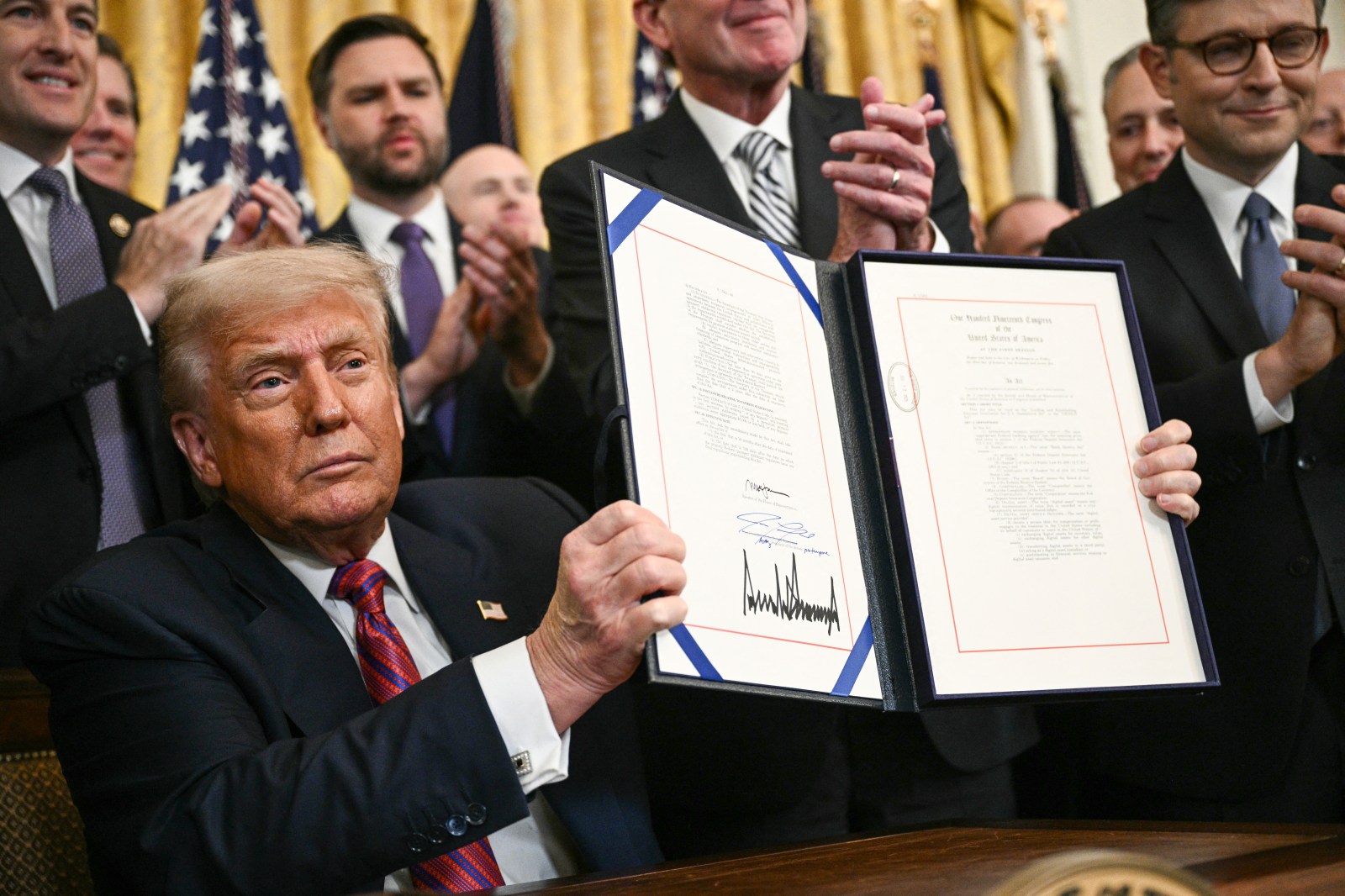
Trump has also endorsed the GENIUS Act, signed into law in July, as a significant step in regulating stablecoins. This legislation aims to provide regulatory clarity, resulting in increased institutional interest and wider financial market integration.
Ava Labs president John Wu considered the bill a milestone that sets a precedent for global standards and legitimizes stablecoins in financial networks.
Scrutiny Over Trump’s Crypto Gains
Estimates from Politico highlight Trump’s crypto-related income in 2025—$1.4 billion, sourced primarily from WLFI and CIC Digital. Despite critics questioning the overlap of policy influence and private gain, Trump dismisses any accusations of impropriety.
Former White House lawyer Ty Cobb claims Trump’s policies may be self-serving. Yet, Trump maintains that he remains detached from personal financial management, attributing his increased wealth to the positive stock market.
According to the White House, Trump’s actions are consistently aligned with the greater good of the American people.
For further inquiries, Newsweek editors Daniel Orton and Sam Wilson can be contacted regarding this story.