
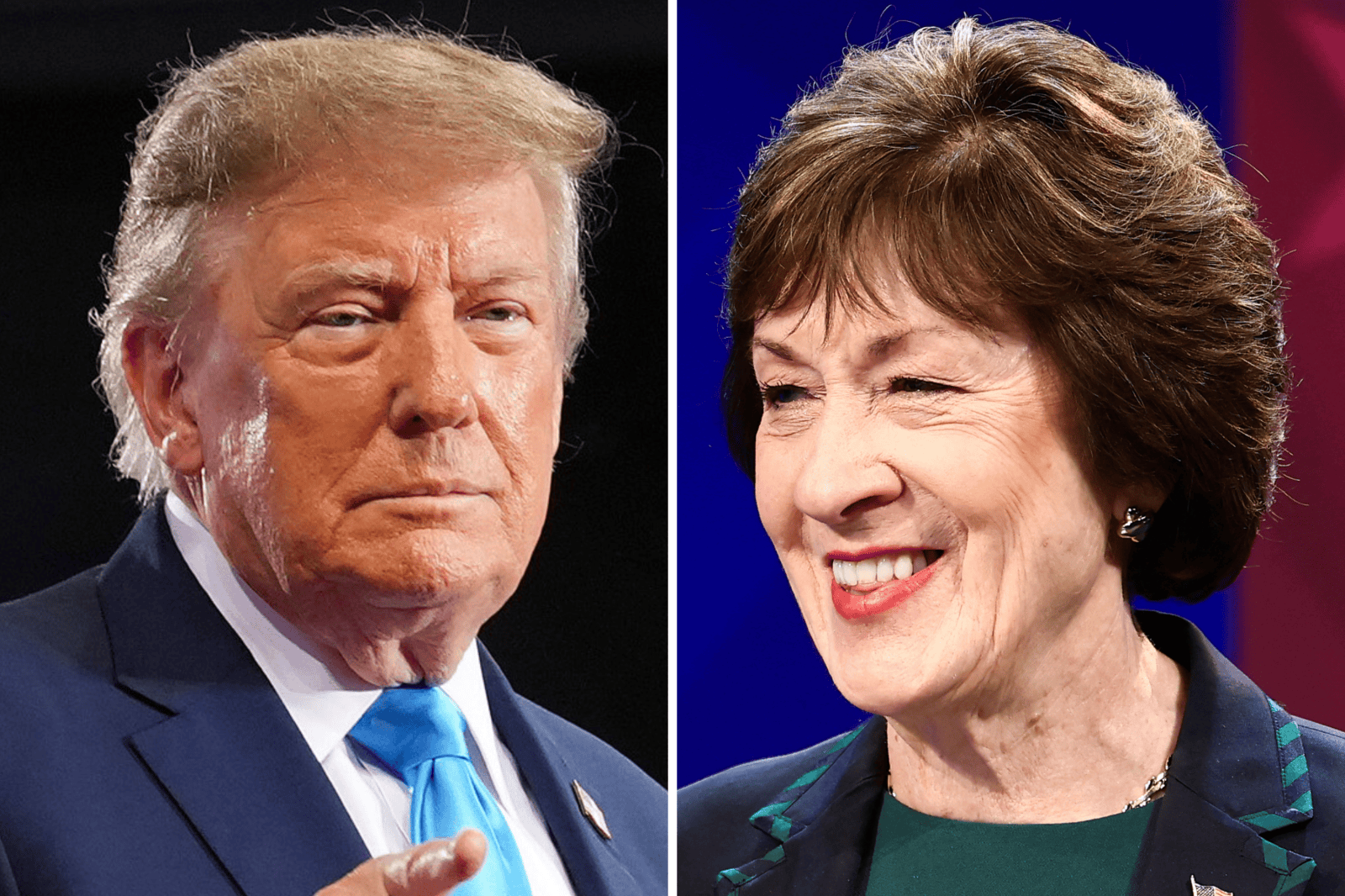
President Donald Trump has provided Republican Senator Susan Collins with economic support in the competitive Maine Senate race. This support includes aid for the state’s lobster industry and targeted tariff relief.
Recent polling data reveals Collins is now level with her Democratic challenger Troy Jackson. A Fox News Poll shows both candidates tied at 49 percent among likely voters. Previously, a Marist Poll indicated a four-point advantage for Jackson earlier in October. While the polls measured different electorates, the results suggest the race is becoming tighter in its final weeks.
Voters for both candidates remain strongly committed, making turnout and a small group of undecided voters crucial to the outcome. Newsweek reached out to both campaigns and the White House for comments outside of regular working hours.
Why It Matters
Historically, midterm elections pose challenges for the president’s party. Control of the Senate is highly dependent on a few close contests. Collins, who is seeking a sixth term, faces a difficult race as Trump remains unpopular in Maine. Data from pollster Civiqs shows Trump with a negative 32-point rating in the state. Collins, however, has defied odds before. In 2020, despite trailing in final polls to Democrat Sara Gideon, Collins won by nearly nine points.
A Lobster-And-Tariffs Boost
Trump has introduced new economic measures benefiting Collins. These support sectors such as lobstering, fishing, and trade, which are vital to many Mainers. On October 23, the White House detailed a national seafood plan aimed at bolstering domestic processing and reducing regulatory barriers. The America First Seafood Strategy promises to restore the profitability of Maine’s lobster fisheries. It includes over $5 billion in loans for modernizing meat and seafood processing and proposes a voluntary ‘U.S. Caught Seafood’ label to guide consumers.
Though this policy does not guarantee cheaper seafood, its focus on Maine lobster offers Collins an industry victory relevant to local voters. Additionally, tariff changes reduce 50 percent duties on Canadian imports vital for Maine’s economy. These products include refrigeration equipment, machinery, and packaging materials. Nine agricultural categories, such as blueberries and potatoes, gain exemptions from Canadian tariffs. Collins emphasized the importance of these specialized goods, which are unavailable domestically.
She stated, ‘I have asked for tariff relief for these important products,’ pledging to continue efforts for broader agreements with Canada. This allows Collins to argue for her ability to secure practical aid from a president unpopular with Mainers. On the other hand, Jackson argues that the senator is benefiting from relief from issues caused by her party’s policies.
Notably, Oregon Senator Ron Wyden described the concessions as a ‘desperate, 11th-hour attempt to save Susan Collins’ political career.’ Collins’ challenge is to provide substantial help while managing her association with Trump, a president disliked by most Maine voters. Newsweek contacted groups like the Maine Potato Board, Maine Aquaculture Association, and Wild Blueberry Commission of Maine for their input.
What Polls Show About Maine Senate Race
The Fox News Poll, run by Beacon Research, a Democratic firm, and Shaw & Company Research, a Republican one, between October 16 to 20, surveyed 1,514 likely voters with a sampling error margin of 2.5 percent. The polling was conducted via landline, cellphone, and online questionnaires.
These results followed the Marist Poll of 1,505 registered voters, from October 1 to 4, showing Jackson at 51 percent and Collins at 47 percent. This gap falls within the poll’s margin of error, making a clear advantage uncertain. Respondents were contacted through telephone, text, or online.
In the broader sample of registered voters, Jackson leads 50 percent to 48 percent, a margin within the two-point error margin. RealClearPolling’s average from September 23 to October 20 includes Jackson at 48.8 percent and Collins at 47.4 percent, showing a slight Democratic lead.
The Coalitions Beneath The Tie
In the Fox News poll, Collins leads among independents by 13 points and rural voters by seven, while dominating among Mainers without college degrees by 16 points. However, these subgroup findings have larger error margins compared to the state’s overall results. Jackson holds a five-point lead among women, 18 points in suburban communities, and 23 points among college graduates.
Turnout could be Jackson’s best opportunity. Seventy-nine percent of Democrats express extreme interest in the election, compared to 61 percent of Republicans. Among engaged voters, Jackson leads by 16 points.
Ballot patterns are mixed. Of those who had already voted, Jackson received 40 percent more support, while Election Day voters favored Collins by 12 percent. Mikaela Linder from Beacon Research noted, ‘Collins is no stranger to outrunning her party, but Democrats hold an 18-point enthusiasm advantage.’ She added, ‘Jackson has an opening if he can maintain momentum.’
The Risk Attached To Trump
The Fox News Poll shows that only 37 percent of likely voters approve of Trump’s performance, with 62 percent disapproving, including 54 percent strongly. Despite this, Collins manages to receive support from 20 percent of Trump disapprovers, showing her political brand allows separation from Trump.
Economic concerns impact both parties. A mere 12 percent feel their families are better off than two years ago, while 51 percent believe they are worse off.
Contact Newsweek editor on this story: Edward Pearcey. Newsweek’s reporting team used Martyn, our AI assistant, for story development. Learn more about Martyn.