
BIDUR, Nepal — The smell of death hangs heavy over Bidur, a town in Nepal’s Nuwakot district, following last week’s catastrophic floods. Hopes for finding more survivors are waning as workers wearing white hazmat suits unload bodies from a constant stream of ambulances. These bodies are placed on blue tarps in restricted areas.
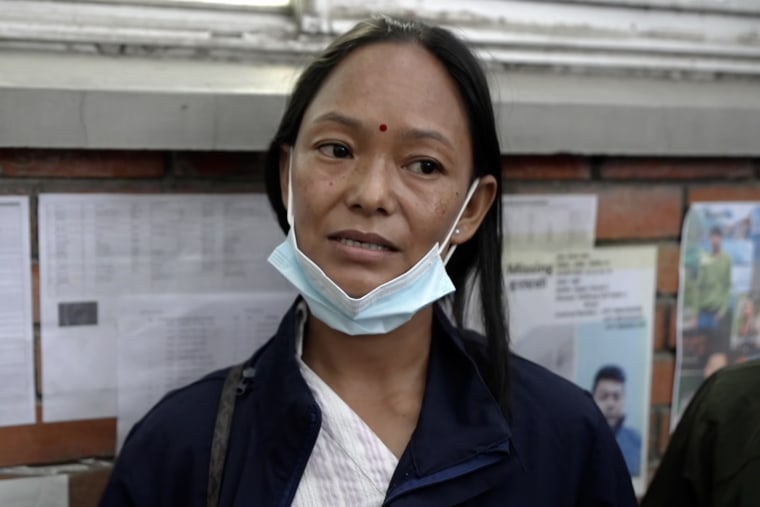
Helicopters, usually used for commercial tours, are now packed with aid supplies before returning with survivors in need of medical care. Kalpana Shrestha, a nurse from Kathmandu, faces the harsh reality of losing ten family members, including her sisters and their children, who disappeared during the disaster in Betrawati, a town obliterated by the flooding.
I have shared their photos with journalists, on social media, and YouTube but received no response,
Shrestha stated in an interview with NBC News in Kathmandu. Despite relentless posting, her attempts to find her family have not been fruitful.
According to Nepal’s National Disaster Risk Reduction and Management Authority, the deadly floods have claimed over 1,000 lives, with 3,915 reported missing. Among the missing are at least 583 foreign nationals, including 80 Americans. China’s CGTN reported that in Tibet, 16 fatalities and 546 missing persons have been recorded. Over 10,000 people have been rescued, including 252 foreign nationals, as per United Nations figures.
The disaster, caused by a glacier collapse and landslide near Nepal’s border with China, has become the deadliest natural catastrophe since the April 2015 earthquake which claimed around 9,000 lives in Nepal.
Shrestha voiced her concerns about insufficient government efforts to locate her family, pointing out ongoing access difficulties to her village. Our brothers tried but couldn’t reach them,
she explained. The road is gone, there is no access at all.
Access issues are the main hurdle for response teams; roads to Nuwakot are passable but crucial sections connecting Kathmandu to heavily affected areas remain blocked, according to the United Nations Office for the Coordination of Humanitarian Affairs.
Authorities face challenges with bodies recovered amidst fears of infection. According to Nepal’s disaster agency, bodies are stored in 21 hospitals across districts and buried to avoid public health threats. Future identification may allow remains to be returned to families.
In Pokhara, police superintendent Nabin Karki explained that DNA samples are being collected, and photos of unidentified bodies are displayed, enabling families to potentially identify their loved ones. Relatives can give blood samples for DNA comparisons, allowing matched bodies to be retrieved and delivered for funerals.
Reporting by Janis Mackey Frayer and Dawn Liu in Bidur, Michael Fiorentino and Surendra Phuyal in Kathmandu, and Sunil Pandey in Pokhara.