
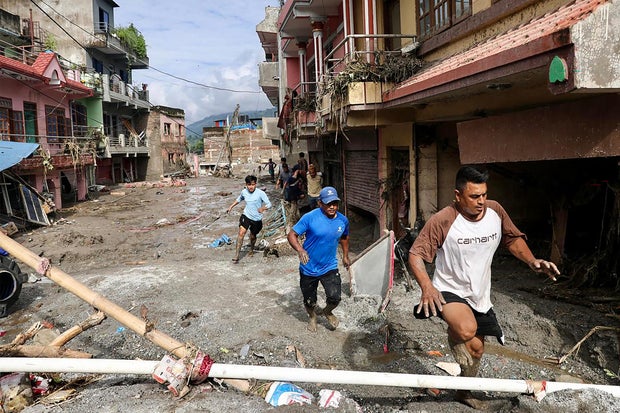
Rescue efforts are ongoing for hundreds missing along the Nepal-China border following devastating floods and mudslides. A glacial collapse triggered these catastrophic events, affecting several communities. Nepal’s National Disaster Risk Reduction and Management Authority reported 826 people missing, with 165 confirmed dead as searches intensified in Nuwakot and Rasuwa.
Chinese state broadcaster CCTV reported 558 missing in Tibet, including 260 foreigners. Three fatalities were confirmed. Nepal’s Tourism Board indicated 33 Americans were among the missing. Large-scale destruction was evident, with homes, roads, and bridges severely impacted. Drone footage revealed extensive damage.
The steep valleys in the region, crucial for travel and economy, have been particularly affected. Images showed only second floors of buildings visible amid thick mud in Nuwakot. Residents faced little warning before the floods struck.
Intensifying Rescue and Relief Efforts
The military has intensified search and rescue operations. The Nepalese army used helicopters to evacuate over 100 individuals, transporting injured to Kathmandu for medical care. Operations targeted areas around the Trishuli hydropower project.
Tibet also experienced mudslides, notably at Gyirong Port, causing extensive damage and communication breakdowns. Despite the ongoing risk of further landslides and rain, rescue efforts continue.
Additionally, concerns arise from a barrier lake that formed near the port, hindering rescue operations. Hundreds of foreigners, including Indian pilgrims, are unaccounted for.
International Support and Tributes
U.S. Secretary of State Marco Rubio expressed sympathy and readiness to assist Nepal. The U.S. Embassy offered condolences and announced a $500,000 grant to Catholic Relief Services to aid in response efforts.
The Dalai Lama also extended prayers and sympathies to those affected by the tragedy.
Glacial Collapse: A Catastrophic Cause
The U.S. Geological Survey initially reported an earthquake but revised this to a 5.2 magnitude glacial collapse. Data from seismic stations and satellite imagery informed this update.
The International Centre for Integrated Mountain Development in Kathmandu linked the disaster to an avalanche from a glacier. The Trishuli River saw water levels spike dramatically.
Increasing Climate Change Threats
This is not the first such disaster. The Lhende Khola River, flooding twice in 14 months, underscores the growing threats from unstable glaciers. Similar floods occurred last August in Tibet due to a glacial lake overflow.
The Himalayan region, home to many glaciers, experiences excessive temperature changes. This increases risks of floods and landslides, affecting both communities and infrastructure. Accelerated ice melting poses a significant global concern.