
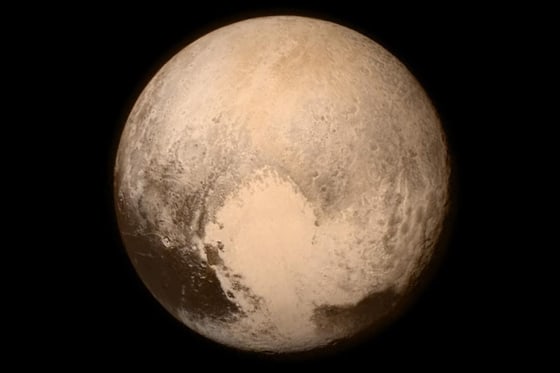
Twenty years ago, a significant change in our understanding of the solar system took place. Pluto, once regarded as the ninth planet from the sun, was reclassified as a dwarf planet in 2006. This decision was made by the International Astronomical Union, leading to a long-standing debate among scientists and space enthusiasts.
NASA Administrator Jared Isaacman has recently rekindled this discussion by expressing his desire to make Pluto a planet again. His sentiments reflect the feelings of many who still feel the impact of Pluto’s change in status.
The reclassification was based on a new definition of what constitutes a planet, which requires an object to clear its orbit of other debris. Pluto, with its relatively small size and overlapping orbit with other objects in the Kuiper Belt, does not meet this criterion, thus its designation as a dwarf planet.
For some, the sting of that cosmic demotion has never gone away.
Despite the reclassification, Pluto continues to be a subject of fascination and study. NASA missions, such as the New Horizons spacecraft, have provided valuable data and images, enhancing our understanding of this distant world.
As discussions about Pluto’s status persist, they highlight the evolving nature of scientific classifications and our ever-growing understanding of the cosmos.