
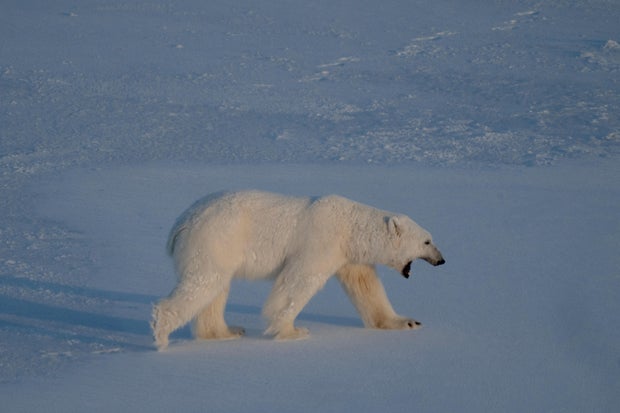
A resident in Norway’s Svalbard archipelago, located in the Arctic, incurred a fine of $5,255 for disturbing a sleeping polar bear using a foghorn, as reported by local authorities. This incident was highlighted in a statement provided by the territory’s governor, which detailed that the event occurred earlier this month while a vessel navigated a fjord in northeastern Svalbard, approximately 620 miles from the North Pole.
The statement explained that the ship’s occupants observed a polar bear resting on land. In response, one individual aboard the vessel opted to use the foghorn, thereby waking the animal and causing it to relocate. The governor’s office subsequently imposed the fine on this person, who accepted and agreed to pay the amount. The individual’s identity and nationality remain undisclosed. Local regulations in Svalbard prohibit pointless disturbance, attraction, or pursuit of polar bears, a species protected in the region since 1972.
In a related context, scientific surveys in 2015 counted approximately 260 polar bears residing within the archipelago. Despite the threats from climate change and shrinking ice, studies revealed that Svalbard’s polar bears are in good health and increasing in size. In January, researchers from the Norwegian Polar Institute, led by Jon Aars, conducted an investigation from 1992 to 2019, which included tracking the weight and size of nearly 800 bears in the region.
Aars shared his initial surprise at the findings given the extensive ice loss since the beginning of his studies. But the data indicated that these polar bears have adapted to the reduced ice habitat, managing to hunt in smaller, more concentrated areas, which potentially aids their survival and reproductive capabilities. Researchers were initially concerned about the reduced sea ice platform, essential for hunting seals, but the adaptation strategies observed provide cautious optimism for the species’ future.