
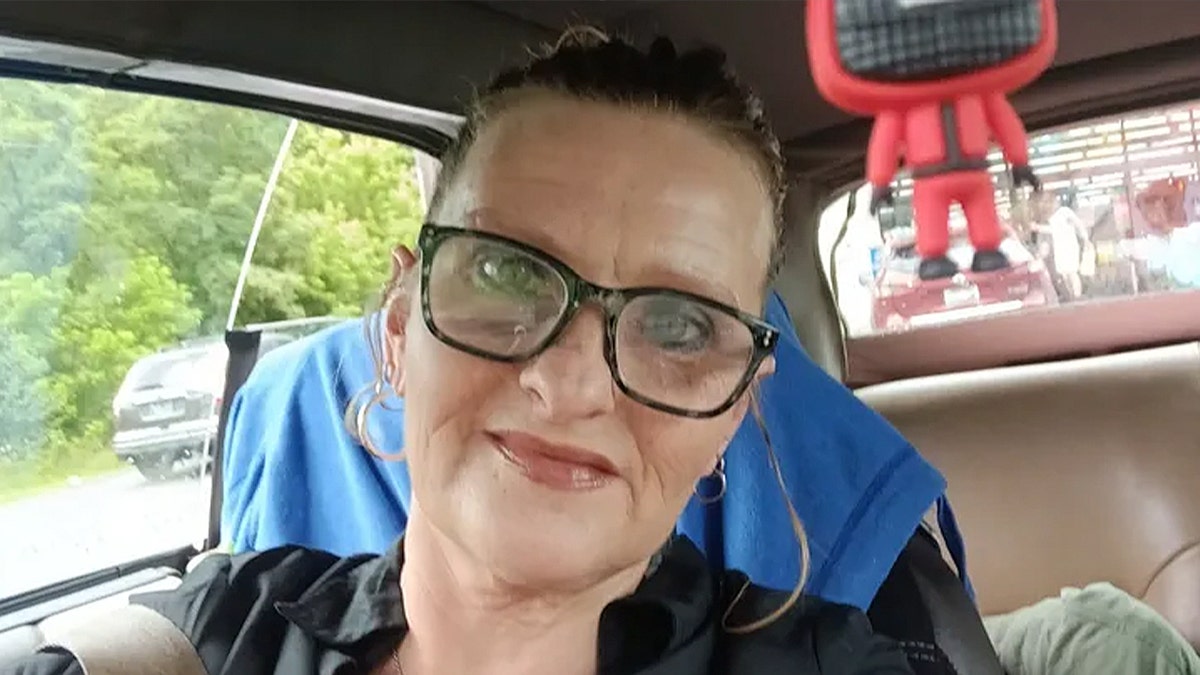
A Tennessee grandmother, Angela Lipps, has initiated legal proceedings against a North Dakota city and police department. She accuses them of wrongfully detaining her for nearly six months due to the alleged misuse of artificial intelligence facial recognition technology in a bank theft investigation.
Lipps, who is 50 years old and resides in Elizabethton, Tennessee, recounted being arrested at gunpoint at her home in July 2025 while caring for her neighbor’s children. The lawsuit, filed on September 15, 2026, claims that authorities relied solely on a defective AI facial recognition match to extradite her from Tennessee to North Dakota. Lipps asserts she had no involvement with the crime or the state.
According to experts on police technology, this case is among more than a dozen reported incidents involving alleged police mishandling of facial recognition technology. In a GoFundMe post, Lipps shared her experience of spending 108 days in a Tennessee jail labeled as a fugitive from justice. She explained, “I had no bail. No one interviewed me. I just sat and waited.” Lipps was eventually transported to North Dakota, where she was cleared of charges.
The bank theft, related to events in April and May 2025, involved an unidentified woman allegedly using fake IDs to commit fraud in Fargo and West Fargo, North Dakota. The lawsuit details how officials used an ID card photo instead of surveillance footage to conduct facial recognition searches using Clearview AI. Allegedly, Fargo police characterized the AI match as a conclusive identification, despite the AI guidelines urging it to be treated as a lead only, without independent corroboration.
Meanwhile, the West Fargo Police reportedly refrained from pursuing charges due to the uncorroborated AI match. A West Fargo police captain allegedly referred to facial recognition as a “last-ditch effort” in investigations.
Lipps maintains that police ignored evidence proving her presence in Tennessee during the thefts occurred. Investigator Lucas Heck allegedly failed to verify Lipps’ financial and travel records and did not conduct photo lineups with bank tellers. Video surveillance indicated several physical discrepancies between Lipps and the suspect, such as differing builds and a neck tattoo Lipps had but the suspect lacked.
The lawsuit alleges Heck disregarded and misrepresented evidence showing Lipps’s innocence. On July 14, 2025, U.S. Marshals appeared at a neighbor’s residence in Tennessee, arresting Lipps at gunpoint on a national warrant. She was subsequently extradited to North Dakota and detained under a $100,000 bond while facing multiple felony charges, some carrying up to 10-year maximum sentences.
Reports state that prosecutors dropped all charges by December 24, 2025, once Lipps provided records affirming her presence in Tennessee during the actual crimes. Upon release, Lipps discovered a loss of her residence, car, and personal property.
Following public critique, Fargo officials admitted investigative errors at a March 2026 press conference. Mayor Tim Mahoney mentioned prompt measures taken upon recognizing flaws in facial recognition practices.
“When chief found some errors that were made in this area of where we got our facial recognition and how that worked, we immediately addressed it,”
Clare Garvie from the Policing Project informed Fox News Digital about the increase in AI misidentifications as law enforcement incorporates AI tools into investigations. She highlighted over 16 known cases where misidentifications led to wrongful arrests due to lack of further investigative steps.
Nate Freed-Wessler of the American Civil Liberties Union, in an interview, discussed the rise in AI-related wrongful arrests. He noted these occurrences have been increasing over the past five to six years.
Bonny Chu contributed to this report.