
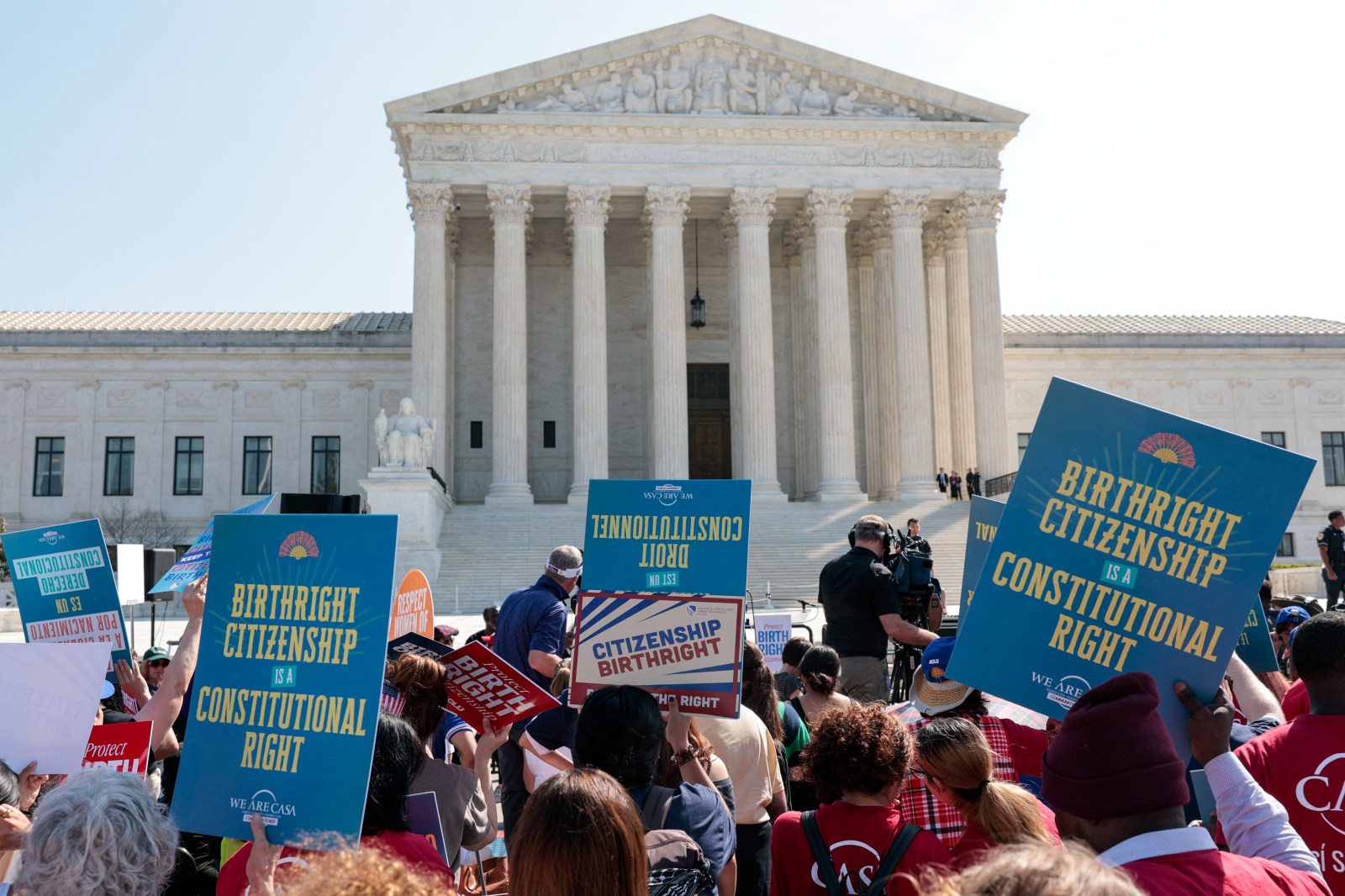
This week’s 5-4 U.S. Supreme Court ruling affirming birthright citizenship was eagerly awaited. The decision provides reassurance. It indicates the Court’s acknowledgment of limits in its shift away from liberal judicial precedents established over decades.
Throughout the year, the Court has delivered several conservative rulings. However, dismissing the constitutional guarantee of birth-based citizenship would have mirrored the reversal of Roe v. Wade. While Roe v. Wade established a right previously unrecognized, eliminating birthright citizenship would have stripped away a widely acknowledged right. This appears to have been an excessive overreach.
The current Court majority seems determined to replace emerging individual rights with traditionalist rights. This shift includes increased support for gun rights while diminishing rights for gays and immigrants.
The rulings against gays and immigrants underscore this trend. The Court permitted the Trump administration to stop asylum seekers from coming to the U.S. and ended humanitarian protections for them. It also struck down bans on conversion therapy, allowed businesses to discriminate against gays, provided exemptions affecting healthcare access for transgender individuals, and upheld bans on trans athletes.
These decisions contribute to the broader conservative agenda, including restricting abortion, weakening environmental regulations, and eroding protections against oligarchy. Recently, the Court facilitated increased political campaign funding led by big money and allowed more federal employees to be dismissed at the president’s discretion.
Chief Justice John Roberts’ opinion showed restraint in not eliminating birthright citizenship. The Trump administration’s attempt to end this constitutional right contradicted a foundational understanding of American identity. Birthright citizenship is guaranteed to all born in the U.S., and attempts to exclude children of illegal immigrants misinterpret the jurisdiction clause meant for diplomats, invaders, and sovereign tribes.
The irrationality of the argument that illegal immigrants are outside American jurisdiction drew recognition. This decision inspires hope for the Court’s impartiality. Nevertheless, conservative judicial reform continues, potentially affecting the midterm elections.
Trump’s efforts to undermine trust in U.S. elections are known, though repeated investigations found no widespread fraud. The Supreme Court must prevent these falsehoods from impacting the midterm elections.
The Court must ensure extra judicial resources during elections, resist avoiding fraud cases, and clearly establish fraud claims’ validity.
Articulating definitive findings about fraud during the 2020 election could have precluded the Capitol attack. In the upcoming election, the Supreme Court’s decisions may prevent a recurrence.