
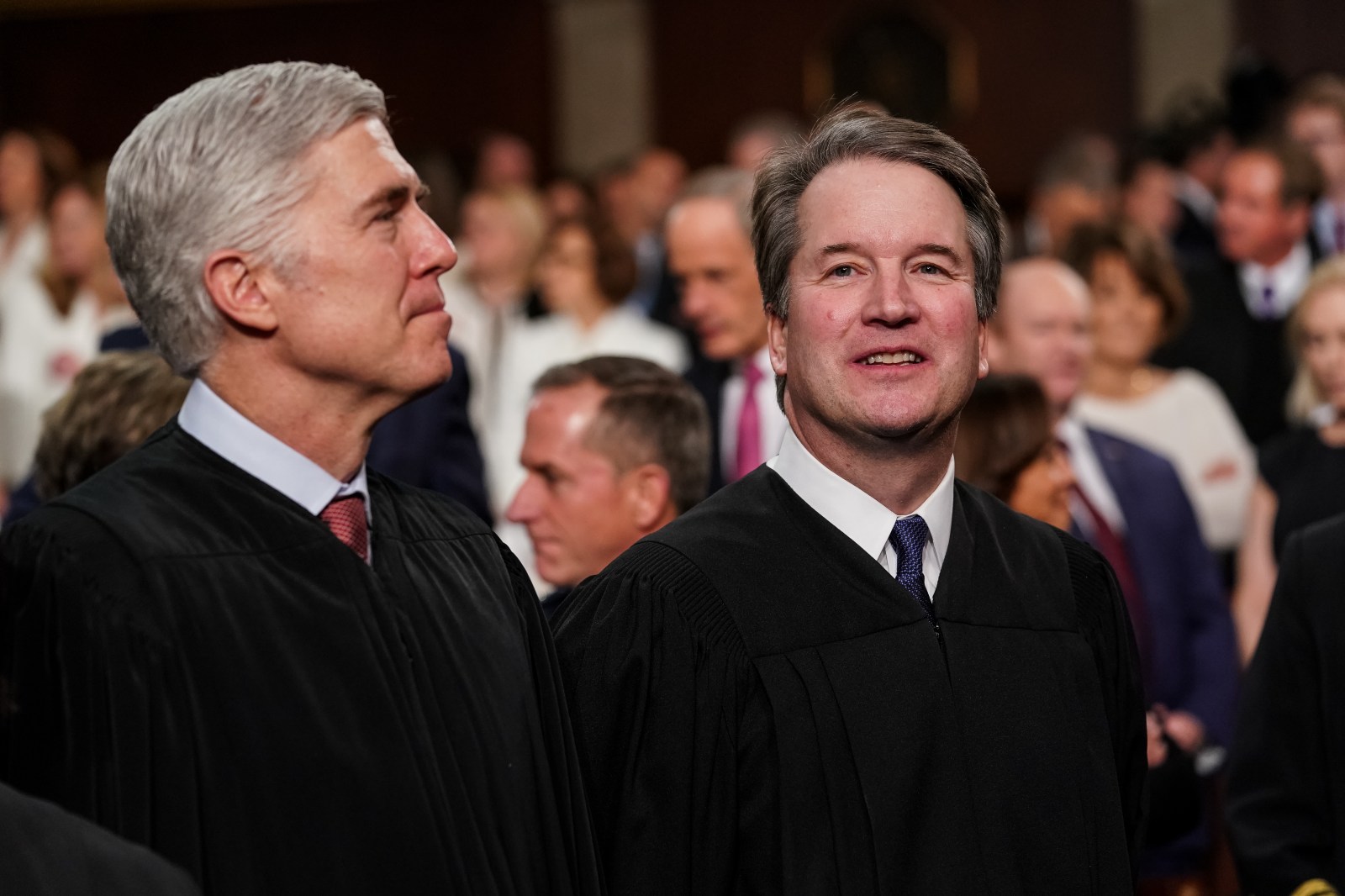
The latest decisions of the Supreme Court’s new term highlight Justice Brett Kavanaugh’s differing opinions from his conservative colleagues in a case involving Sunoco, a prominent gasoline and oil firm in the U.S. Sunoco faced a class action lawsuit due to alleged late oil production payments without interest as mandated by Oklahoma law, resulting in a $103 million judgment against the company.
Sunoco sought a Supreme Court review, arguing that the class might include individuals who didn’t suffer actual losses. The company believed that courts should determine eligible parties before awarding damages. However, the court denied Sunoco’s request to hear the case, with Justice Kavanaugh expressing his willingness to grant the petition.
Justice Samuel Alito abstained from the decision, providing no explanation. One potential reason could be his financial interests in companies competing with Sunoco. Alito’s financial disclosures reveal stock ownership in Phillips 66, a company involved in refining and distribution activities similar to Sunoco’s. Additionally, he holds stock in ConocoPhillips, which operates within the oil and gas sector, although not directly competing in Sunoco’s core operations.
Alito’s investments may have influenced his absence from initial oral arguments in the new term. Recently, the justices reviewed the case Suncor Energy Inc. v County Commissioners of Boulder County, focusing on climate change. Under external pressure, Alito eventually recused himself from the case without providing reasons.
In the Sunoco v. Perry Cline case, Cline represented royalty owners alleging Sunoco’s breach of Oklahoma law by withholding interest on late payments. The courts sustained a decision mandating that Sunoco pay $103 million. Rather than disputing the amount, Sunoco’s Supreme Court petition challenged the method of determining class membership. Sunoco argued that certifying or awarding damages should not occur without identifying the actual class members, noting the presence of unclaimed-property funds due to their inability to locate some owners.
Cline countered, asserting the irrelevance of Sunoco’s broader class action concerns to this case. While Sunoco questioned the identification of class members, Cline pointed to Sunoco’s business records as evidence for identifying recipients of royalty proceeds, maintaining that all class members experienced financial harm.
Sunoco expressed concern that the lack of Supreme Court intervention would set precedents permitting courts to award damages even when entitled individuals are not clearly identifiable. The company warned that such precedents could pressure defendants into settling class lawsuits and impose significant economic strain on companies, even without concrete evidence of harm suffered by individuals.