
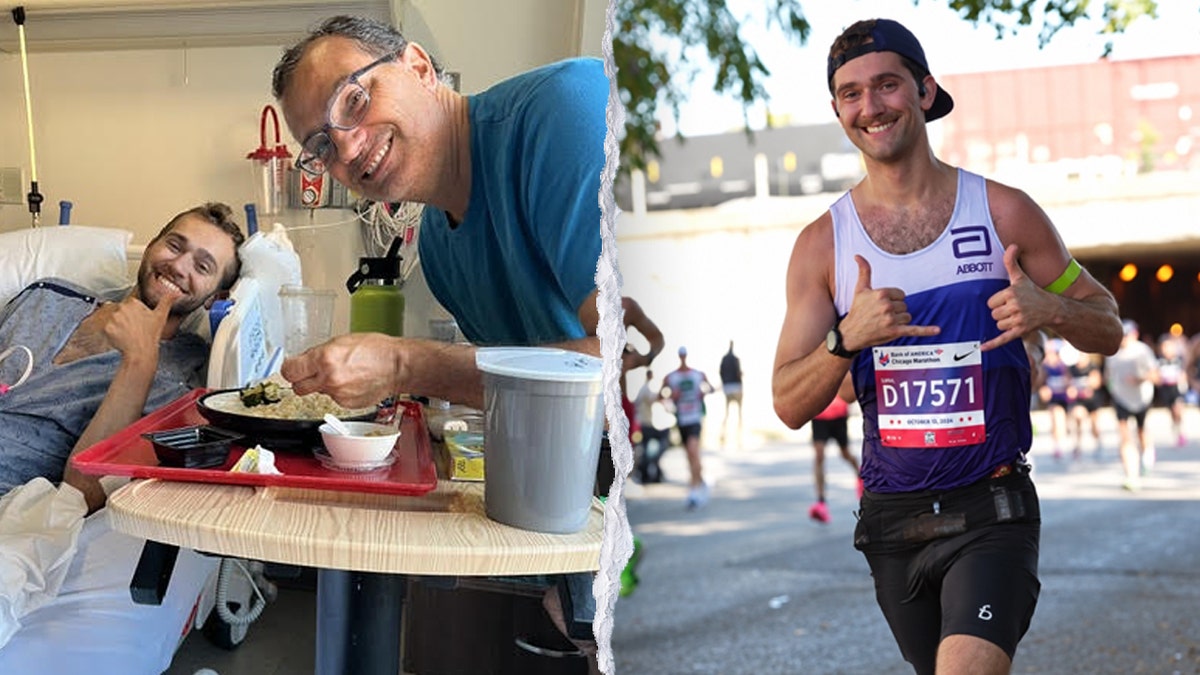
As stroke incidents among young adults continue to increase, one Boston resident, Patrick Mascoli, has recounted his harrowing experience at the age of 27. Mascoli, an engineer who prioritized fitness, was accustomed to running 40 miles each week. Aside from a history of migraines, he experienced no prior symptoms or warnings.
In July 2024, Mascoli embarked on a customary 10-mile run followed by a weightlifting session. Alone in the locker room, he suddenly felt an acute sensation, described as a bomb exploding in his head. The right side of his brain experienced a severe burning sensation and intense pain.
Initially suspecting a fainting episode related to previous blood pressure issues, he noted his vision progressively worsening and the pain escalating. This was unlike anything he had previously encountered. Struggling to stand, his legs disobeyed his commands, redirecting him into the wall and leaving his vision swirling.
He managed to contact his sister before fainting again. By the time she arrived, Mascoli was incapacitated on the gym floor, sweating profusely and unable to control his legs or see clearly. Despite suspecting a stroke, he dismissed the idea owing to his youth and fitness.
First responders initially suspected dehydration, given his recent run in the heat. Yet, IV fluids and vertigo treatment failed to alleviate his symptoms. Detailed scans at Boston Medical Center eventually confirmed the stroke diagnosis.
“No matter what I was telling my body to do, it just wasn’t working,” Mascoli remarked, reflecting on his condition.
Mascoli’s subsequent diagnosis was both unsettling and frightful. His stroke investigation involved extensive testing to determine the cause, but remained inconclusive. A heart ultrasound revealed a patent foramen ovale (PFO), a small heart opening that usually closes shortly after birth. Dr. Dheeraj Khurana explained that occasionally, a clot can pass through this opening to the brain, triggering a stroke.
Though not everyone with a PFO experiences health problems, Mascoli’s unresolved uncertainties remain concerning. About a month following the stroke, he underwent a procedure to close this heart opening with an Abbott device. This helped ease some of his apprehensions, though he still contends with motor skill challenges.
Returning to running was fraught with anxiety. Prior carefree runs were replaced with the constant concern of being too far from assistance. His girlfriend gifted him a fitness watch, galvanizing him to resume racing. Running became a motivation aid, benefiting his mental and physical recovery.
By October 2026, Mascoli achieved a major milestone by completing the Chicago Marathon with Team Abbott. His sister’s voicemail, acknowledging her role in his rescue, provided an emotional capstone to the achievement.
To others experiencing health crises, Mascoli encourages patience and self-acceptance, emphasizing the unique nature of individual recoveries.
Risks and Prevention
Risk factors for strokes in younger adults include high blood pressure, smoking, high cholesterol, clotting disorders, heart conditions, and arterial tears. Symptoms can mimic signs of exhaustion, complicating timely recognition.
Dr. Sean Levchuck advises maintaining strenuous activity levels with proper hydration. He cautions against smoking and emphasizes the importance of immediate medical assistance in stroke symptom scenarios, irrespective of age or fitness.
If you experience sudden balance loss, visual changes, facial drooping, arm weakness, or speech difficulties, contact emergency services without delay.