
Fertility rates in the United States are nearing historic lows. A significant reason is the sharp decline in the number of women having babies in their 20s over the past three decades. Despite no biological changes in women or fertility declination with age, an option that has emerged is egg freezing.
Initially developed for patients with cancer and other conditions affecting fertility, egg freezing for non-medical reasons became recognized as an accepted practice 13 years ago. Demand has since surged, with hundreds of thousands of eggs now frozen. As a result, the practice raises hopes and questions about delaying motherhood.
On a rainy Tuesday, Kate Sonderegger visited a Midtown Manhattan fertility clinic to freeze her eggs. Meanwhile, at another clinic, Katherine Schneider prepared for her egg freezing procedure, assisted by Dr. Tomer Singer, head of Northwell Health’s fertility practice.
Dr. Tomer Singer: Let’s get some eggs.
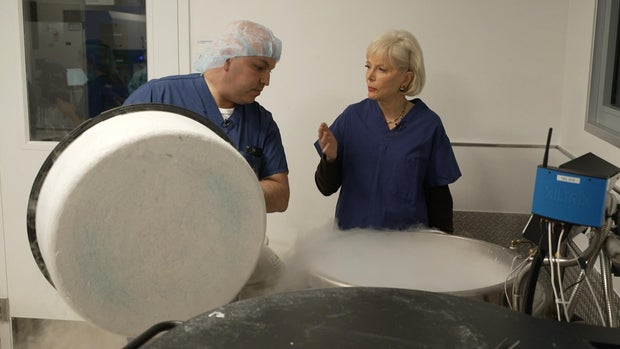
The process involves two weeks of hormone injections to ripen multiple follicles, allowing a surgeon to retrieve eggs. These eggs, identified by embryologists, are later frozen in liquid nitrogen at negative 320 degrees until the owner decides to thaw them, add sperm, and create embryos.
According to Dr. Singer, egg freezing is revolutionary for women, similar to the introduction of the contraceptive pill in the 1960s. It offers the possibility of delaying motherhood until women are ready, even into their 40s, using eggs frozen in their 20s and 30s.
A group of women shared their reasons for freezing eggs. Some cited wanting to focus on their careers or not having found the right partner yet. Egg freezing provides them with peace of mind, reducing the urgency dictated by the biological clock.
Dr. Lucky Sekhon from RMA of New York emphasized the reality of the dwindling number and quality of eggs as women age. She explained that freezing eggs ‘stops the clock’ on their aging process.
Although egg freezing offers options, Dr. Sekhon advises that the optimal time to freeze eggs is in a woman’s 20s, due to lower rates of genetic errors. Dr. Tomer Singer noted the shift in demographics, as younger women increasingly turn to egg freezing.
However, the procedure is costly, with one cycle costing an average of $12,000 to $15,000, and annual storage fees adding up. Despite this, some large corporations have started covering the cost to retain employees.
Tina Rampino, who froze her eggs at 35, later chose to become a single mother. She was successful after using her stored eggs and a sperm donor. However, not all stories are successful, as illustrated by Evelyn Gosnell’s heartbreaking experience.
While egg freezing gives hope, Vardit Ravitsky of the Hastings Center warns it is not a guaranteed solution. She argues for broader support policies to allow women to have children earlier if desired.
Despite the risks, many women find relief in the option of egg freezing, with doctors emphasizing informed choices. As more women consider egg freezing, the field of fertility treatment continues to grow, enticing venture capital and private equity firms. However, critics warn of the potential emphasis on profits over patient care.
Egg freezing technology continues to evolve. Dr. Tomer Singer believes future generations may predominantly rely on this technique rather than traditional methods for having children. As awareness grows, conversations about fertility are increasingly important, giving women the knowledge they need to make empowered decisions.