
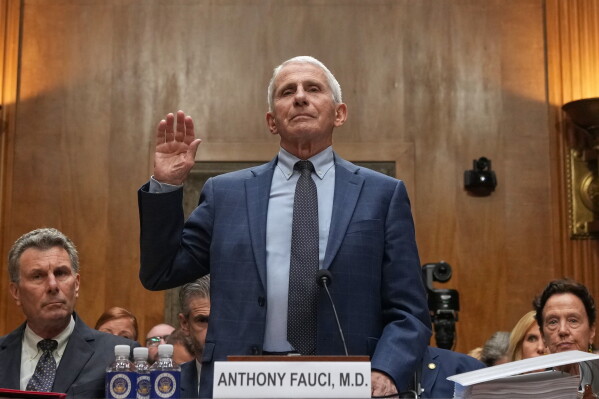
Dr. Anthony Fauci, a central figure in the COVID-19 response, faced a Republican-led Senate committee. He chose to invoke the Fifth Amendment, avoiding answers to numerous questions about his pandemic management. This decision has protected him, for the time being, from allegations of perjury.
Fauci, who was pardoned by President Biden in 2025, is still a target for some Republicans seeking his arrest. They proposed that he might yet face repercussions for any perjury during this hearing. Subpoenaed by Senator Rand Paul, Fauci faced a tense exchange with lawmakers who have long criticized him.
The hearing unfolded amid ongoing partisan debates about the pandemic’s origins and Fauci’s role. Fauci, who has dealt with threats to his safety, stood by his decision to remain silent in the face of Sen. Paul’s persistent questioning.
“The reason for hauling me before this committee,” Fauci stated, “is to extract any admission that may satisfy Paul’s public declarations of intent to see me imprisoned.” He explained following the advice of his legal counsel.
Sen. Paul disputed Fauci’s previous statements about the origins of the virus. He also highlighted discrepancies between Fauci’s public statements and personal diary entries, questioning his reliability.
The hearing encountered dramatic moments, such as the ejection of Fauci’s attorney, David Schertler. Schertler criticized the proceeding’s handling and labeled the accusations against Fauci as baseless.
While disparaged by Republicans, Fauci received support from Democrats who argued the hearing was politically driven. They lauded him for his public health contributions.
Sen. Paul published pages from Fauci’s diary, asserting inconsistencies with his public accounts. These entries, some reflecting early-pandemic uncertainties, were partly revealed before in Fauci’s memoirs and interviews but continue to rile critics of Fauci’s pandemic-era decisions.
Former President Trump commented on social media that he lost confidence in Fauci due to his pandemic strategies. Health Secretary Robert F. Kennedy Jr. disclosed discovering Fauci’s diaries on government property and passing them to the committee.
A supportive group of disease experts penned a public defense for Fauci, dismissing allegations and urging a halt to what they describe as “witch-hunts.”
The hearing also revisited theories about the virus’ origins. Debate remains whether it naturally evolved or resulted from a lab incident. Fauci continued to support the natural origin theory.
Further accusations involved the funding of gain-of-function research at Wuhan’s labs. Fauci maintained that definitions and past NIH funding practices did not implicate him in any potential onset of the pandemic.