
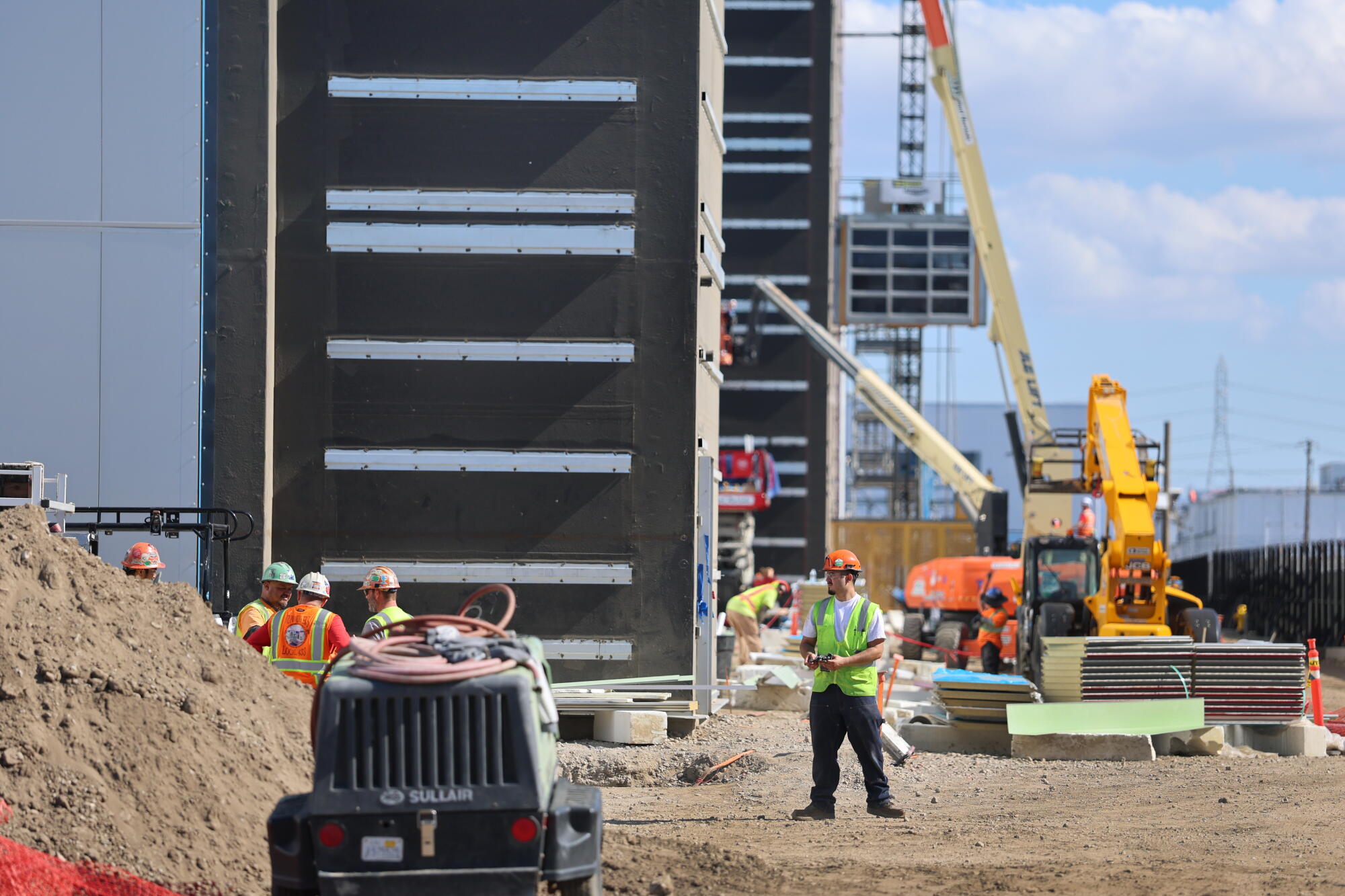
The city of Vernon stands out in the greater Los Angeles area as the singular location for new data center development. Just south of downtown, Vernon is a city largely composed of businesses. Around 50,000 people commute to work there daily, yet only about 300 reside in the city. Known for its supportive stance towards heavy industry, Vernon has adopted a pro-business approach, with one data center already in operation and five more in progress.
Despite this business-friendly environment, the winds of opposition to data centers are beginning to stir, even in Vernon. Typically, development in the city is allowed “by right,” a strategy to attract more businesses. However, a recent council meeting highlighted a potential shift. Council members began discussing zoning changes that could impose environmental reviews on data centers. “We definitely need some regulations for the data centers,” remarked Vernon Mayor Pro Tem Jesus Rivera during the meeting.
“Even the Vernon employers, residents, businesses, those who work in Vernon, are concerned,” said Marisa Olguin, Chamber of Commerce president.
Last December, an indication of changing attitudes appeared when Vernon’s public utility announced plans to halt processing new registration requests from data centers. This decision stemmed from worries about data centers’ demands on electric systems, water supplies, and the environmental impacts of their backup generators. Concerns also arose about the limited number of permanent jobs these centers provide.
Data centers must operate 99.99% of the time, leading them to rely on diesel generators for backup power. These generators emit pollutants like soot and nitrogen oxide. The South Coast Air Quality Management District has already approved 52 diesel generators for three data centers within a small area in Vernon. These generators can run during grid emergencies and up to 50 hours annually for testing.
Local opposition to polluting industries in Vernon is not new. Communities in Boyle Heights and Southeast L.A., such as Maywood and Huntington Park, have historically fought against industries like the Exide lead-battery plant, which was shut down in 2015. However, internal resistance in Vernon has been scarce, partly because most residents are city employees or live in city-owned housing. “It’s a company town,” commented Felipe Aguirre, director of Comité Pro Uno, an environmental justice nonprofit.
The tide may be turning as data centers face increasing scrutiny. Notably, the Los Angeles Unified School District is challenging a new data center planned near Vernon City Elementary School. The school district has sought to delay Texas-based Digital Realty’s project until a comprehensive environmental review occurs.
Deputy Superintendent Pedro Salcido emphasized the need for understanding potential impacts near schools, such as noise and pollution. A 2023 UC Riverside report estimated the health costs from data center generators in California at $33 million, with a significant portion from Los Angeles.
Vernon City Elementary School is located in a bustling industrial area. Just a block away, Prime Data Centers operates a large facility capable of significant power consumption. Digital Realty aims to proceed with its project, assured by city zoning that negates the need for formal environmental review.
“We’ve worked hard to communicate and address concerns,” said Richard Hartnett, Digital Realty spokesperson.
Other data center projects are underway, including CoreSite’s 50-megawatt facility and SCIND Fruitland Point LLC’s 49-megawatt expansion. Goodman Group is also developing two projects, including a 99-megawatt Goodman Energy Park. These projects include requests for backup generators exempt from state regulations.
“Vernon’s current approval process does not protect people’s health,” argued Vanessa Vasquez, a lawyer with Communities for a Better Environment. The city council plans a public hearing on November 17 to discuss subjecting future data centers to environmental reviews, with a decision expected in December.
Industry voices are divided on Vernon’s approach. Some advocate for following the example of Loudoun County, Virginia, a haven for data centers, while others push for zoning changes to maintain control over Vernon’s future development.