
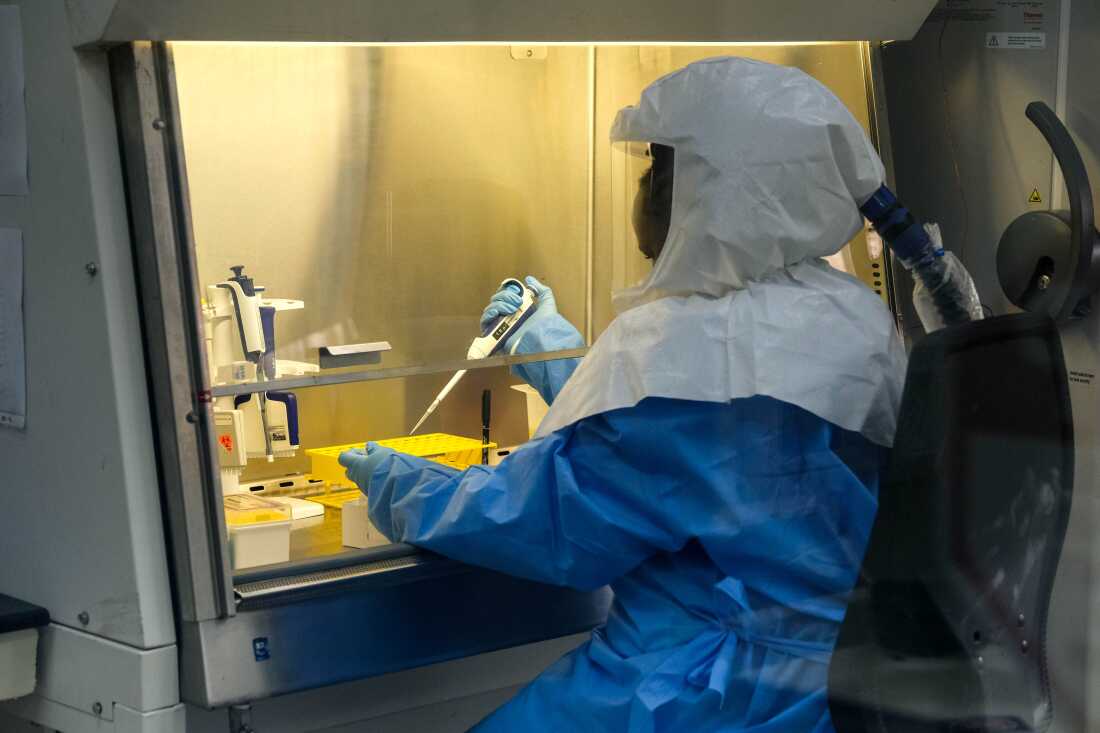
Sophia Mulei, a laboratory technologist, works diligently at the Viral Hemorrhagic Fever Laboratory within the Uganda Virus Research Institute in Entebbe. This lab plays a crucial role in testing Ebola samples. Concerns regarding Ebola arose in mid-April when health officials in the Democratic Republic of Congo (DRC) noted suspicious deaths in the northeast. Samples from deceased individuals were sent to the Bunia lab for testing.
“The first samples were tested on April 30th,” reports Jean-Jaques Muyembe, general director of DRC’s national biomedical research center, INRB. Utilizing the GeneXpert machine, the initial tests returned negative results for Ebola. As more samples followed, results continued to be negative. This led to samples being dispatched to Kinshasa for further specialized analysis, which eventually confirmed Ebola Bundibugyo. The GeneXpert machine, a key part of DRC’s Ebola surveillance, failed to identify the rare Ebola species, causing a month-long delay before alerting the public about the outbreak.
The outbreak blossomed into one of the largest recorded, with suspected cases surpassing 1,100. Responding efficiently became a significant challenge. “The initial response faced major obstacles due to inadequate diagnostics,” notes Caia Dominicus, senior technical adviser with the International Pandemic Preparedness Secretariat. Insufficient testing hampered timely patient isolation, facilitating the virus’s spread.
Efforts to bolster diagnostic capacity have achieved some success. “Diagnostic capacity has significantly improved in the past few weeks,” says Abdirahman Mahamud, who oversees health emergency alert operations for the World Health Organization (WHO). Yet, current testing capacities face limitations. The U.S. Centers for Disease Control and Prevention predicts a potential escalation to 20,000 cases by August. “We remain behind the curve,” Mahamud warns. More efforts will be necessary if the outbreak expands geographically or in case numbers.
A significant advancement in diagnostic capability is the RADI-One machine. This device simplifies the detection of Bundibugyo in patient samples, needing minimal training and equipment, hence suitable for smaller, localized clinics.
Currently, northeastern DRC uses seven laboratories and one mobile lab for testing. Major laboratories, like Bunia, process over 100 samples daily, a laboratory technician reveals, though their identity remains undisclosed. “We’ve eradicated the backlog; samples are analyzed within an hour to twelve,” the technician states. Africa CDC aims to deploy 50 RADI-One units by June’s end in coordination with WHO and DRC health officials. Yet, demand outpaces supply, says Dominicus, with talks ongoing to increase production by South Korean manufacturer KH Medical. Additionally, alternative tests need validation and staff training to enhance testing capabilities.
Challenges persist, with logistics posing another barrier. “Sample transport is a critical bottleneck,” Dominicus admits. Distance between patients and laboratories can lead to days of delay. The surrounding conflict, population movement, and distrust compound the difficulty.
Implementing rapid testing offers a potential solution. These could yield results in minutes compared to laboratory testing. Abraar Karan, an infectious disease physician at Stanford University, emphasizes the necessity. “Identifying positives quickly allows for rapid isolation, curtailing spread,” he says. Though rapid tests are less sensitive, they offer insight into outbreak magnitude. Muyembe also advocates for rapid tests to screen deceased individuals, guiding safe burial practices to prevent transmission.
However, no rapid tests for Bundibugyo are yet approved. Several tests for common Ebola strains could potentially work. Developing special Bundibugyo rapid tests might take months, Robert Garry from Tulane University mentions. Ranu Dhillon, an advisor during Guinea’s 2014 outbreak, supports this pursuit due to longer timelines for therapeutics or vaccines. Validating existing tests could offer quick insights, he suggests. Evaluating samples against rapid tests could facilitate comparative analysis.
Substantial investment is essential for scaling lab-based and rapid tests. Dominicus of IPPS observes diagnostics often lack attention compared to vaccines or therapeutics. “Underfunded, yet vital for informing key decisions,” she remarks. “Without diagnostics, we’re navigating blind.” Bundibugyo’s rarity wasn’t unexpected. Advanced diagnostics might have better mitigated the outbreak’s severity. The delay signified a setback in response efforts.