
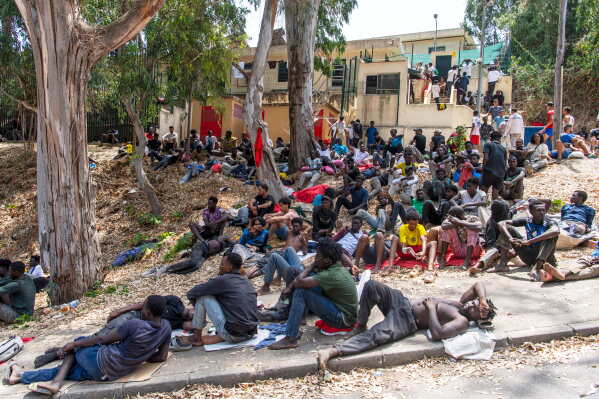
Ceuta, Spain—Spain installed a 500-meter-long barrier on its sea border with Morocco. This measure followed the breach of the frontier by tens of thousands of migrants.
At least 67 migrants lost their lives during the attempt to cross the border. Reasons for death included drowning and a stampede at the breakwater barrier. Spanish Prime Minister Pedro Sánchez criticized certain EU leaders for suggesting that Spain be suspended from the Schengen zone. He described these suggestions as being driven by prejudice and misinformation.
Saturday morning, some exhausted migrants swam to Tarajal beach in Ceuta. Soldiers escorted them across the border. Most of the 50,000 to 60,000 migrants who entered Ceuta soon returned to Morocco.
“We are relentless against those who break the law,”
said Spanish Interior Minister Fernando Grande-Marlaska. Despite heavy security, a massive breach occurred. Marlaska emphasized the need for Spain-Morocco evaluation.
He stated that cooperation with Morocco allowed Spain to restore order quickly. He described Morocco as a reliable partner, not a threat.
EU’s Call for Coordination
The leaders of 22 EU countries called for a coordinated response to this situation. They sent a letter to EU officials requesting a videoconference of interior ministers. The letter emphasized that unlawful crossings should not give rise to perceptions of possible legal stay.
Sánchez also requested a videoconference. He stressed that securing external borders is a shared responsibility among all Member States. Countries like Italy reimposed border controls for travelers from Spain.
Sánchez condemned the unilateral actions that risk destabilizing the EU. Italian Premier Giorgia Meloni considered suspending Italy’s Schengen agreement with Spain.
Migrants Return to Morocco
Hundreds of migrants returned to Morocco voluntarily, despite harsh experiences in Ceuta. Witnesses described returning through informal entry points under Moroccan police watch. Most migrants were Moroccans, with fewer from sub-Saharan Africa.
Those who returned recounted degrading treatment, injuries, and survival struggles. Ouail Lamzeiz shared his decision to leave, citing lack of food despite an offer for a bed in Ceuta.
Salah Eddine El Arrage reported alleged abuse by Spanish police. He and others survived in wilderness areas due to a lack of shelter and food.
Othmane El Merzoug sought assistance from bystanders for a phone call to reach family. Migrants continued to head back amidst indifferent crowds on Ceuta’s beaches.
Impact on Ceuta and Surrounding Areas
Mohamed Abdelatif, a Ceuta resident, shared concerns about the disturbance caused by the border incident. Protests left scars along the road from Fnideq to the border crossing.
President Juan Jesús Vivas remarked on the city’s disruption. He noted the initial stages of return, urging completion of the process.
In Tangier, many returning migrants gathered at the railway station. Abdalah, who aimed to cross the border, recounted his hungry ordeal near Ceuta.
However, a number of migrants remained determined to stay in Ceuta. Mohamed Hatri asserted their resilience despite closure of local resources to force returns.
Oubachir reported from Fnideq, while Renata Brito contributed from Barcelona and Elena Becatoros from Athens.